

Technical guides
This section brings together practical notes for unit managers, operators and technical staff at registered renal units. Use these guides to prepare for service work, support day to day equipment checks and keep records in order for audits.
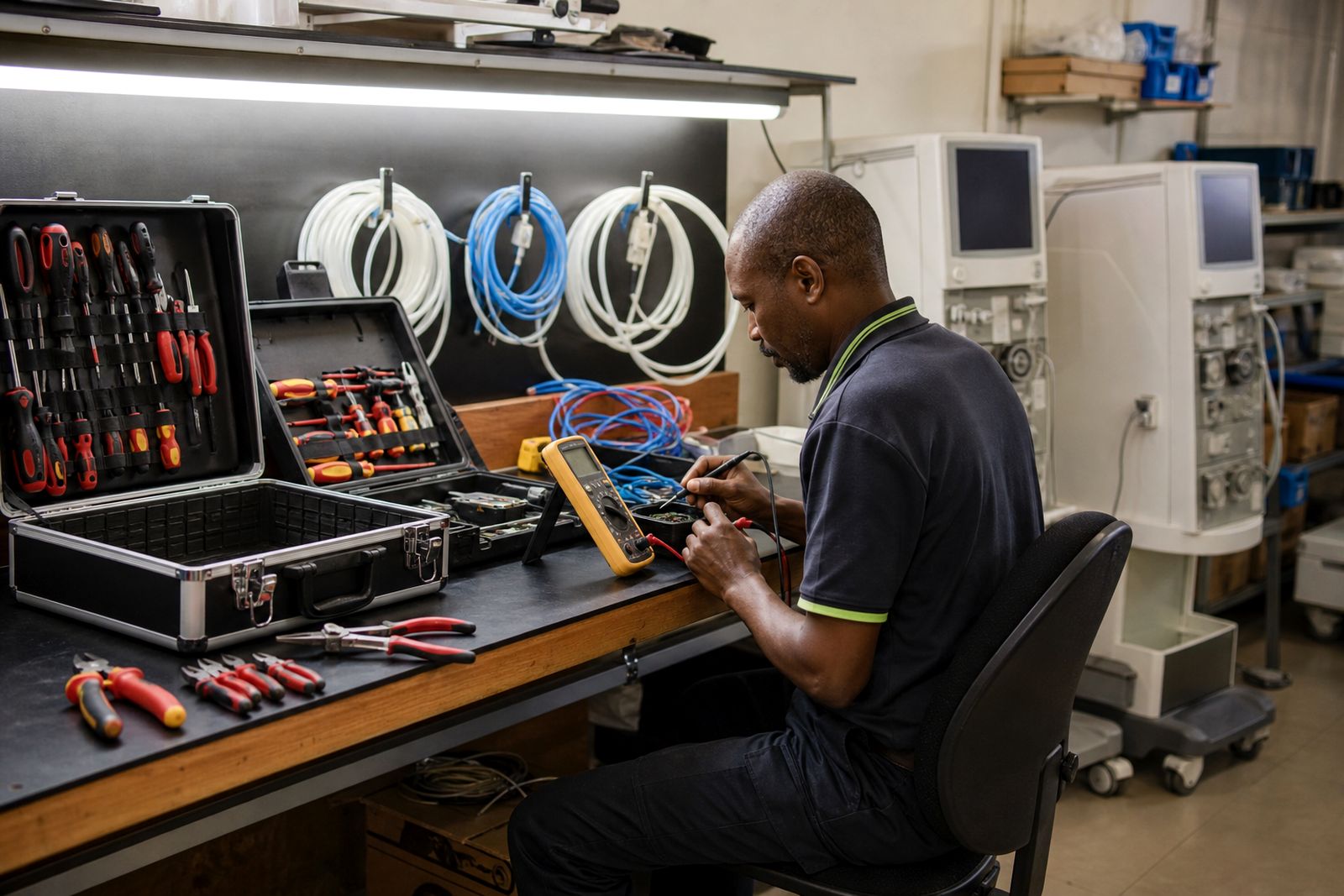
What you will find in these guides
The guides in this section are written for registered renal units that need practical technical information rather than clinical instruction. They cover routine equipment care around haemodialysis machines and treatment chairs, how to prepare for a technician visit, what documents to keep on file, and what to look for when appointing a service partner.
These notes are useful for unit managers planning maintenance, operators doing basic daily checks, and technical staff coordinating workshop or on-site support. They do not replace the unit's own clinical policies, and they do not tell staff how to make patient care decisions. Clinical decisions stay with the unit at all times.
How to choose the right guide
If you are not sure where to start, choose the guide that matches the immediate task in front of you. Some guides are best for daily operation on the floor, while others are more relevant before a planned shutdown, a workshop collection, or an internal audit.
- Daily checks for unit staff: Best when operators need a simple routine before the first patient session and between shifts.
- Preparing for a service visit: Best when a machine, chair or related item is booked for planned service or fault finding.
- Choosing a service partner: Best when management is comparing technical support options for ongoing maintenance.
In practice many units use more than one guide together. A manager may review service provider requirements while the floor team follows a daily pre-use checklist and the stores team gathers records for inspection. That mix usually makes service visits smoother and cuts down on avoidable delays.
Daily checks versus technician work
One of the most common problems in renal units is confusion about what staff can reasonably check themselves and what should be left to a biomedical technician. A good daily routine helps pick up issues early, but it should stay within the unit's approved operating procedures.
- Daily unit checks: visual condition, cable routing, obvious chair damage, loose fittings, alarm response, cleanliness of accessible surfaces, and confirming that logs are completed.
- Technician tasks: calibration, internal fault finding, electrical safety testing, component replacement, workshop repairs, and service record completion.
- Clinical matters: treatment settings, patient suitability, dialysis prescriptions and any decision linked to care remain with the unit's clinical team.
Keeping these boundaries clear protects staff and helps during audits. It also avoids a situation where a small technical fault becomes a larger repair because somebody tried to open or adjust equipment without the right test gear.
Preparing properly for a service visit
A little preparation before a technician arrives can save a great deal of time on site. This is especially important in busy Gauteng units where treatment schedules are tight and floor space is limited. In some facilities the machine position, water line access or municipal power interruptions can affect how quickly testing can be completed.
Before the visit, confirm which items are booked in, note the fault exactly as seen by staff, and make sure previous service records are available. If the issue is intermittent, write down when it happens, whether it appears during priming, treatment or rinse cycles, and whether there was a recent power event. During power cuts or generator changeover, these details matter more than people think.
For workshop jobs, the unit should identify whether a loan unit is needed while the machine is away. For chair repairs, clear photos of damaged armrests, actuators, castors or upholstery areas can help the technician arrive with the right parts and tools.
Records that help with audits and follow-up
Good technical records are not paperwork for the sake of paperwork. They show what was checked, what was repaired, what was found and what still needs attention. For unit managers this makes planning easier, and for auditors it provides a clear maintenance trail.
- Asset identification for each machine and treatment chair.
- Date of service, calibration or safety testing.
- Fault description reported by the unit.
- Work carried out, parts replaced where applicable, and any limitations noted.
- Recommendations for follow-up, monitoring or workshop repair.
Units that keep these records together are usually better prepared when equipment rotates through planned maintenance. It also helps when staff change over and somebody new needs to see the history of a recurring fault or a chair that has needed repeated attention.
Using these guides with planned maintenance
The guides on this page work best when they are used alongside a proper maintenance plan. Daily checks help spot wear early, service preparation keeps workshop and on-site visits organised, and clear records support contract planning and audit readiness. None of that replaces scheduled technical service, but it does make the service process cleaner and more predictable.
If your unit is reviewing its current support arrangement, the guide on choosing a service partner can help you compare practical points rather than sales claims. Look at scope of work, whether service records are supplied properly, how loan units are handled, and whether the provider understands the realities of renal unit operation on the East Rand and across Gauteng. For units further afield, it also helps to clarify what can be done on site and what must return to the workshop.
Use the guides below according to the task at hand, then contact us through the enquiry form on the contact page if your registered facility needs technical support.
Explore the range
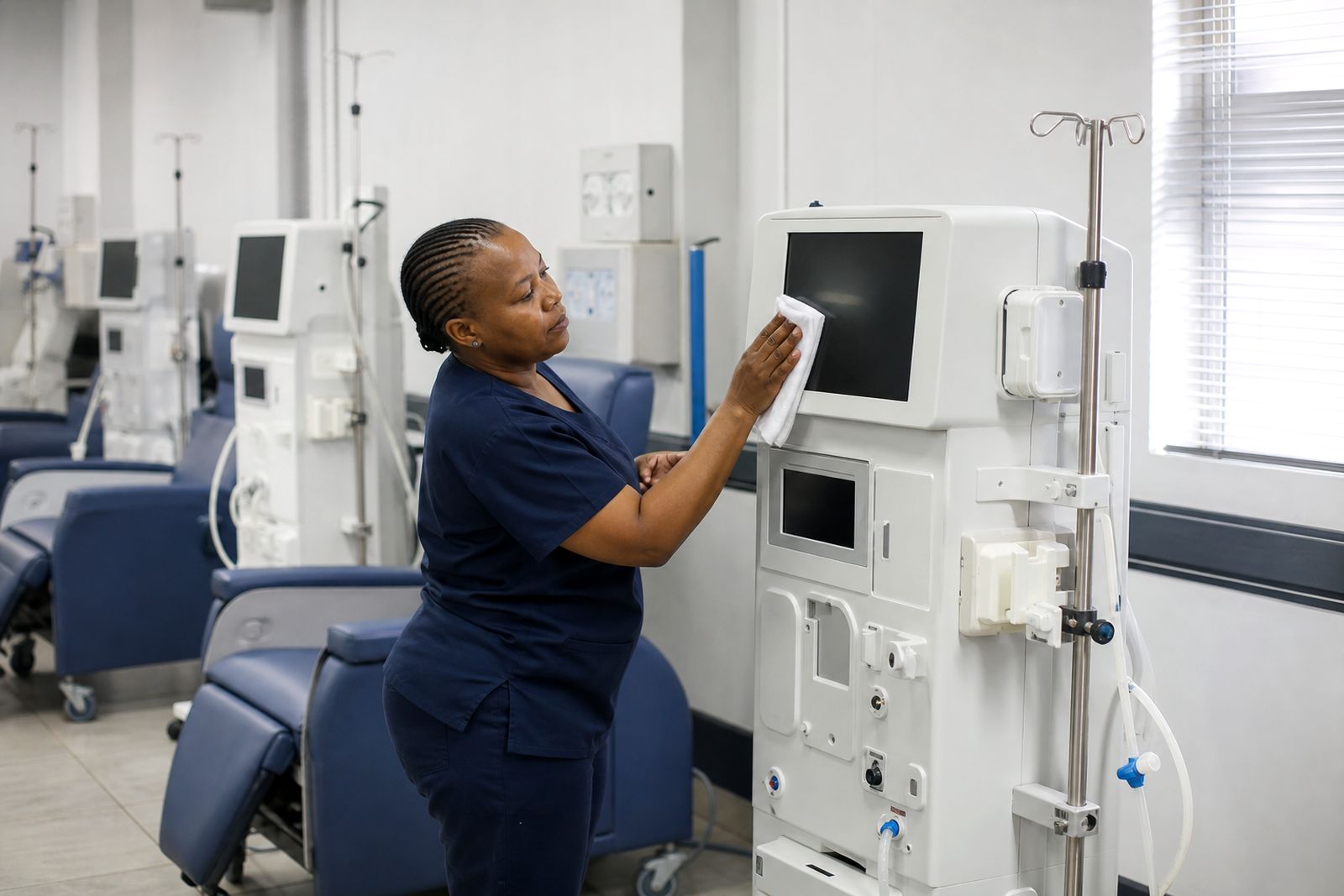
Daily checks for unit staff
Simple daily checks for renal unit staff to help catch equipment problems early.
Read more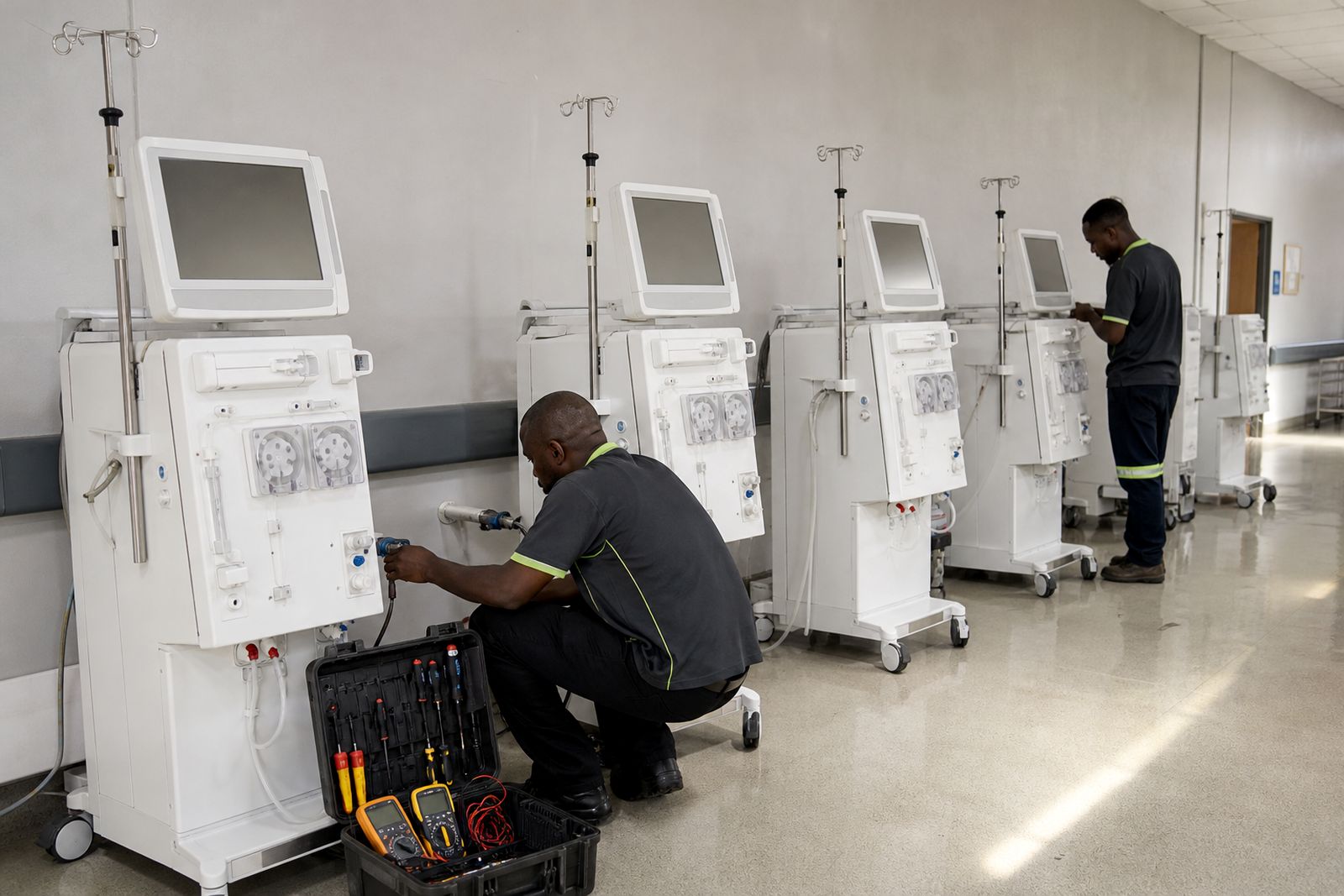
Preparing for a service visit
Simple checks and prep steps that help renal units get more value from each technician visit.
Read more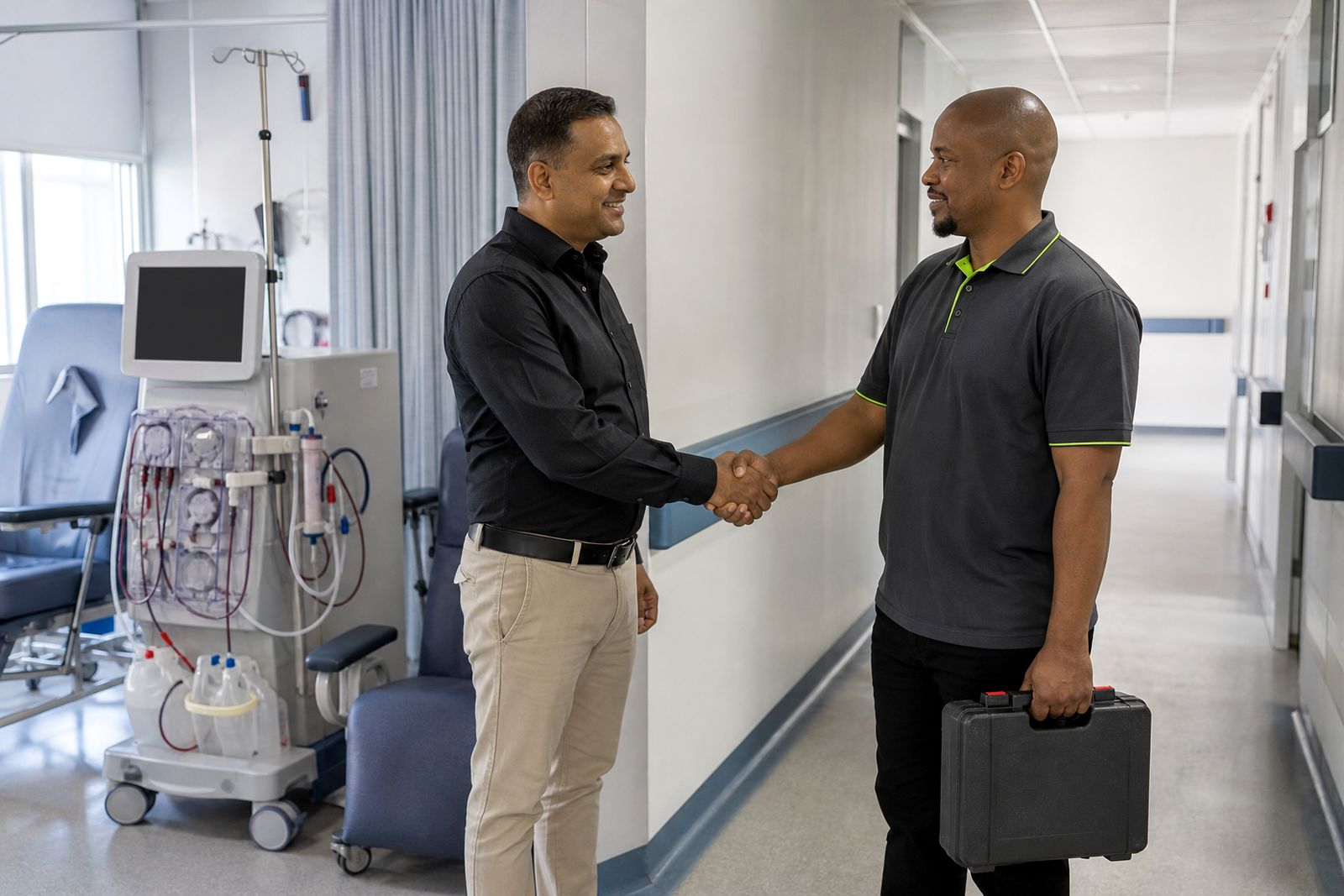
Choosing a service partner
A practical guide to comparing service partners for haemodialysis machines and treatment chairs.
Read moreWhat our Dialysis Machine Servicing customers say
Verified Google reviews
Questions we get asked
Who are these technical guides for?
They are for registered renal units, including unit managers, operators and technical staff who need practical information about equipment support, service preparation and record keeping.
Do these guides provide clinical advice?
No. The guides deal with technical and maintenance topics only. Clinical decisions, treatment settings and patient care instructions remain the responsibility of the unit's clinical team.
Can home users request help based on these guides?
No. We work only for registered facilities and do not support home users.
Book a service or report a fault
Send a note through our contact form with your unit, the equipment involved and what you need, and a technician will contact you.
Open the contact form