
Servicing
Our servicing work covers planned preventive maintenance, calibration and electrical safety testing for haemodialysis machines and treatment chairs in registered renal units. From our Germiston base we support units across Gauteng, with field technicians available further afield on request.
What this servicing section covers
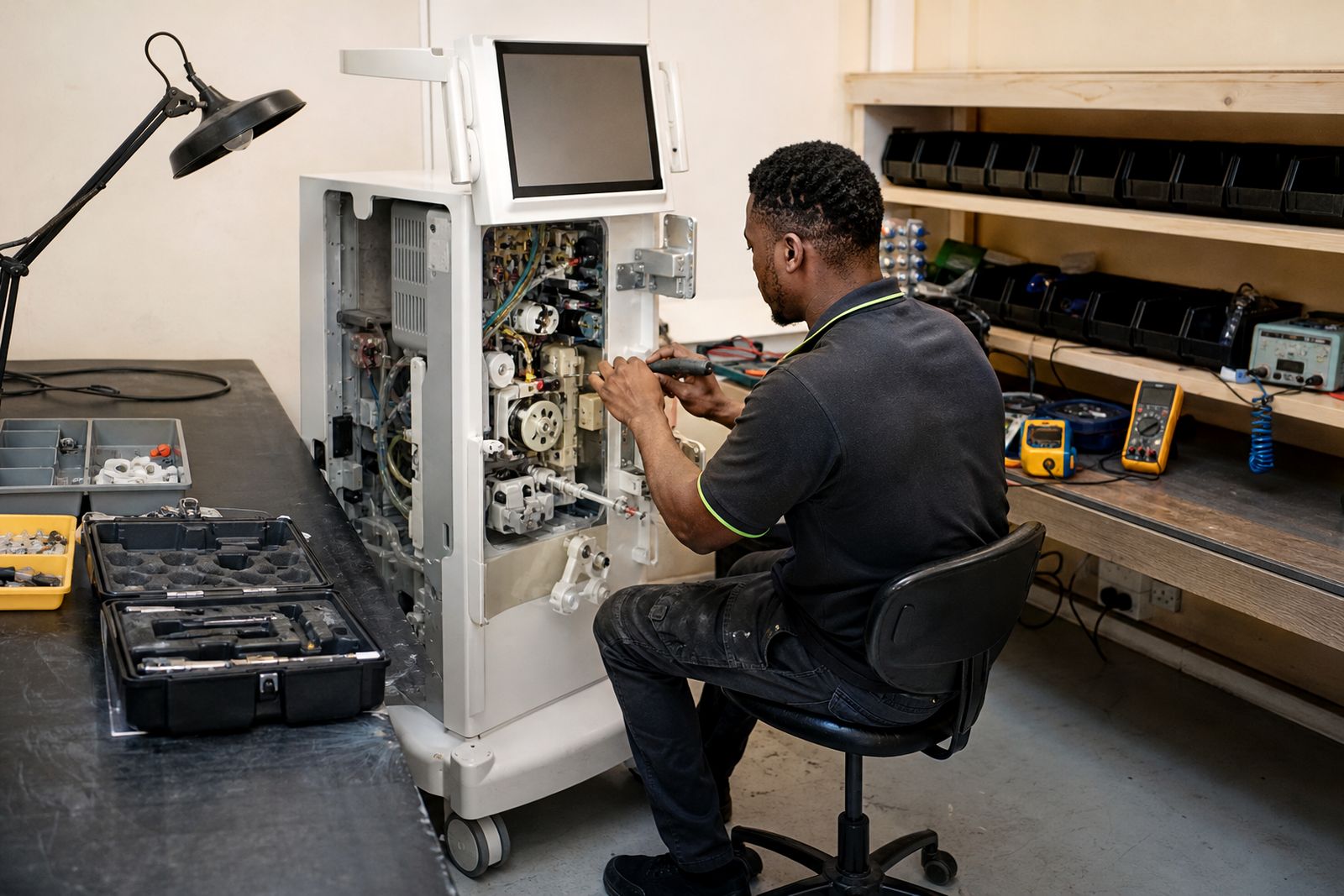
This section explains the routine technical work that keeps haemodialysis equipment serviceable between breakdowns. It includes planned preventive maintenance for machines and chairs, calibration where required, and electrical safety testing with service records that can be filed for audits and internal unit checks.
Servicing is not the same as emergency repair work. A planned visit is used to inspect wear items, check operating functions, confirm settings against the unit's technical requirements and record what was done. If a machine is already down with a fault, the repairs section is usually the better starting point. We work only for registered renal units and related registered facilities, never for home users, and we do not give clinical advice.
Planned preventive maintenance for dialysis equipment
Preventive maintenance is scheduled work done before a fault causes treatment disruption. In a busy unit this helps reduce avoidable stoppages, especially where machines run daily lists and chairs are in constant use. Our technician checks the machine's technical condition, inspects moving and serviceable parts, tests key functions and notes items that may need follow-up attention.
For treatment chairs, servicing can include checking actuator operation, hand control response, frame condition, cables, power supply condition and general movement. For haemodialysis machines, the work depends on the model and the unit's maintenance plan, but the aim stays the same: keep equipment safe, consistent and ready for use.
- Scheduled workshop or on-site servicing to suit unit operations
- Inspection of wear points and service-related components
- Function checks after service work is completed
- Clear records for the unit file and future planning
Calibration and electrical safety testing
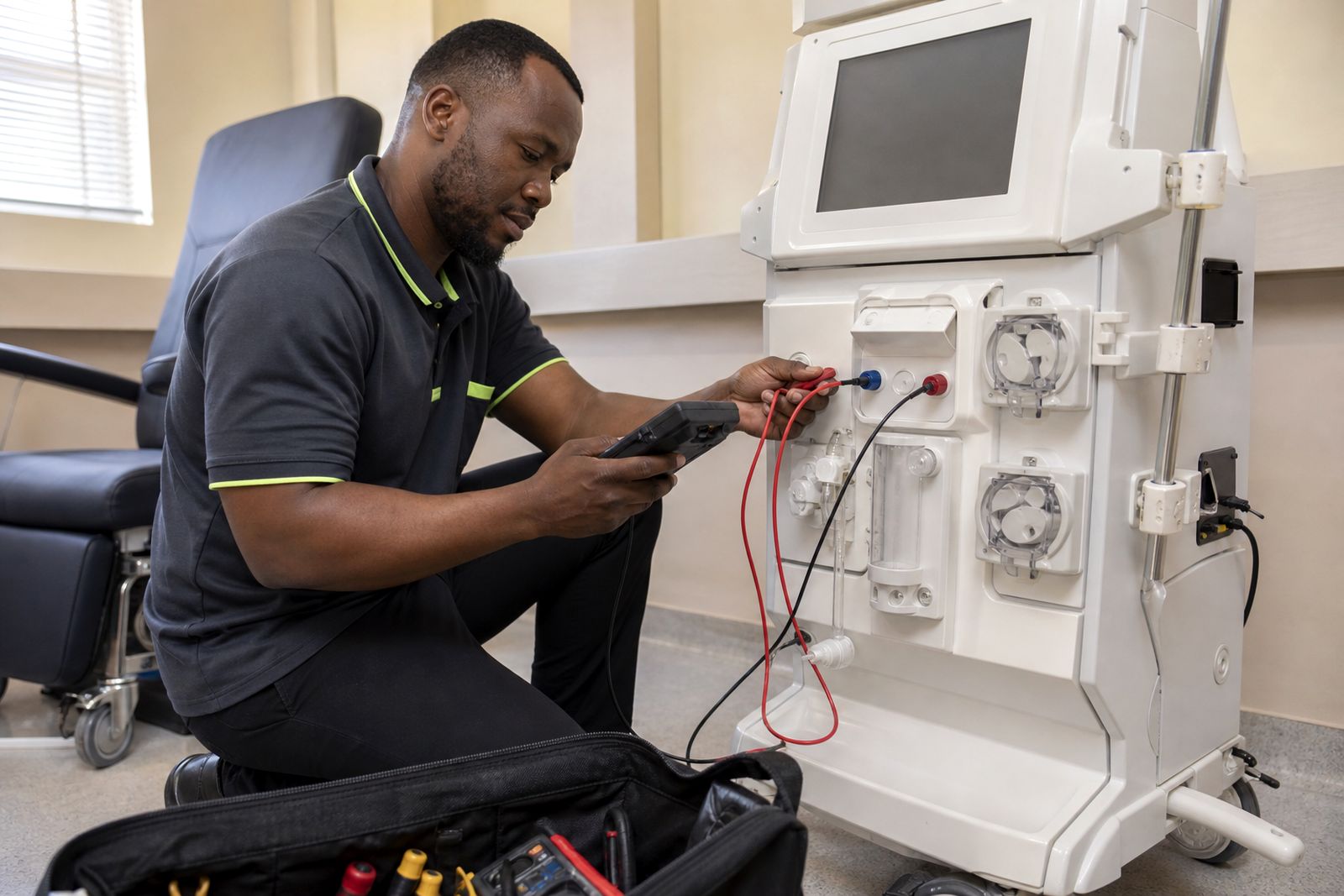
Calibration and safety testing are often grouped with routine servicing, but they answer different questions. Calibration checks whether a measurement or control function is reading and operating within the expected technical range. Electrical safety testing checks the equipment's electrical condition and verifies that it remains suitable for clinical use within the facility's maintenance framework.
Units often ask for these checks before audits, after repair work or as part of a scheduled maintenance plan. In Gauteng, where machines may be moved between rooms or work under heavy demand, documented testing helps the unit keep technical records in order. Where there are local facility rules or internal engineering procedures, we work to that scope and record the outcome properly.
- Calibration focuses on technical accuracy and consistency
- Electrical safety testing focuses on the electrical condition of the equipment
- Both should be documented in the service record
- Both can be combined with a planned maintenance visit
How to choose between the service options
If you are deciding which page in this section fits your unit's needs, start with the equipment's current condition. A machine that is operating normally but due for routine attention usually belongs under planned preventive maintenance. A machine with suspected reading drift or one that needs formal checks for records may need calibration and safety testing. If the equipment is already not working properly, fault finding or repairs is the better route.
- Choose planned preventive maintenance when: the machine or chair is due for scheduled service, there is no active breakdown, and the unit wants to reduce avoidable failures.
- Choose calibration and safety testing when: the unit needs documented technical checks, there has been recent repair work, or audit files need updating.
- Choose repairs or on-site fault finding when: the equipment is down, showing an active fault, tripping power, or cannot be cleared for use.
- Ask about loan units when: workshop time is needed and treatment capacity must be protected.
If you are not sure, send the machine type, the symptom or service need, and whether the unit requires on-site work or workshop handling. That makes triage much easier for the technician.
Working around unit schedules and facility requirements
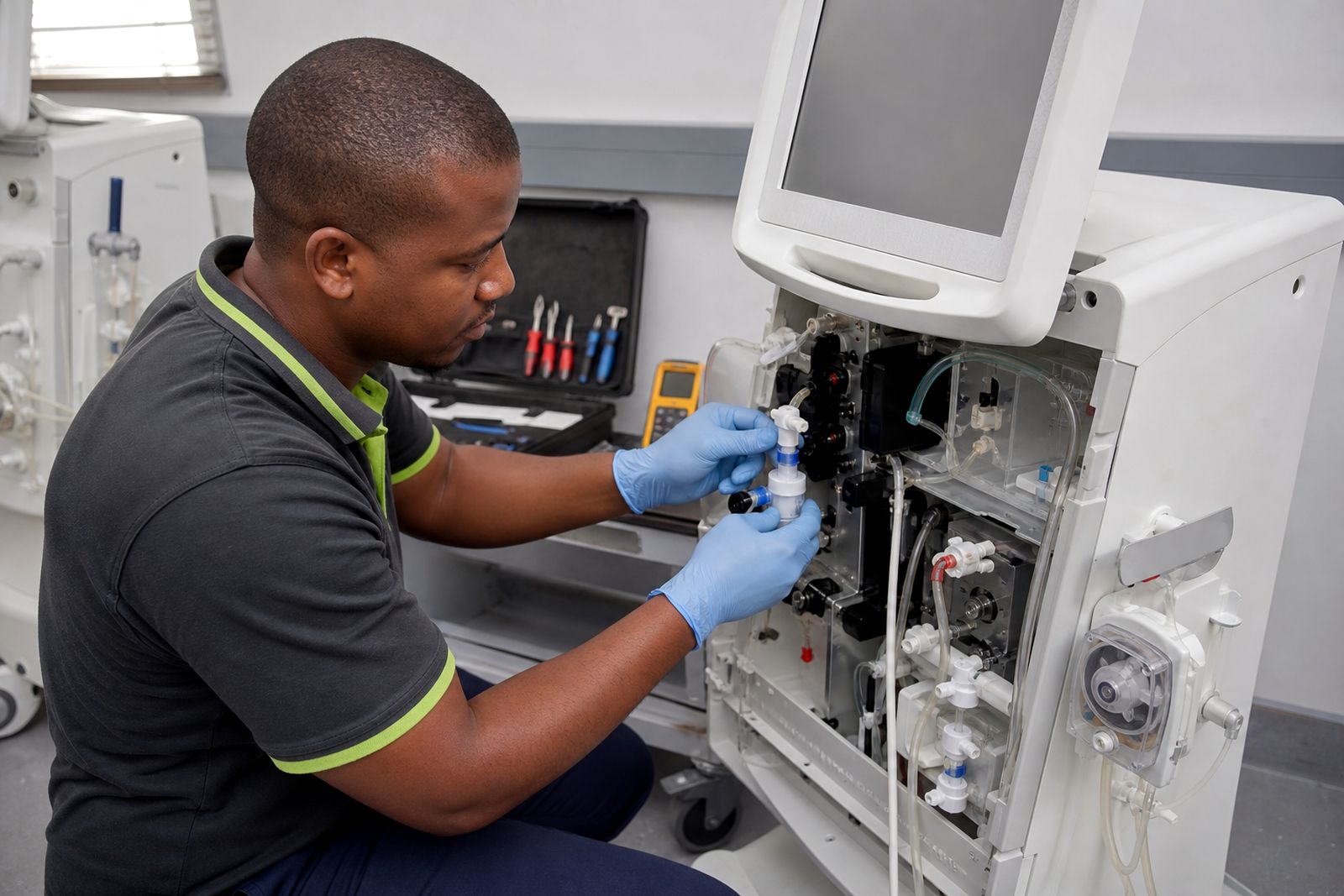
Renal units cannot stop for long technical interruptions, so servicing has to be planned around treatment lists, room access and infection-control procedures. Some visits are best done on site, while others are more practical in the workshop if deeper strip-down work is needed. Where a machine must come out of use, a loan unit may help the unit keep capacity while technical work is completed.
In practice, a useful booking includes the equipment type, the number of items due for service, whether chairs are also included, and any access limits such as weekend entry, loading bay rules or security sign-in. Power cut planning may also matter for testing windows and unit logistics, especially if backup power switching affects when equipment can be taken offline for checks.
Service records that support audits and follow-up
Good servicing is not only about the work done on the day. It also depends on records that show what was checked, what was adjusted, what still needs attention and when the next service should be considered. This helps unit managers, technical teams and auditors review the equipment history without guessing.
Our service records are intended for registered facilities that need clear maintenance documentation for their files. If repeat issues are noticed, the record trail helps the unit decide whether to keep monitoring, schedule repair work or review how a particular machine is being rotated. That paper trail matters, and small details often save time later.
Explore the range
What our Dialysis Machine Servicing customers say
Verified Google reviews
Questions we get asked
Do you service equipment for home dialysis patients?
No. We work only for registered renal units and related registered facilities, not for home users.
Can servicing be done on site at the renal unit?
Yes, where the work is suitable for an on-site visit. Some jobs may still need workshop handling, depending on the equipment condition and the technical scope.
Does servicing include clinical advice on treatment settings?
No. We handle technical servicing, calibration, testing and repairs only. Clinical decisions remain with the unit and its clinical team.
Book a service or report a fault
Send a note through our contact form with your unit, the equipment involved and what you need, and a technician will contact you.
Open the contact form