Repairs
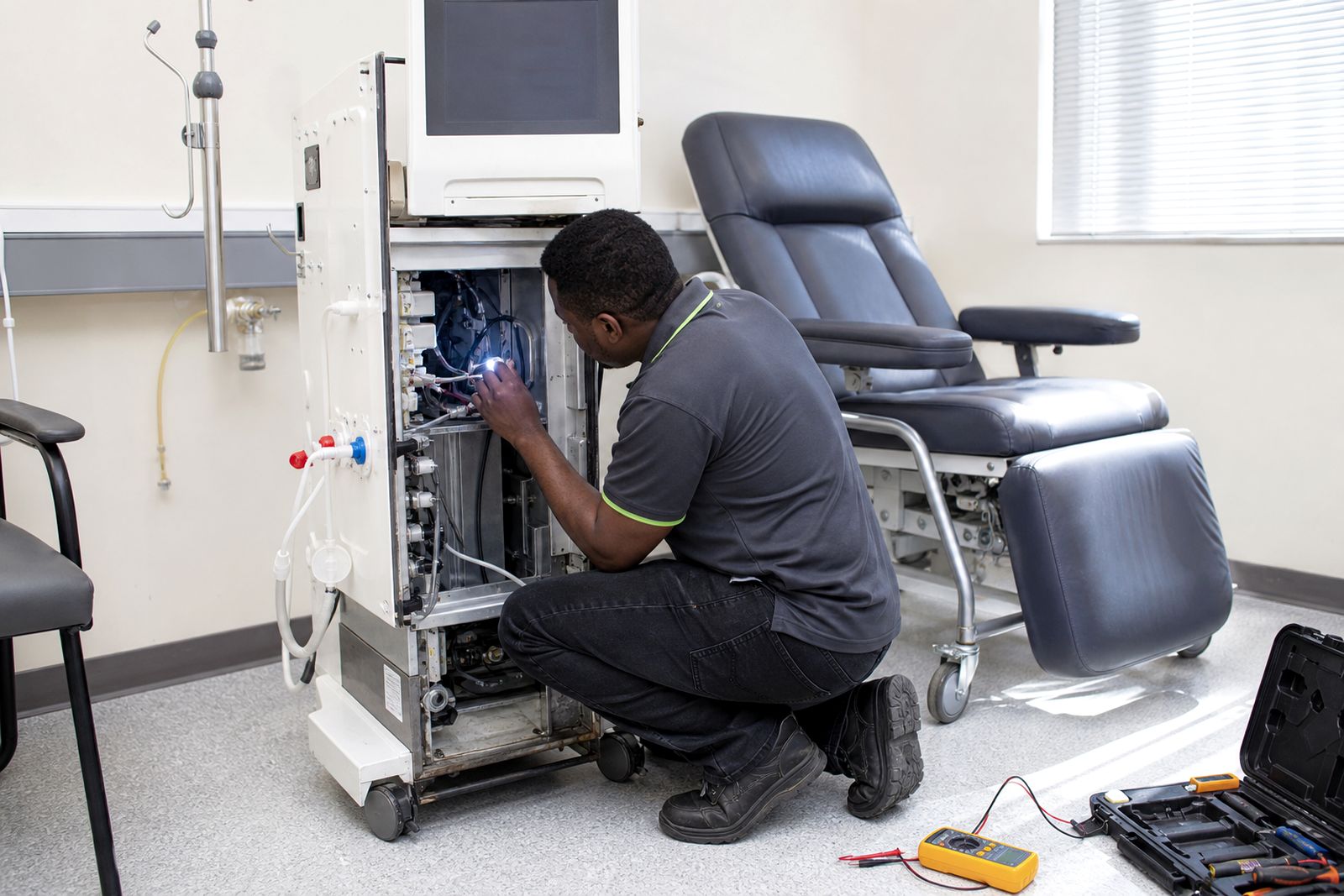
When a haemodialysis machine or treatment chair develops a fault, the priority is to restore safe operation with clear technical records. We handle repair work for registered renal units in Germiston, across Gauteng and, on request, further afield.
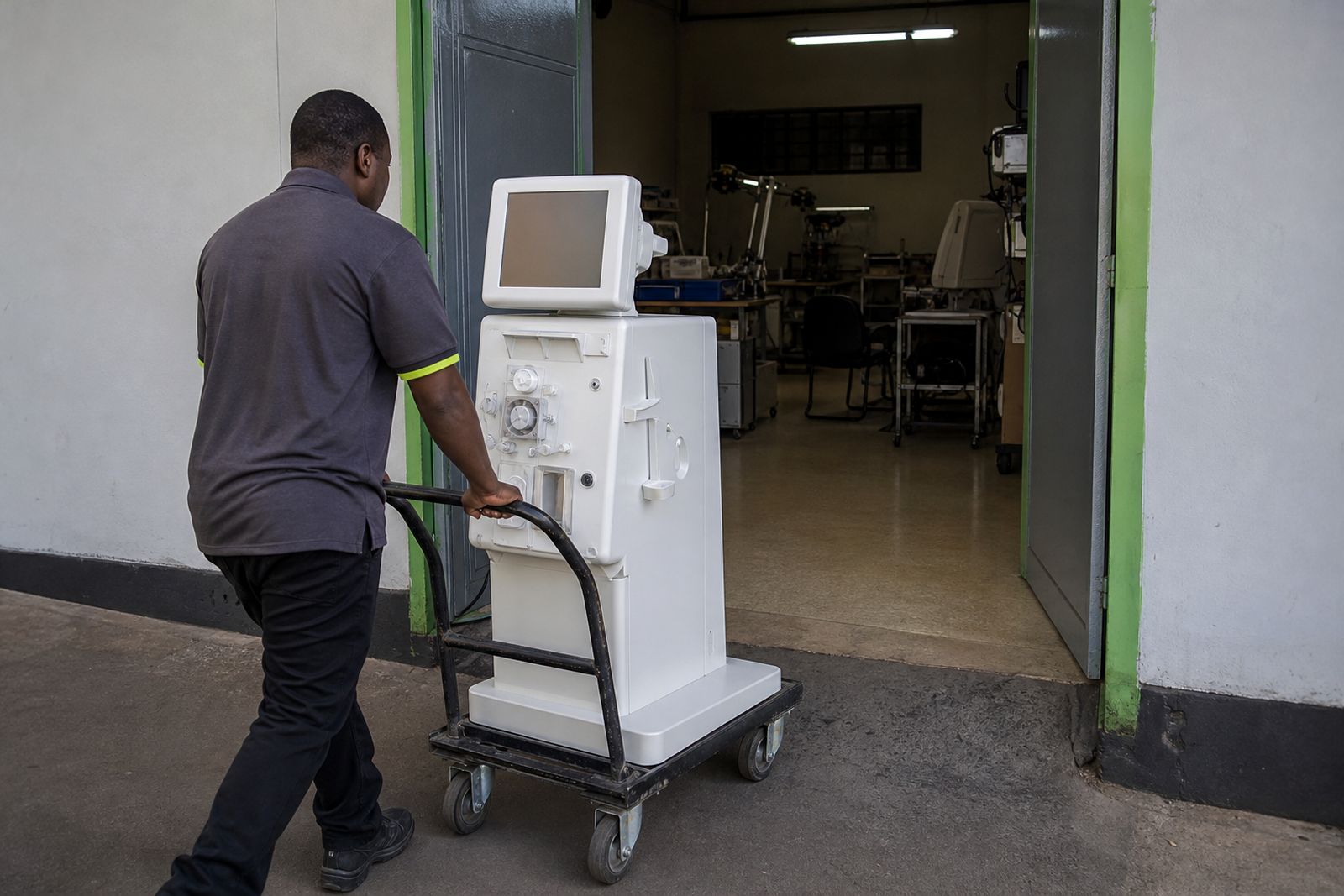
Repair support for registered renal units
This section covers fault finding and repair work for haemodialysis machines and treatment chairs used in registered renal units. Our work is technical only: inspection, diagnosis, parts replacement where required, calibration checks linked to the repair, electrical safety testing where relevant, and documentation for the unit file. We do not work on domestic equipment, we do not attend home users, and we do not give clinical advice. Clinical decisions, patient scheduling and treatment changes remain with the unit.
Because dialysis equipment operates under daily pressure, small faults can quickly turn into lost chair time, delayed sessions and extra load on the remaining stations. A machine that intermittently alarms, a chair with a failed actuator, or a conductivity drift that shows up during checks all need different repair approaches. Some faults are best handled at the unit, while others need workshop time for strip-down, testing and repeat verification after the repair is complete.
Choosing on-site or workshop repair
The right repair route depends on the fault, access at the unit and whether stable testing conditions are needed. On-site work is often suitable when the problem can be isolated without major disassembly, while workshop repair is usually the better choice for repeat faults, internal component issues or cases where the machine must be monitored after the repair.
- Choose on-site fault finding when: the unit needs an initial diagnosis, the fault is intermittent, basic adjustments or replacements may solve it, or moving the equipment would disrupt operations.
- Choose workshop repair when: the machine needs extended testing, deeper strip-down, multiple assemblies must be checked, or the unit wants the equipment fully assessed away from the treatment floor.
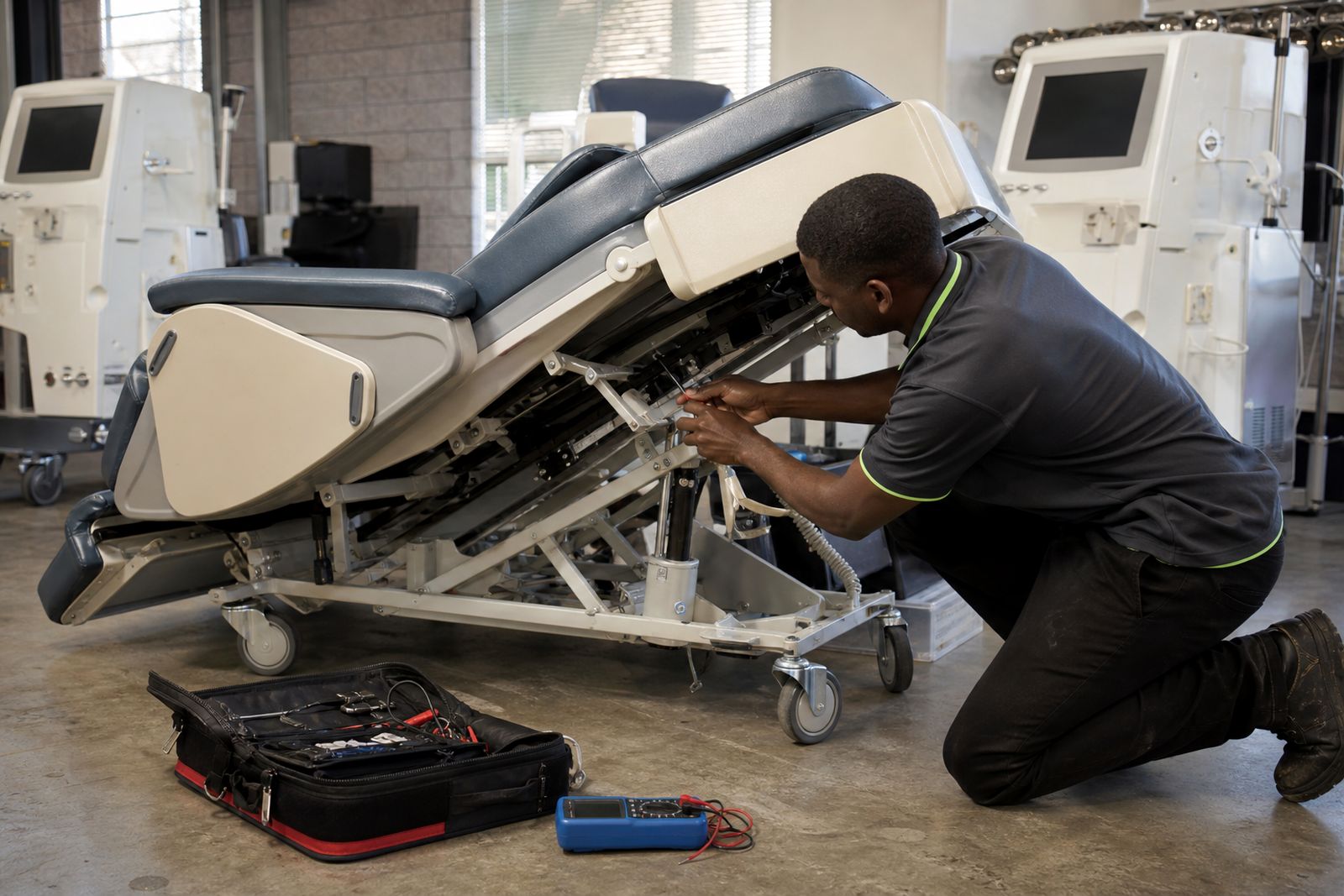
- For treatment chairs: on-site work often suits actuator, handset, power-supply and positioning faults, while workshop attention may be needed for more involved frame, control or repeat electrical issues.
If you are unsure which route fits the fault, log the symptoms as accurately as possible and send the enquiry through the contact page. The more exact the fault description, the easier it is to prepare the correct test gear and likely replacement items.
What we check during fault finding
Effective repair starts with a proper fault history. We look at the alarm or symptom reported by unit staff, what happened before the failure, whether the problem is constant or intermittent, and whether recent service or water-quality changes may be relevant. From there the technician checks the machine or chair systematically rather than guessing at parts, which saves time and reduces unnecessary replacements.
- Visual inspection for damage, leaks, loose fittings, cable wear and signs of heat or moisture exposure.
- Functional checks on the reported fault and any linked systems that can influence it.
- Electrical safety testing where applicable after repair work or component replacement.
- Verification that settings and measured values return to expected operating range after the fault is cleared.
- Recording of findings, work done and follow-up recommendations for the unit record.
In Gauteng units this may be straightforward, but conditions still matter. Repeated trolley movement, busy session changes and power interruptions can all contribute to faults. Equipment near coastal areas can also show corrosion or connector issues over time, especially where humidity is high and cleaning routines are frequent.
Typical repair issues we handle
Repair work varies from a single failed component to a chain of smaller issues that only appear under operating conditions. With haemodialysis machines, faults may involve alarms that will not clear, unstable readings, pump-related issues, sensor-related errors, control problems, display faults, power concerns or damage found during routine servicing. Treatment chairs can present with lifting and recline failures, foot section problems, hand control faults, power supply issues, damaged cabling or braking and castor concerns.
Power cuts and generator changeover can also play a part in electrical failures or nuisance faults. Even where backup power is available, repeated switching events can expose a weak power module or an already marginal connection. That is why we do not treat every alarm as an isolated event. We check the wider technical picture so the repair makes sense for the way the unit actually operates.
Where a machine cannot remain in service, a loan unit may be the more practical option while workshop work is completed and verified. That decision depends on availability and the technical condition of the affected machine.
Records, safety checks and return to service
Repairs on dialysis equipment should leave a clear paper trail. After fault finding and repair, we document the reported problem, the technical findings, the work completed and any further action recommended. For units preparing for internal reviews or external audits, complete service records help show that equipment issues were managed in a controlled way.
Where the repair affects measured performance or electrical integrity, we include the appropriate checks before the machine or chair is returned to use. This may include calibration-related verification, electrical safety testing, functional testing and confirmation that the original fault is resolved under test conditions. If further workshop observation is needed, we note that rather than sending equipment back too early. That simple step prevents a machine from going out only to fail again by the next shift.
How to prepare a repair call
A useful repair enquiry gives the technician a better starting point and can reduce unnecessary back-and-forth. Before submitting the form on our contact page, gather the equipment identification details and a short fault summary from the unit. If the machine has already been removed from service, say so. If the fault is intermittent, note roughly when it occurs and what the operator sees on screen or hears from the machine.
- Equipment type and asset or serial reference used by the unit.
- Whether the item is a haemodialysis machine or a treatment chair.
- The exact fault symptoms, including alarms, error wording or movement failure.
- Whether the problem is constant or intermittent.
- Whether the unit needs on-site diagnosis or wants the item booked for workshop repair.
- Any audit or service-record requirement linked to the repair.
We are based in Germiston and attend registered renal units on the East Rand, across Gauteng and further afield when arranged. To request repair support, use the enquiry form on the contact page and include the practical details above, it helps us prepare properly.
What our Dialysis Machine Servicing customers say
Verified Google reviews
Questions we get asked
Do you repair equipment for home dialysis patients?
No. We work only for registered renal units and other registered facilities. We do not attend home users.
Should we request on-site fault finding or send the machine to the workshop?
Use on-site fault finding when the problem needs initial diagnosis at the unit or when moving the equipment would disrupt operations. Workshop repair is usually better for deeper internal faults, repeat failures or cases that need extended testing after repair.
Do you provide records for audits after repairs?
Yes. We keep service and repair records showing the reported fault, technical findings, work completed and any relevant testing linked to the repair.
Book a service or report a fault
Send a note through our contact form with your unit, the equipment involved and what you need, and a technician will contact you.
Open the contact form