Loan units
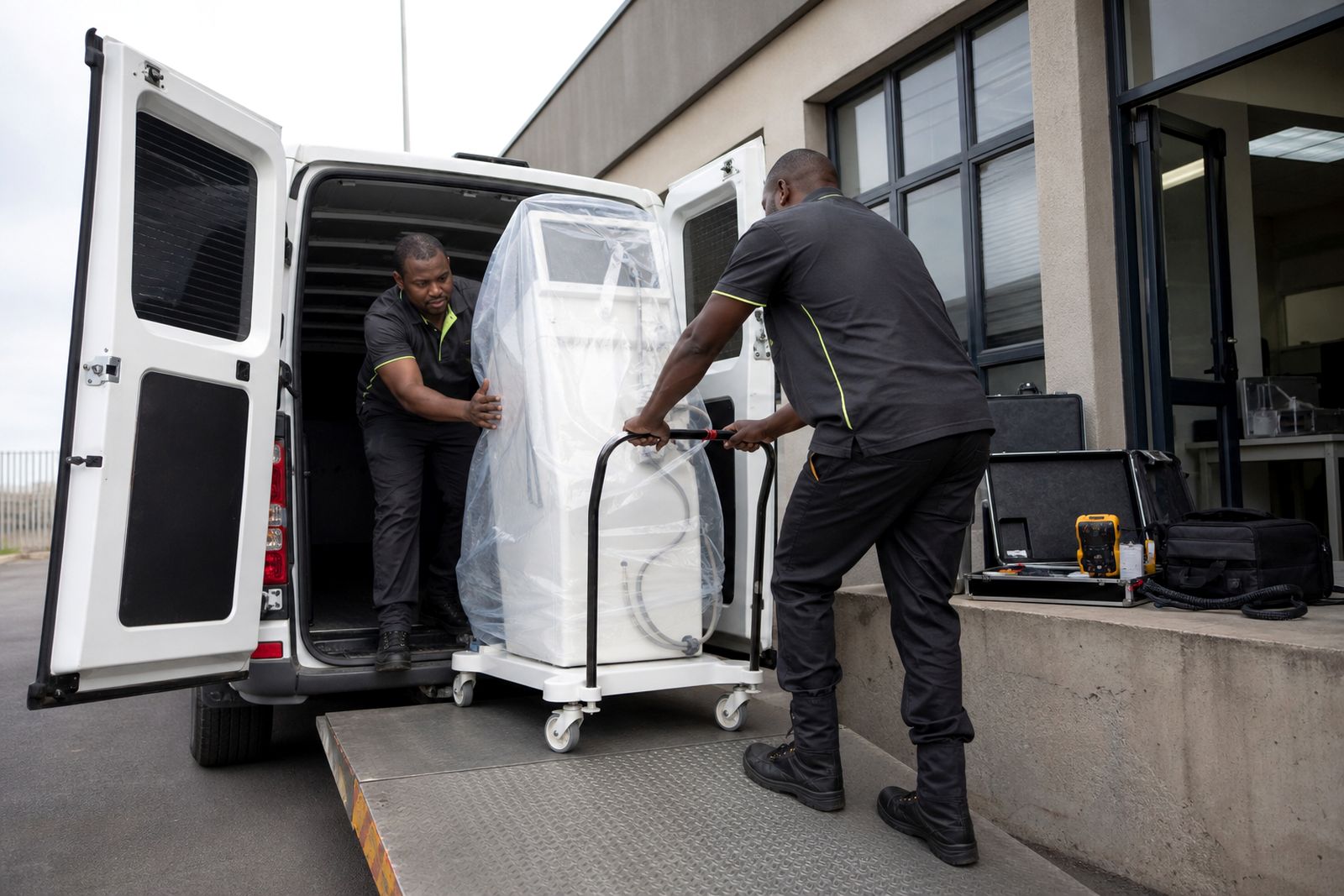
When a haemodialysis machine has to come off line for workshop repair, a loan unit can help your renal unit keep treatment capacity in place. We supply stand-in machines only to registered facilities, with technical checks, records and practical handover for unit staff.
What this section covers
This section explains how our loan-unit service works for registered renal units that need a temporary haemodialysis machine while their own unit is being assessed, repaired or tested. It is intended for unit managers, technical managers and procurement or admin teams who need to understand what is included before requesting support.
Loan units are not a replacement for proper maintenance planning, but they can reduce pressure on a busy dialysis roster when a machine must be removed from use. We handle the technical side only. Clinical settings, patient allocation and treatment decisions always remain with the renal unit.
Because every site works a bit differently, the best choice depends on why your machine is down, how long it may be off line, and whether the fault can be resolved on site or needs workshop attention in Germiston.
When a loan unit is usually needed
A loan machine is most commonly arranged when a unit cannot wait for the normal repair cycle. This may happen after a breakdown, when a machine fails calibration or safety checks, or when workshop work is needed that cannot be completed inside the treatment area. In some cases a loan unit also helps when a facility wants to avoid losing a station during a planned repair.
- Your machine needs workshop repair rather than on-site fault finding.
- A repeated fault means the unit should not be returned to service until testing is complete.
- The renal roster is full and taking one station out creates pressure on sessions.
- A chair-side machine has been removed for electrical safety testing and corrective work.
- The facility needs continuity while waiting for parts approval or internal sign-off.
We only supply loan units to registered renal facilities. We do not provide machines for home use, private storage, training at non-clinical venues or any arrangement outside an approved facility.
How to choose between the options
The right option depends on the condition of your own machine and where the work will be done. If the fault can be isolated and repaired at the unit, an on-site visit may be enough and a loan unit may not be necessary. If the machine must come to the workshop, a stand-in unit often makes more sense.
- On-site fault finding: Best when the problem appears limited, access is straightforward and the machine can be assessed safely in the unit.
- Workshop repair with loan unit: Best when deeper testing, strip-down work or repeated verification is required off site.
- Planned-maintenance contract support: Best for facilities that want a more structured approach to servicing, records and temporary cover where available.
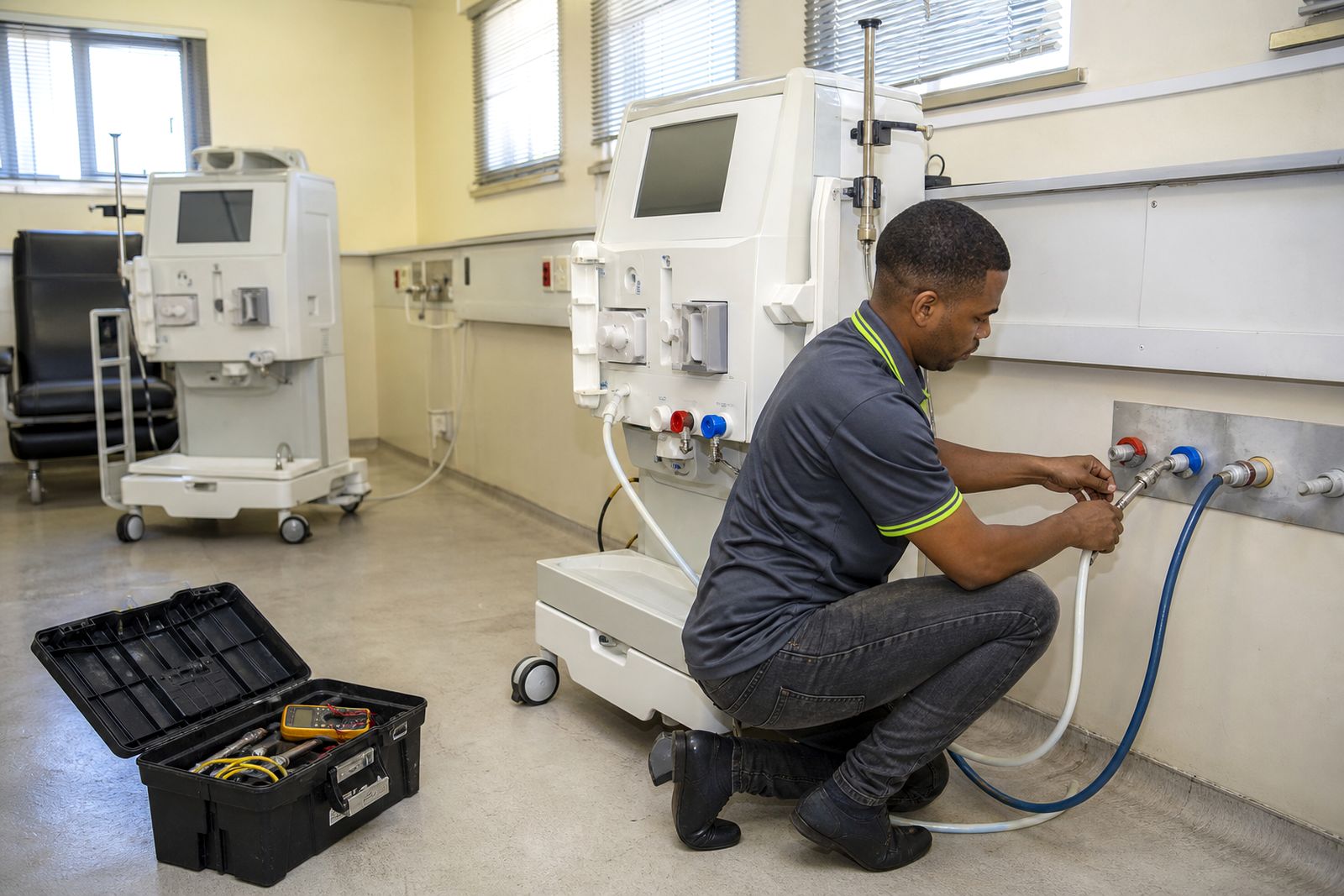
Think about water connection compatibility, floor space, municipal power stability and staff workflow before requesting the stand-in unit. In some units backup power arrangements and plug-point location can affect where the temporary machine is placed, so it helps to flag that early even if the machine bay looks standard.
What happens before a loan unit is placed
Before a loan machine goes out, we confirm the facility details, the machine that is being removed from service, and the reason the loan is needed. We also check whether the job is linked to a breakdown repair, calibration issue or workshop assessment. This keeps the paperwork clear for your service records and later audit review.
The loan unit is prepared as a technical stand-in machine, with its relevant checks recorded before dispatch. On arrival at the facility, unit staff should confirm the allocated position, utility connections and local operating procedures. Our technician can note equipment condition and serial references at handover, which helps avoid confusion later.
- Facility and contact confirmation through the enquiry process.
- Technical review of the machine being removed from service.
- Preparation of the loan unit with the necessary records.
- Handover details for the receiving renal unit.
- Collection or swap arrangements once your machine is ready to return.
If your unit has access restrictions, basement loading, after-hours receiving rules or coastal humidity concerns for stored equipment, mention it upfront. Small details like that save time on the day.
What is included and what stays with the unit
Our role is to provide technical support around the temporary machine and the repair process. We do not step into clinical decision-making, patient prescription matters or nursing protocols. The renal unit remains responsible for clinical use, consumables, water quality processes, routine user checks and any local governance steps required before treatment starts.
- Included from our side: technical preparation, equipment handover records, workshop coordination where relevant, and service documentation linked to the repair process.
- Managed by the facility: clinical readiness, consumables, staffing, routine pre-use checks, treatment programming and patient care decisions.
- Not provided: advice for home users, supply to unregistered facilities or clinical instruction outside the unit's own protocols.
This split matters during audits. It keeps the technical record clean and shows clearly what was serviced, what was supplied temporarily and what the unit itself approved for patient use.
Planning for handover and return
A loan arrangement works best when the unit plans for both the arrival and the return of the stand-in machine. Keep the treatment bay accessible, ensure the correct staff are available for receipt, and have your internal asset or service log ready. When your repaired machine is due back, the same practical planning helps the changeover go smoother.
If the original machine is still under assessment, we will keep the facility informed through the service process using the contact route on this site. The final return depends on technical completion, testing and records being in order, not guesswork. That avoids rushed reinstalls and repeat faults.
For a step-by-step outline of the process, see the page on how loan units work. If you are comparing temporary cover against a longer-term maintenance arrangement, the planned-maintenance contracts section may be the better next read.
What our Dialysis Machine Servicing customers say
Verified Google reviews
Questions we get asked
Who can request a loan unit?
We work only with registered renal facilities. Requests should come from the unit, its technical contact or an authorised admin or procurement contact through our enquiry form.
Do you supply loan units for home dialysis?
No. We do not supply, service or advise for home users. Our work is limited to registered facilities and the technical support around their equipment.
Does a loan unit include clinical setup advice?
No. We handle technical preparation, repair coordination and records. Clinical settings, patient treatment decisions and unit protocols remain the responsibility of the renal facility.
Book a service or report a fault
Send a note through our contact form with your unit, the equipment involved and what you need, and a technician will contact you.
Open the contact form