Service contracts
Our service contracts help registered renal units keep haemodialysis equipment on a planned maintenance cycle with clear technical records. We support units from Germiston across Gauteng, with field technicians available further afield on request.
What a service contract covers
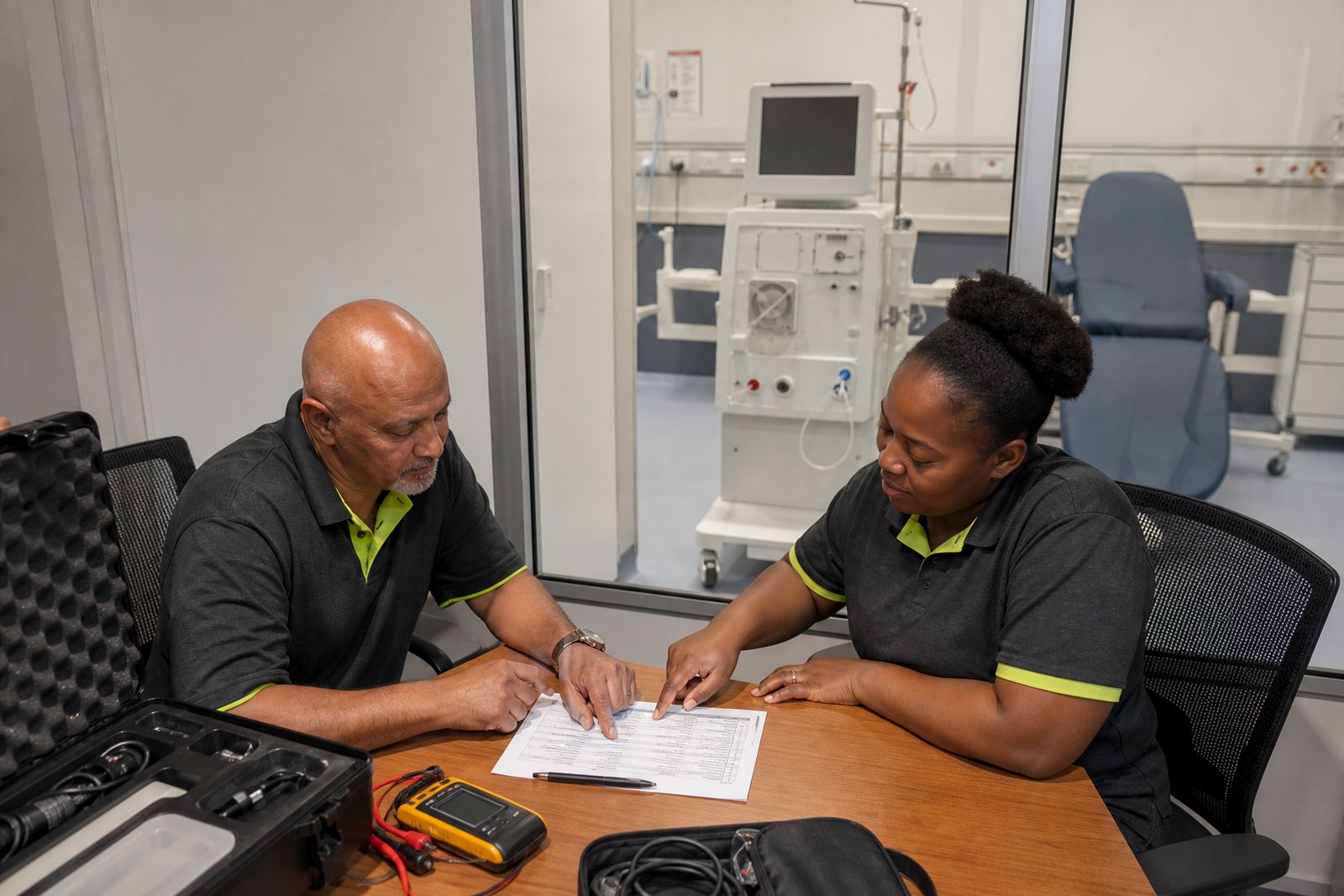
A service contract brings routine technical work into one managed arrangement for your renal unit. Instead of waiting for problems to interrupt treatment areas, the unit has a set maintenance structure for haemodialysis machines and treatment chairs, along with calibration, electrical safety testing, repairs when needed and service records kept in order for audit files.
Our contracts are for registered facilities only. We do not work on home-use equipment, and we do not provide clinical guidance. The technician handles the technical condition of the machine or chair, while clinical decisions remain with the renal unit.
- Scheduled servicing for haemodialysis machines
- Planned checks and repairs for treatment chairs
- Calibration and electrical safety testing where required
- Breakdown support linked to the contract scope
- Workshop repairs when on-site correction is not suitable
- Service documentation for maintenance and audit records
- Loan-unit arrangements while a machine is in the workshop, where available under the agreement
Why planned maintenance matters in a renal unit
In a dialysis environment, technical reliability affects the flow of the whole unit. A machine that drifts out of calibration, a chair with unstable positioning, or a repeated fault that was left too long can put pressure on session planning and staff allocation. A planned-maintenance contract helps reduce avoidable stoppages by dealing with wear items, electrical checks and known failure points before they become bigger workshop jobs.
This is also useful in Gauteng conditions where power interruptions, generator changeovers and day to day heavy use can place extra strain on equipment. A formal contract gives the unit a clear record of what was checked, what was repaired and what still needs follow-up, which makes internal planning easier.
Choosing between contract options
The right contract depends on the age of the equipment, how busy the unit is, and how much technical administration the facility wants included. Some units mainly need scheduled servicing and compliance records. Others need a broader arrangement that also covers fault finding, chair support and loan-unit planning during workshop repairs.
- Planned-maintenance focused: Best for units that want routine servicing, calibration and safety testing kept on schedule.
- Maintenance plus repair support: Suits units where older machines or heavier daily use make fault call-outs more likely.
- Contract with full record keeping: Useful where audit preparation and traceable service history are a priority.
- Contract with loan-unit provision: Helps facilities that need continuity while a machine is removed for workshop work.
If your unit is unsure which level fits best, start by looking at your current maintenance file, recent repair frequency and whether machines can be rotated out without affecting treatment planning. That usually shows quite quickly where the gaps are.
Practical comparison for unit managers
When comparing service-contract options, it helps to look at operational questions rather than only the service list. A contract should match the way your unit actually runs, not just the equipment register.
- If your priority is compliance: choose a contract with scheduled servicing, calibration, safety testing and organised records.
- If your priority is continuity: choose a contract that includes repair coordination and loan-unit support for workshop cases.
- If your priority is older equipment control: choose a contract with more regular technical review and fault trend tracking.
- If your priority is chair reliability: make sure treatment chair inspections and repair work are included, not treated as a separate afterthought.
- If your priority is easier audit preparation: choose a contract with complete service records filed clearly after each visit.
For many units the best fit is not the most extensive contract on paper, but the one that covers the equipment mix properly and keeps the technical file current.
Service records and audit readiness
Good records are one of the main reasons renal units move onto planned contracts. Each service event, calibration check, repair action and safety test should be traceable. When records are scattered between paper files, workshop notes and staff memory, audit preparation becomes harder than it should be.
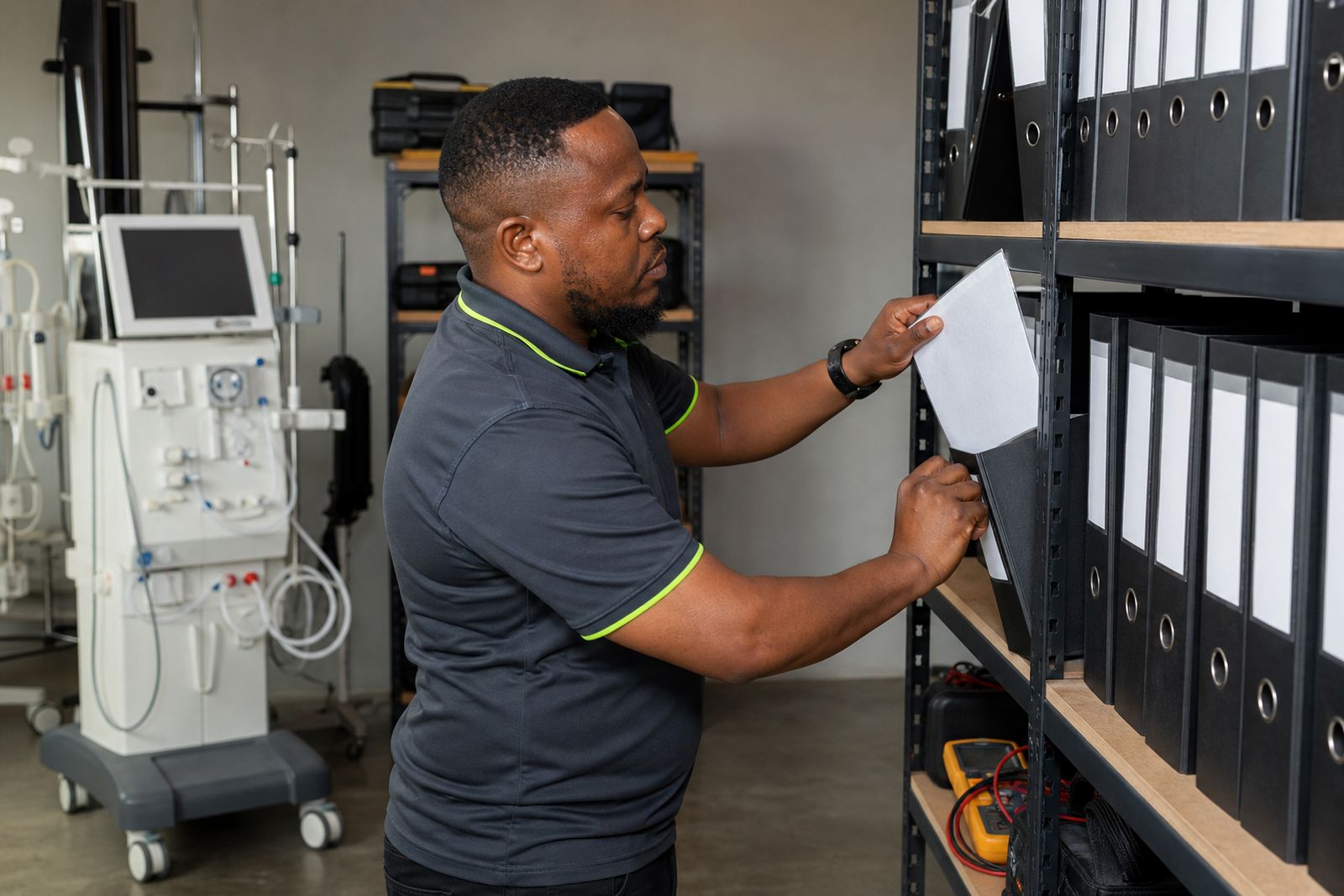
Under a contract, service records are kept in a consistent format so the unit can show what was done and when. This includes maintenance history for machines and chairs, notes on parts replaced, safety checks completed and any technical recommendations for follow-up. It sounds simple but having the file in order saves time for the unit lead and reduces last minute chasing before inspections.
Support during breakdowns and workshop repairs
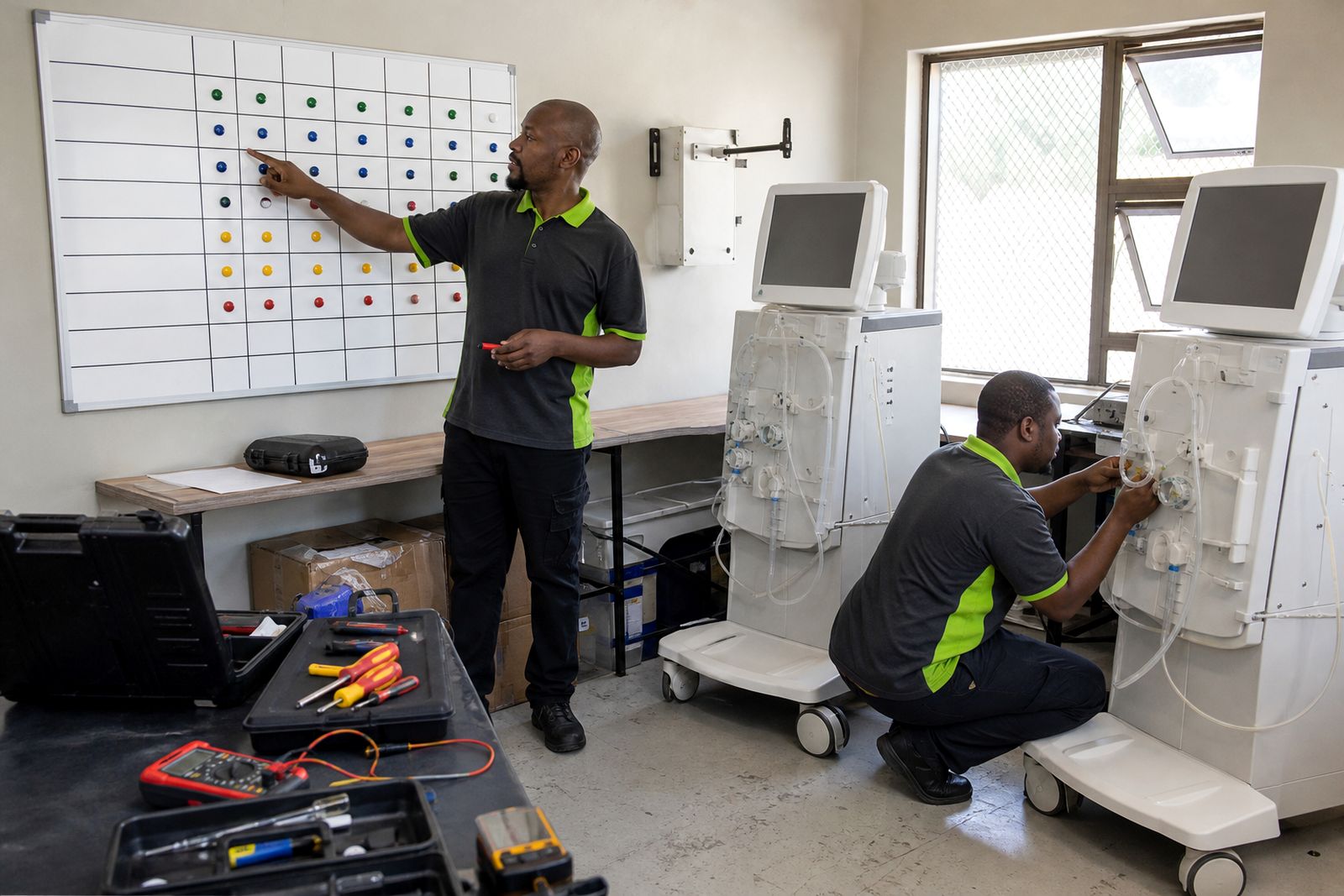
Even with planned maintenance, equipment can still fail between scheduled visits. A service contract helps define how breakdown work is handled, when a technician attends on site and when a machine should come into the workshop for deeper repair. This keeps the process clearer for unit staff and avoids confusion about the next step.
Where a machine must be removed, a loan unit can help the facility maintain capacity while technical work is completed. Availability and suitability depend on the unit's requirements and the machine type under service. The aim is to support continuity at the facility while keeping repair work properly controlled in workshop conditions.
If you need help selecting the right arrangement, use the enquiry form on our contact page and tell us about your unit size, equipment mix and current maintenance setup.
What our Dialysis Machine Servicing customers say
Verified Google reviews
Questions we get asked
Do you offer service contracts for home dialysis machines?
No. We work only for registered renal units and other registered facilities. We do not service home-use equipment.
Can a contract include treatment chairs as well as haemodialysis machines?
Yes. A contract can include technical support for treatment chairs together with planned maintenance, repairs and record keeping for haemodialysis equipment.
Do your contracts include clinical advice or treatment guidance?
No. We provide technical servicing, calibration, safety testing and repairs only. Clinical decisions always remain with the renal unit.
Book a service or report a fault
Send a note through our contact form with your unit, the equipment involved and what you need, and a technician will contact you.
Open the contact form