Service records and audits
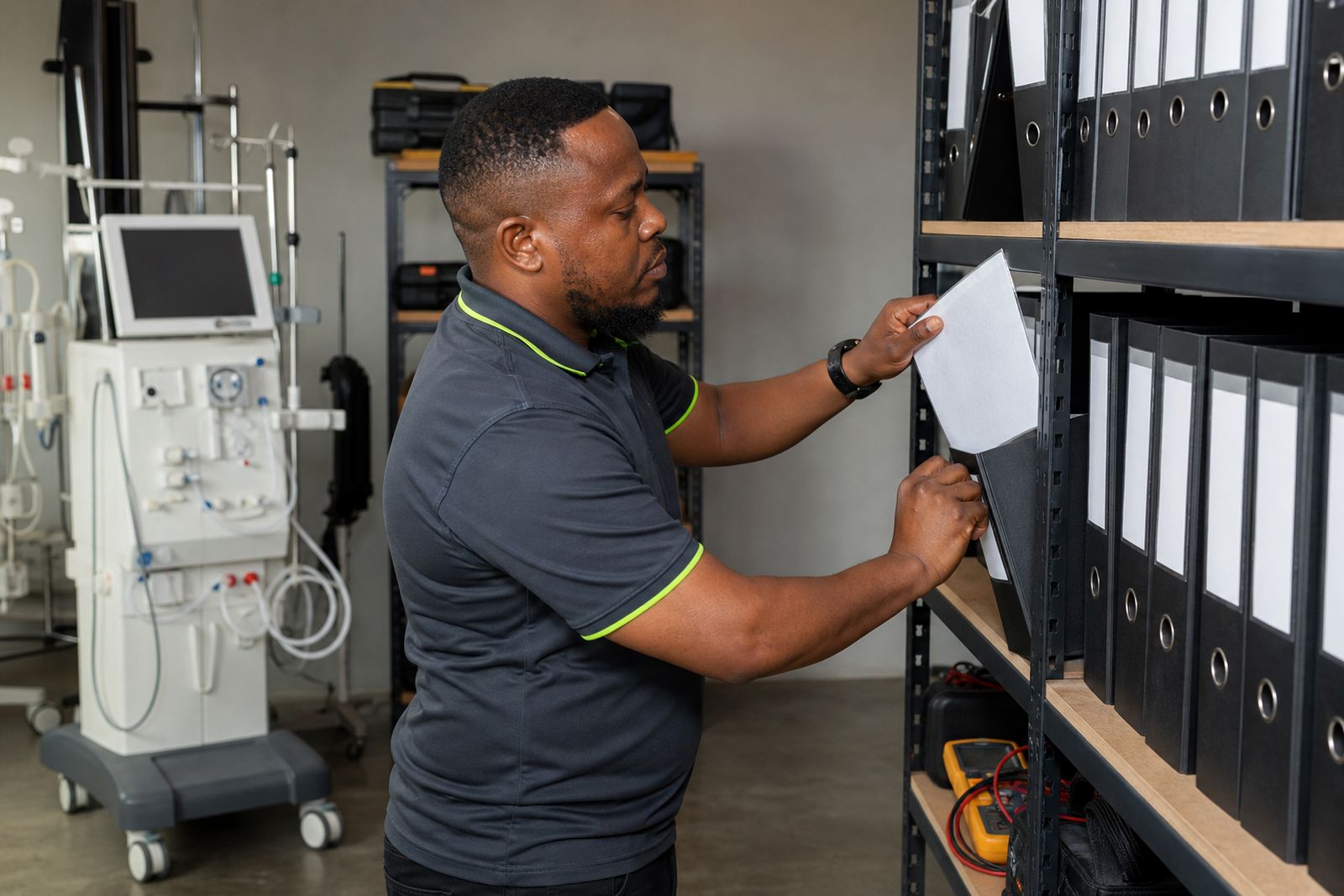
Good service work needs clear paperwork behind it. We keep maintenance records for haemodialysis machines and treatment chairs so registered renal units can show what was done, when it was done and what still needs attention.
Why service records matter in a renal unit
In a haemodialysis environment, service records are not just a filing exercise. They help the unit track the technical condition of each machine and chair, support internal quality checks and make external inspections easier to manage. When a file is complete, the unit can quickly see the service history, previous faults, parts replaced, calibration work done and any follow-up recommendations.
Our records are prepared for registered renal units that need a practical, traceable maintenance trail. We work on haemodialysis machines and treatment chairs only, and we keep the technical side separate from clinical decision-making. Clinical settings, treatment prescriptions and patient care decisions remain with the unit team.
For units in Germiston and across Gauteng, proper documentation also helps when equipment moves between stations, when a loan unit is placed, or when workshop repairs have to be matched back to the correct asset. A clean file saves time for the unit manager, the operator and the person handling audit prep.
What is included in the record file
Each service record is built around the individual asset and the work carried out on it. We record enough detail for technical follow-up without filling the file with unnecessary paperwork. If a machine is serviced on site, repaired in the workshop, calibrated, electrically safety tested or swapped for a loan unit, that activity should be reflected in the record set.
- Equipment identification, including model, serial number and unit asset reference where available
- Service date and type of visit, such as planned maintenance, breakdown call-out, calibration or chair repair
- Fault reported by the unit and findings confirmed by the technician
- Work completed, adjustments made and replacement parts fitted where applicable
- Calibration and electrical safety test results where that work forms part of the visit
- Outstanding items, follow-up actions and recommendations for the unit to schedule
- Loan unit placement and return notes if a temporary replacement was supplied
Where a unit already has its own asset register or file format, we can align our paperwork to help with internal record keeping. That makes handover simpler and reduces extra admin on the client side.
Our process from visit to audit file
The process starts when the registered facility books work through the enquiry form on our contact page. Once the visit or workshop job is confirmed, the technician logs the equipment details against the request so the record trail starts before spanners come out.
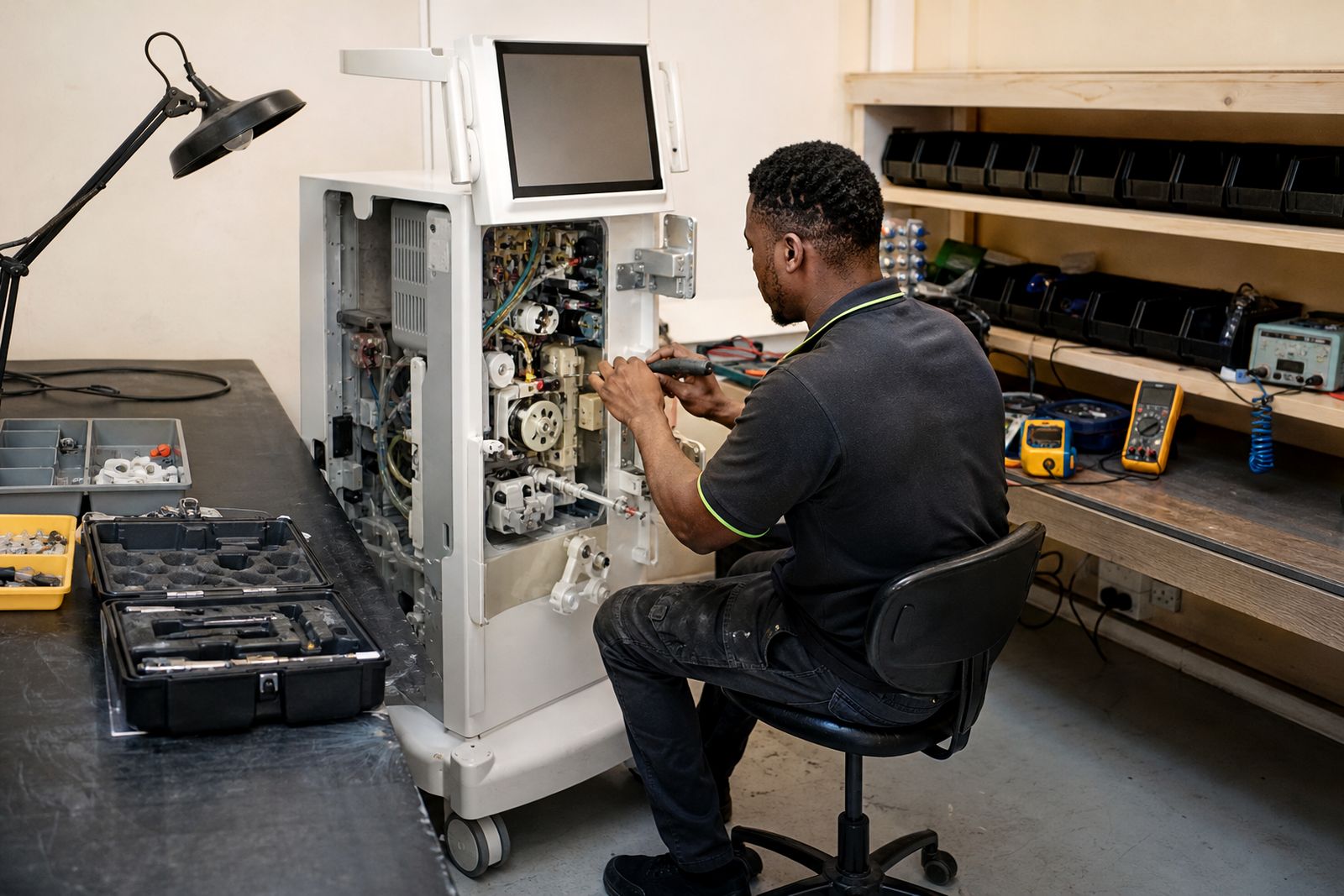
On site, the technician checks the asset identity, confirms the reported problem or maintenance requirement, then carries out the agreed technical work. Measurements, test outcomes and observations are written into the job record while the work is being done, not from memory afterwards. That matters when several machines are serviced in one day.
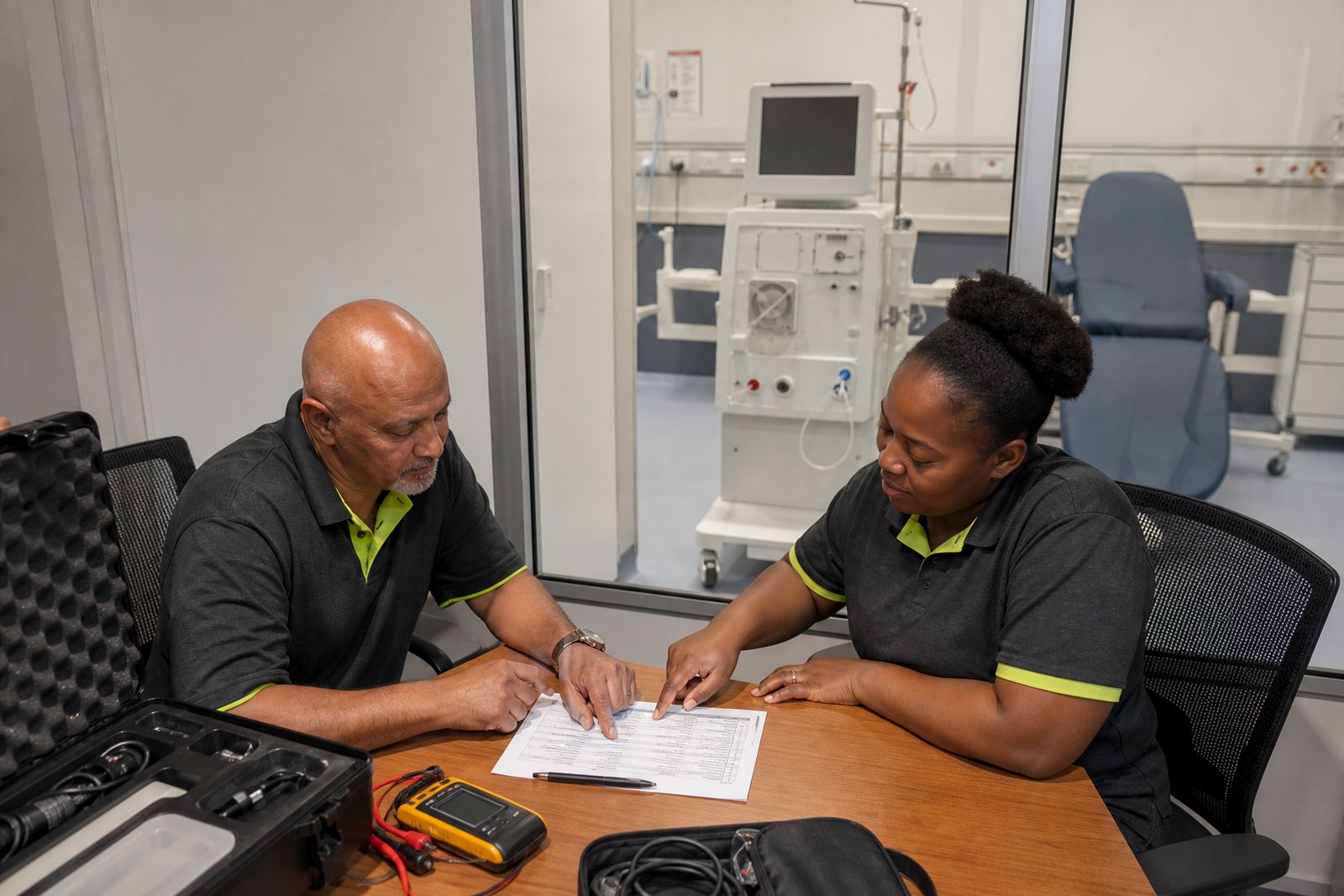
After the technical work, the paperwork is reviewed and finalised. If further action is needed, such as a return visit, workshop repair, parts sourcing or a chair component replacement, that note is added clearly so the unit can plan ahead. The service record is then available for the unit's maintenance file and audit pack.
- Booking and asset identification
- On-site or workshop technical work
- Recording of findings, tests and parts used
- Review of pending actions
- Issue of service documentation for filing and audit support
If the unit has multiple machines due in the same period, we can structure the paperwork per asset and per visit, which helps a lot when an auditor asks for one specific file not the whole cupboard.
What the unit should prepare before an inspection or file review
Good records work best when the unit also keeps its side in order. Before a scheduled service review or an external audit, it helps to gather the latest equipment list, confirm which machines are active, and note any items that are out of service or in storage. If serial numbers on the floor do not match the register, sorting that out early prevents confusion later.
The unit should also keep previous service reports together, especially if equipment has been moved between rooms or sites. For treatment chairs, note any recurring actuator, handset or upholstery issues so there is a full picture of repeat faults. Small admin gaps can turn into long delays on audit day, so a bit of prep goes a long way.
- Current asset list for machines and chairs
- Correct serial numbers and internal asset references
- Previous service reports and open technical issues
- Access to equipment that needs file verification
- A contact person who can confirm unit records during the visit
We do not work for home users and we do not advise on treatment or patient matters. The unit should therefore route only technical equipment questions to us, while clinical queries stay with its own clinical team.
How pricing is worked out
Pricing for service records and audit support is usually linked to the technical work behind the paperwork, rather than charged as a stand-alone stack of forms. In general terms, the cost depends on the type of visit, how many assets are involved, whether the work is on site or in the workshop, and whether calibration, electrical safety testing or loan-unit administration forms part of the job.
A single breakdown report will not be costed the same way as a planned maintenance programme covering several machines and chairs. If file reconstruction is needed because earlier records are incomplete, that extra admin time may also affect the scope. We keep this practical and discuss the likely record requirements upfront so there are fewer surprises later.
For units outside the East Rand or elsewhere in Gauteng, travel and scheduling can also form part of the overall service costing. Where work is requested further afield, the file structure remains the same, but the job scope may need more planning.
Aftercare and ongoing record support
Once the service paperwork has been issued, the value comes from keeping it current. We recommend filing each report against the individual machine or chair, then cross-referencing it in the unit maintenance register. That way the record is easy to find during internal reviews, supplier follow-ups or formal inspections.
If a later fault relates to previous work, the technician can refer back to the earlier record and compare symptoms, tests and parts history. This improves continuity and helps avoid repeating the same checks again and again. For contract clients, ongoing record control also supports planned maintenance scheduling and gives the unit a clearer view of upcoming technical work.
Where a machine was replaced temporarily with a loan unit, both the original asset and the temporary unit should be tracked properly in the file. We can help the unit keep that trail straight, especially when busy sessions make paperwork easy to misplace. Clean records make life easier for everyone in the room.
What our Dialysis Machine Servicing customers say
Verified Google reviews
Questions we get asked
Can you help if our files are incomplete?
Yes, we can review the current paperwork and add clear records for new service work going forward. Where older information is missing, we will note the gaps rather than guess details.
Do you provide records for treatment chairs as well as dialysis machines?
Yes. We keep technical records for treatment chair repairs and maintenance in the same practical format used for haemodialysis equipment.
Can you advise our staff on clinical settings during an audit?
No. We handle technical servicing, calibration, repairs and equipment records only. Clinical decisions stay with the registered unit and its clinical team.
Also worth a look
Book a service or report a fault
Send a note through our contact form with your unit, the equipment involved and what you need, and a technician will contact you.
Open the contact form