Planned-maintenance contracts
A planned-maintenance contract gives each machine in your unit a clear service calendar instead of waiting for a fault to stop treatment. We support registered renal units from Germiston across Gauteng, with field technicians available further afield on request.
What a planned-maintenance contract covers
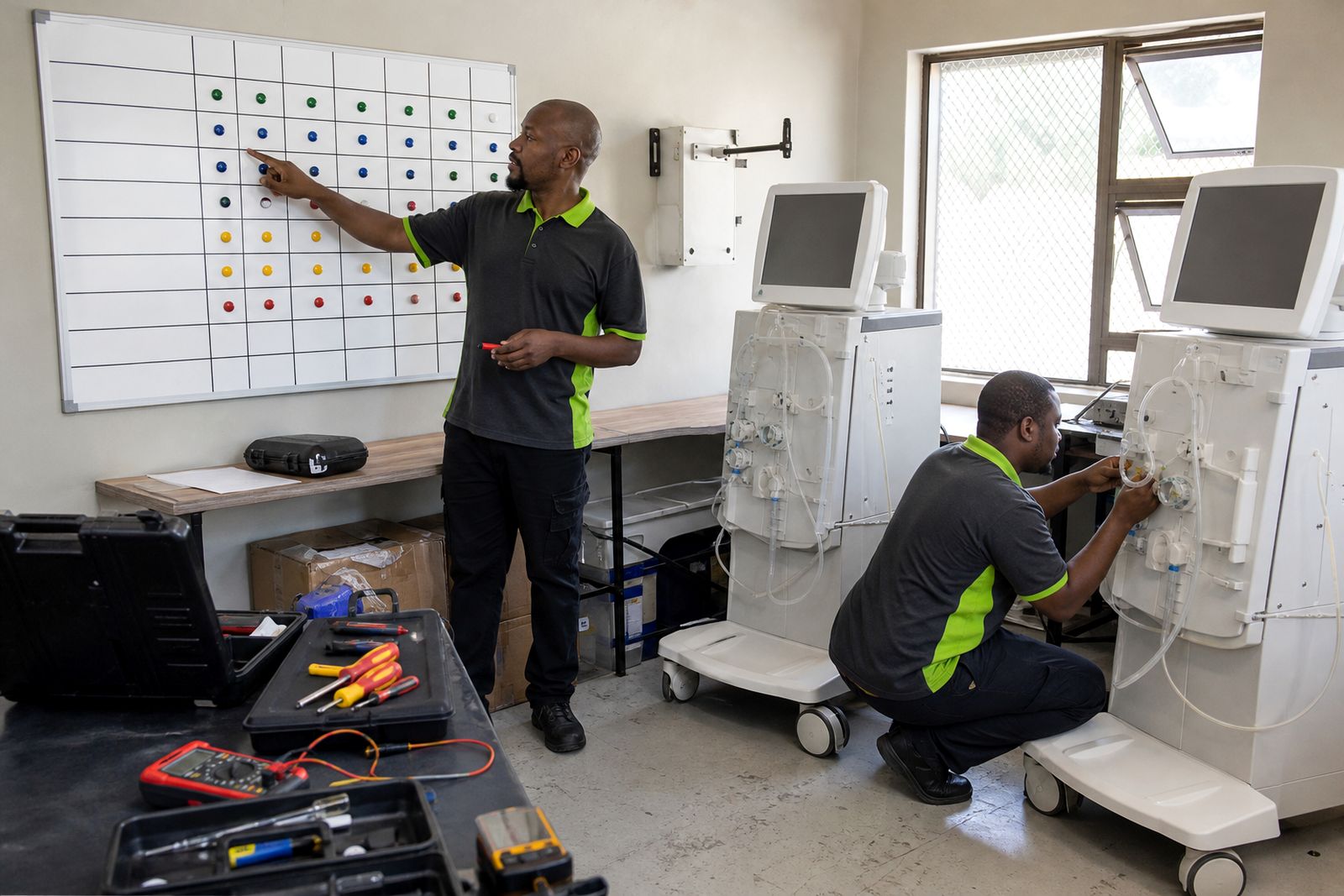
Our planned-maintenance contracts are built for registered renal units that need a repeatable technical programme for haemodialysis machines and treatment chairs. The aim is simple: keep equipment on a service calendar, catch wear before it becomes a breakdown, and keep records in order for internal checks and external audits. We work on the technical side only. Clinical settings, patient care decisions and treatment protocols always remain with the unit.
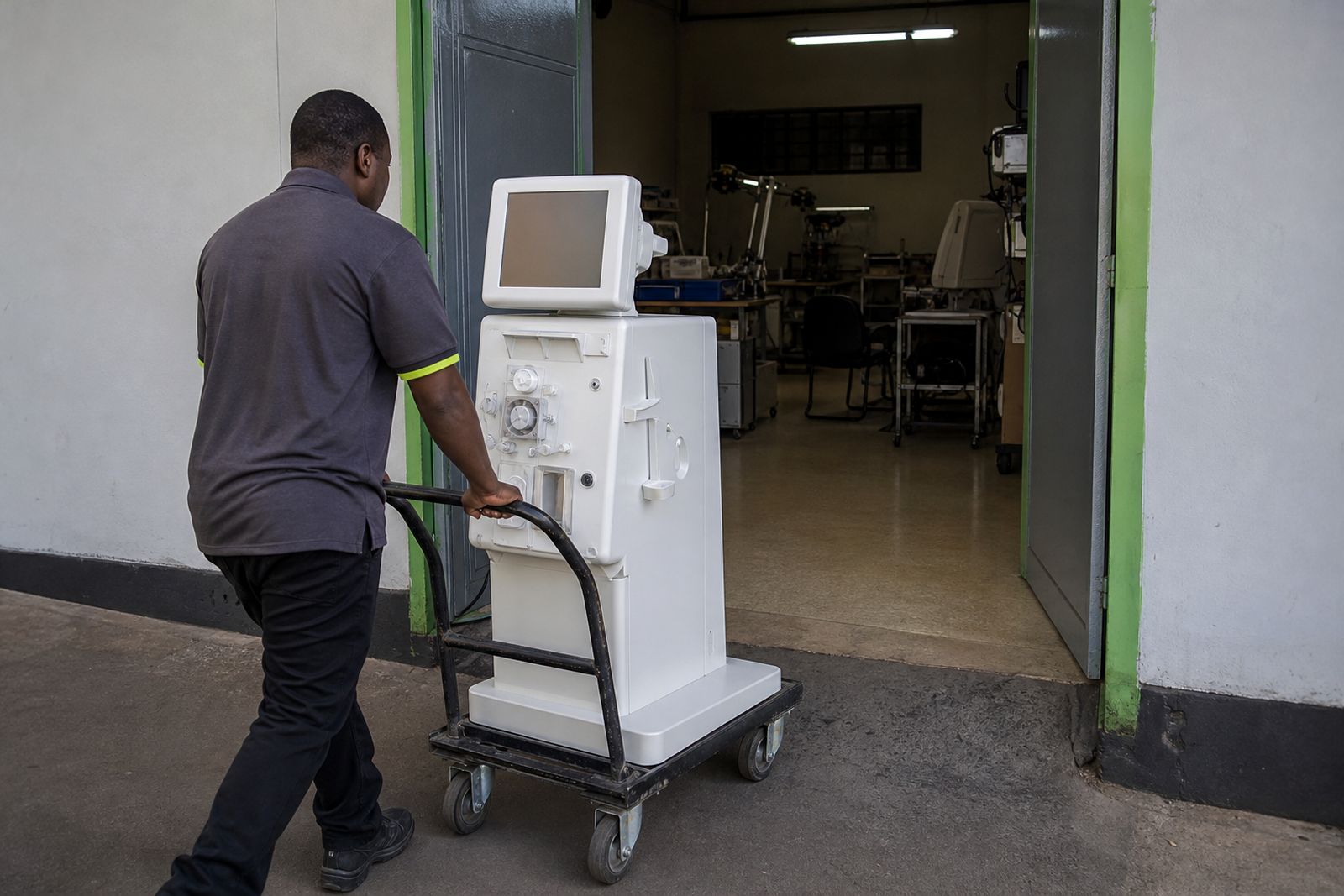
A contract can cover all machines in a unit or an agreed group of machines and chairs. It includes scheduled servicing, calibration checks where applicable, electrical safety testing, fault reporting, and service documentation after each visit. If a machine must come to the workshop, loan unit support can be arranged subject to availability and the unit's operational needs.
- Scheduled preventive service visits for haemodialysis machines
- Inspection and repair of treatment chairs where included in scope
- Calibration and verification checks relevant to the equipment
- Electrical safety testing and recorded results
- Replacement of normal service wear items as agreed in the contract scope
- Service reports, asset history and audit-ready records
How the service calendar is set up
We start by listing the equipment that will fall under the contract and confirming where each unit is located. For a smaller renal unit this may be straightforward. For a hospital-based unit or group of satellite rooms it often means mapping machine locations, treatment areas, water-side connections, chair positions and the best times for access. This first planning step matters because dialysis units cannot simply stop for a full day while technical work carries on around patients.
Service intervals are then assigned per machine according to manufacturer guidance, usage pattern, condition, previous service history and the unit's operational schedule. Where a unit runs long sessions, night shifts or heavy patient loads, the service calendar may need tighter coordination. Gauteng sites with high utilisation often prefer planned dates booked well ahead so theatre cases, transport and nursing rosters are not affected.
- Asset list confirmed by serial number or unit identifier
- Contract scope agreed for machines, chairs and related checks
- Service intervals assigned to each machine
- Visit dates planned around treatment activity
- Workshop support and loan unit needs discussed in advance
Step-by-step during a contract visit
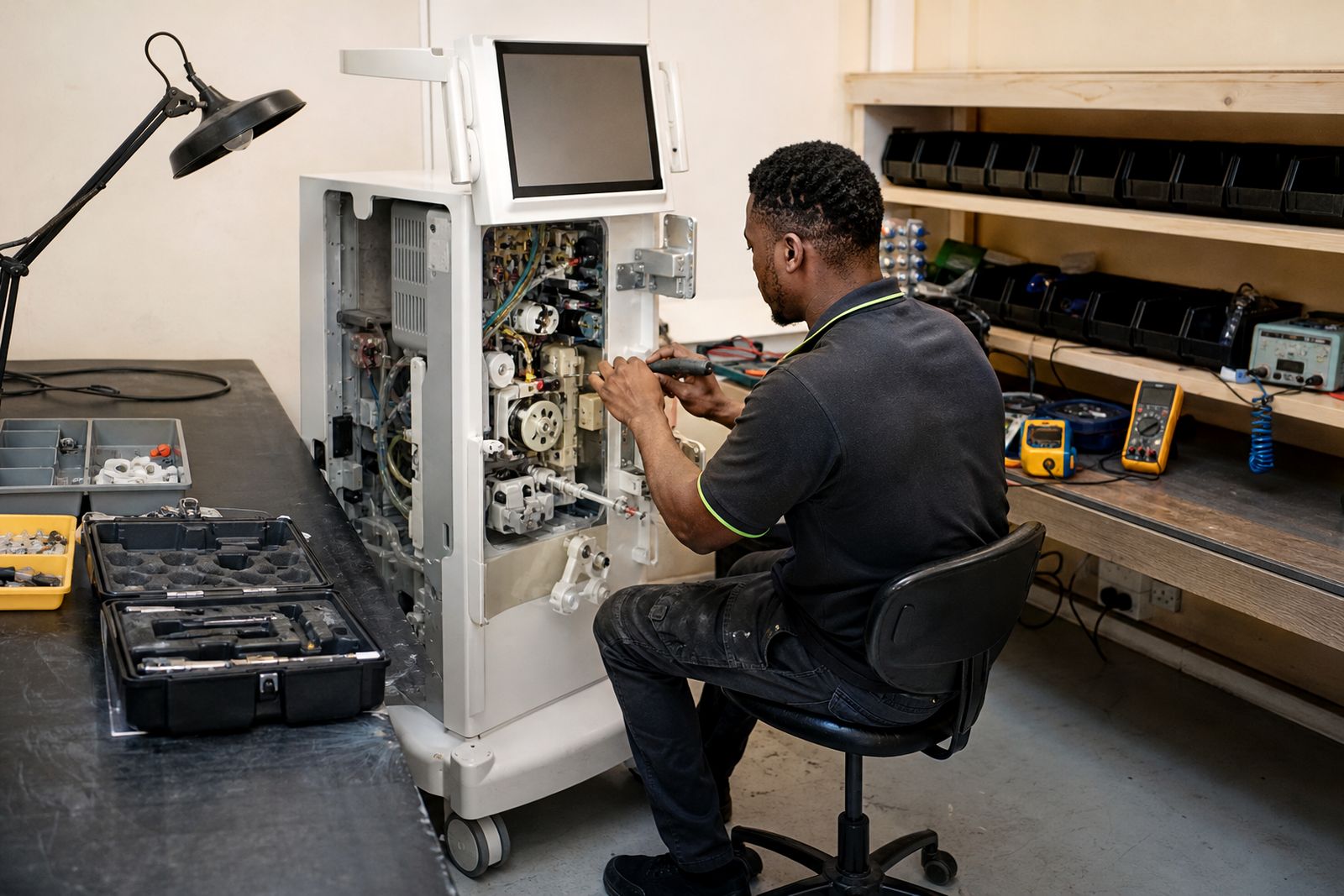
On the day of a planned visit, the technician checks in with the unit contact and confirms which machines are available for service. Each machine is identified against the service schedule and then taken through the agreed technical procedure. This may include visual inspection, internal condition checks, functional testing, calibration-related checks, alarms, flow-related checks, electrical safety testing and replacement of service items due at that interval.
If an issue is found outside the normal maintenance scope, it is recorded and discussed with the unit. Some faults can be corrected during the visit if parts and time allow. Others need workshop repair or a return visit. When that happens we document the machine status clearly so the unit knows whether the machine can stay in use, should be held back for technical attention, or needs to be swapped out. That distinction is important and we record it plainly, no guessing.
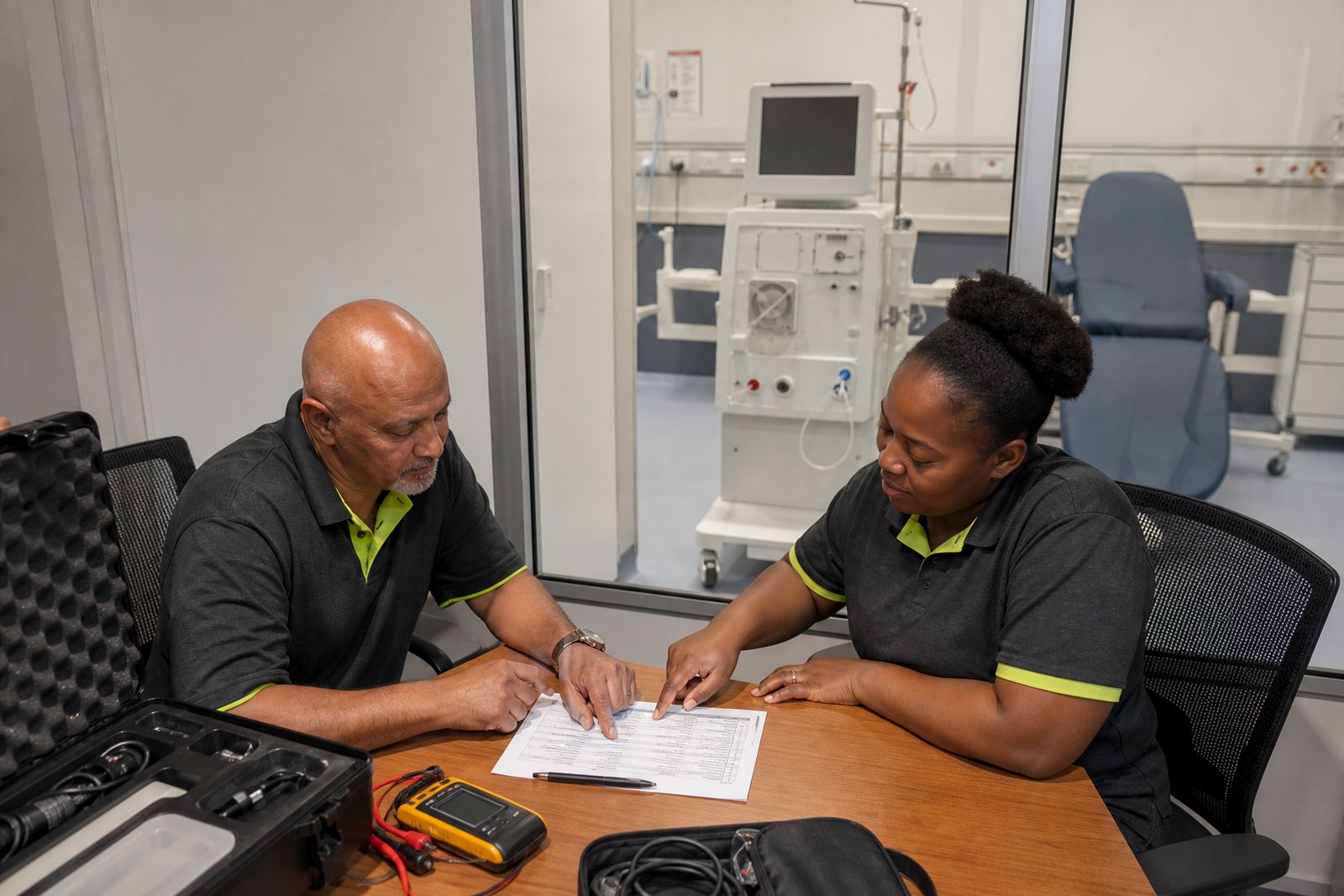
After the technical work, the service technician completes the service record for each item attended to. The unit receives documentation for filing and audit trails, and the next due date is updated on the schedule.
What the unit should prepare before the visit
Good preparation saves time and reduces disruption on the floor. The main requirement is access: access to the machines, space to work safely, and a clear unit contact who can confirm any current faults or operational concerns. If there have been recurring alarms, intermittent chair movement problems, or issues seen during priming and rinse cycles, these should be logged before the visit so the technician can focus quickly on the right checks.
Where machines are connected in a tight treatment area, please allow enough space for covers to be opened and test equipment to be used safely. In some units, especially older rooms, power outlets and chair positions can be cramped so a little preparation goes a long way.
- Provide the current equipment list and any internal asset numbers
- Mark machines with recent faults, unusual alarms or performance concerns
- Confirm a contact person on the day for access and sign-off
- Keep the work area clear and ensure safe power access
- Advise us in advance if a loan unit may be needed
- Share any site rules for parking, loading zones or after-hours entry
How contract pricing is worked out
Contract pricing is based on the scope of equipment covered and the amount of scheduled technical work required over the contract term. In general, the main factors are the number of machines, whether treatment chairs are included, the service interval, the condition and age profile of the equipment, travel requirements from Germiston to the unit, and whether the contract includes workshop handling, loan unit planning and expanded record-keeping.
Another factor is whether the unit wants a straightforward scheduled maintenance agreement or a broader contract that also sets out how non-routine repairs, call-outs and replacement parts will be handled. Units outside the East Rand or wider Gauteng footprint can still be supported on request, but travel and scheduling will affect the quote structure. We explain the scope clearly so the unit knows what falls inside planned maintenance and what will be treated as separate repair work.
Aftercare, records and ongoing support
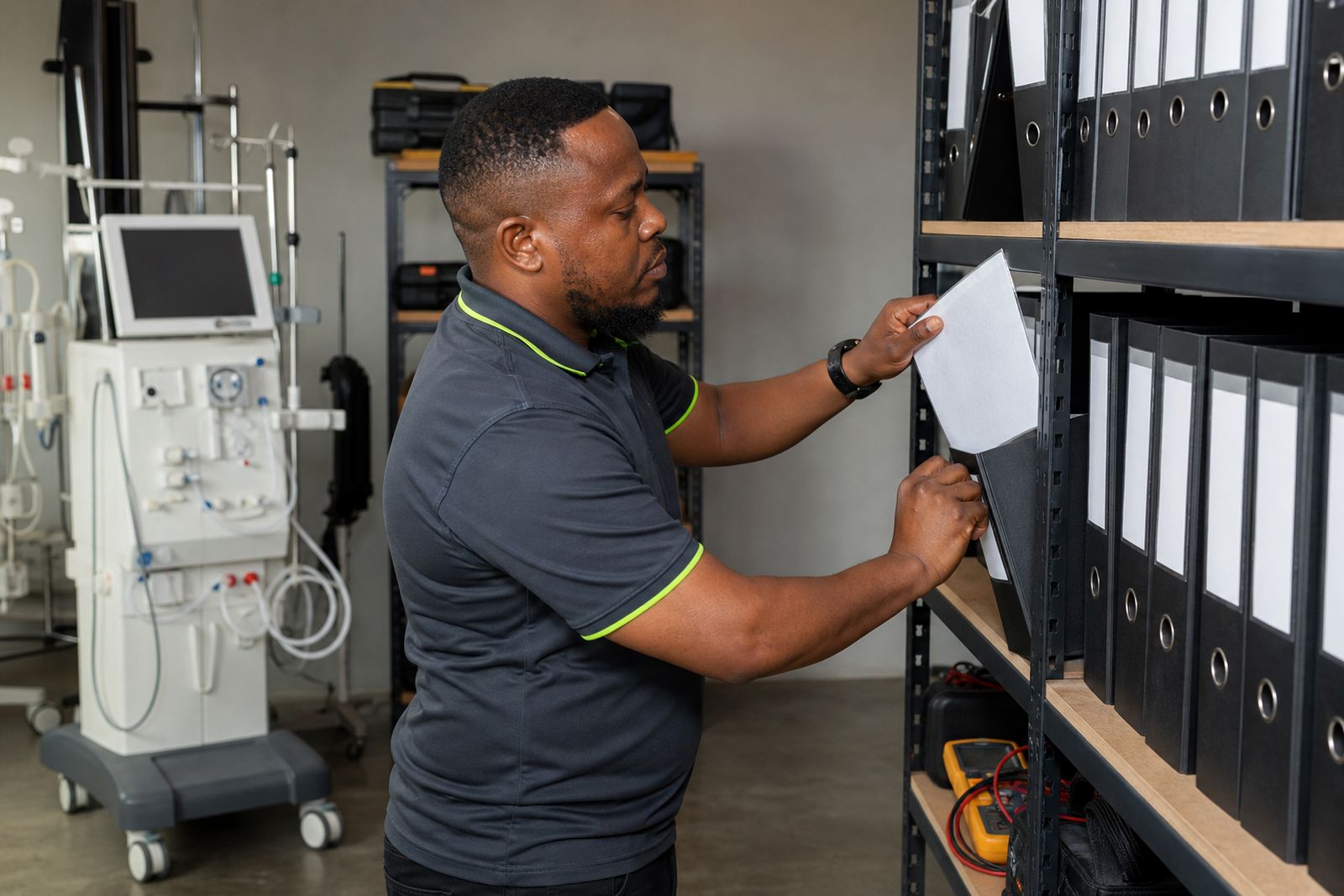
Planned maintenance should not end when the technician leaves site. After each visit, the service history is updated so the unit has a traceable record of what was done, what was found and what is due next. This helps with internal quality checks, equipment planning and audit preparation. It also makes recurring problems easier to track because the technical notes stay attached to the same asset record over time.
If a machine later develops a fault between planned visits, the contract history gives a useful baseline for fault finding. We can see the last maintenance actions, any advisory notes, and whether a similar issue had started to show earlier. Where a machine must go to the workshop, we coordinate the paperwork and discuss loan unit arrangements if required. We support registered facilities only, and we do not provide home-user support or clinical advice.
For units managing power cut exposure, generator changeover and day-to-day wear from high patient throughput, a planned contract keeps the technical side organised and easier to manage. It is one less thing for the nursing team to chase when the unit is already busy.
What our Dialysis Machine Servicing customers say
Verified Google reviews
Questions we get asked
Can one contract cover both machines and treatment chairs?
Yes. The contract scope can include haemodialysis machines, treatment chairs, or both, provided the covered equipment is listed clearly at the start.
Do you work directly with home dialysis users?
No. We work only for registered renal units and other registered facilities. We do not provide technical support for home users.
What happens if a machine cannot be completed on site?
If workshop repair is needed, we record the machine status, arrange removal where applicable, and discuss loan unit support if the unit requires it and availability allows.
Also worth a look
Book a service or report a fault
Send a note through our contact form with your unit, the equipment involved and what you need, and a technician will contact you.
Open the contact form