About Haemodialysis Technical Services
Haemodialysis Technical Services supports registered renal units with technical servicing, calibration and repair work on haemodialysis machines and treatment chairs. From our Germiston base, the workshop and field team handle planned maintenance, breakdowns, loan units and service records for audits.
What We Do
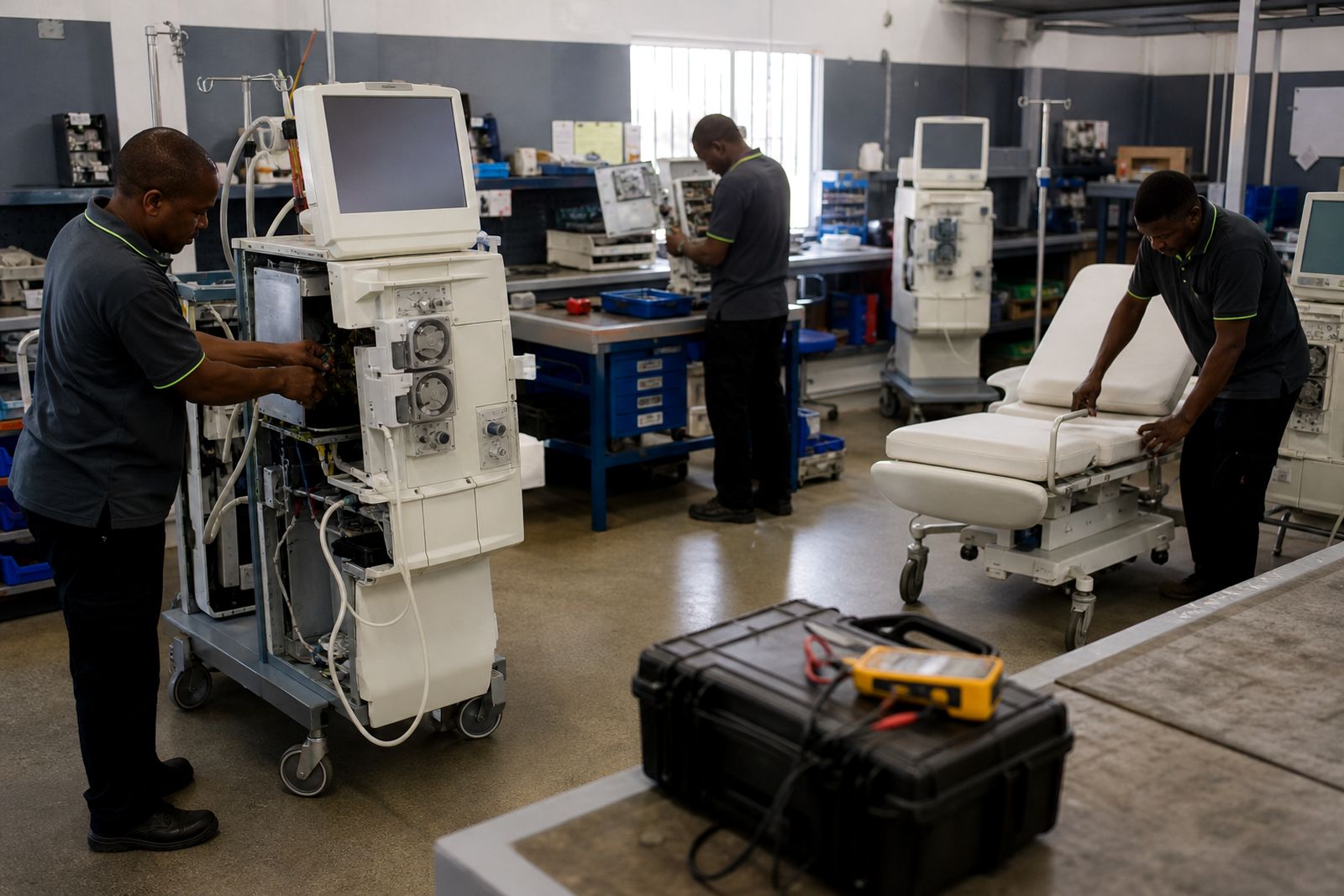
We are biomedical technicians focused on the technical side of haemodialysis equipment support. Our work covers routine servicing, planned preventive maintenance, calibration, electrical safety testing, fault finding, breakdown repair and treatment chair repairs for registered renal units. We also provide loan units while a machine is in the workshop, subject to availability and the unit's technical requirements.
Our scope is practical and controlled. We work on the equipment so that unit staff have clear service records and a machine can be assessed, repaired and returned with the required technical documentation. We do not work for home users, and we do not advise on treatment settings or patient care. Clinical decisions remain with the unit at all times, as they should.
- Servicing of haemodialysis machines for registered facilities
- Calibration and electrical safety testing
- Workshop repairs and on-site fault finding
- Treatment chair assessment and repair
- Loan units during workshop repair periods
- Service records for maintenance files and audits
Who We Work With
Our clients are registered renal units that need dependable technical support and proper service documentation. Some sites call us in for scheduled maintenance, while others need help with a machine that has developed a fault during the working day or after a shutdown. We support units in Germiston and across Gauteng, and we can assist further afield on request where the job needs biomedical attention from a team familiar with dialysis equipment.
Because this equipment operates in a clinical environment, the way we work matters. We coordinate with unit management and technical contacts, record the job correctly and keep the technical scope clear. That means no shortcuts, no guesswork and no crossing into clinical instruction. If a unit needs operational clarification after a repair, we explain the technical findings and the service work completed, then the unit applies its own internal clinical process.
How the Team Works
Our workshop and field team work together so that jobs move in a sensible order from enquiry to completion. The service coordinator logs the request, confirms the unit details and gathers the basic fault information. The workshop lead reviews whether the machine should be assessed on site first or brought in for bench work, and the field technician handles site access and first-line checks where needed.
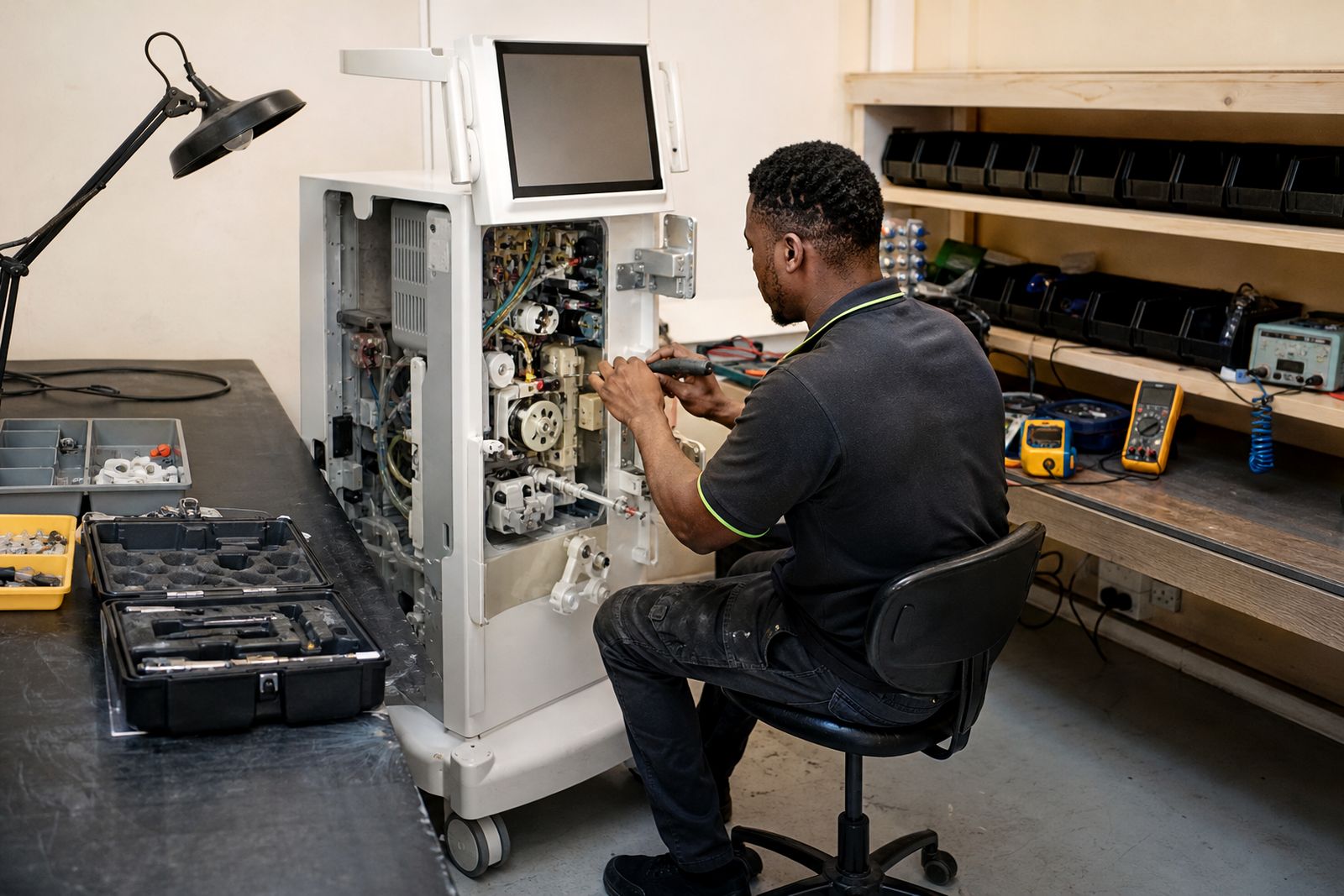
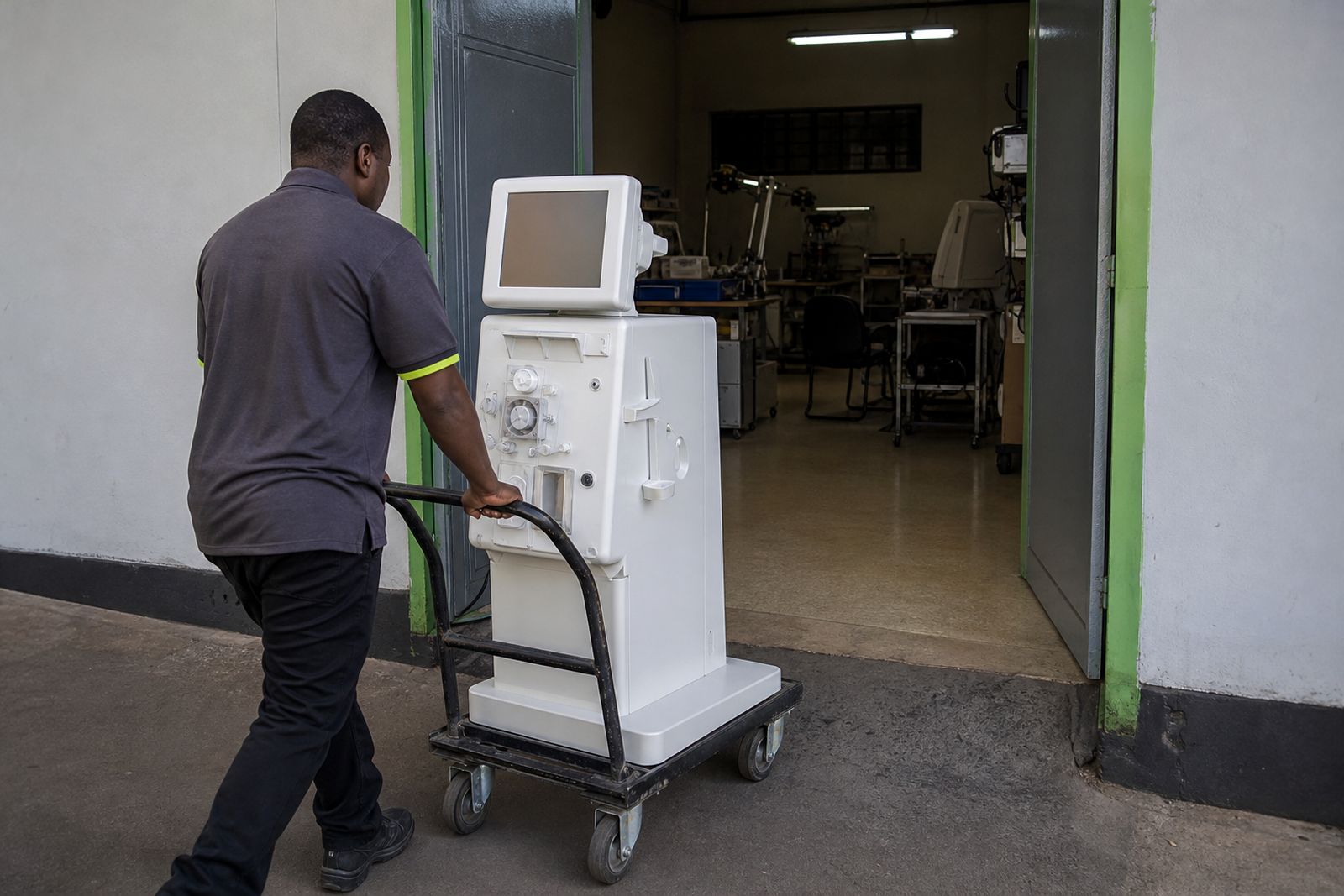
In the workshop, the technician inspects the machine or chair, tests the reported fault and checks related functions before carrying out the repair or service work. If a loan unit is needed, that is arranged alongside the workshop plan so the renal unit can manage its floor space and technical handover properly. It keeps disruption lower for the unit and helps avoid confusion later.
- Service coordinator for enquiries, booking and records
- Field technician for site visits and unit liaison
- Workshop technician for bench diagnosis, repair and testing
- Workshop lead for job review and quality checks
- Administrative support for service files and audit records
Our Germiston Base
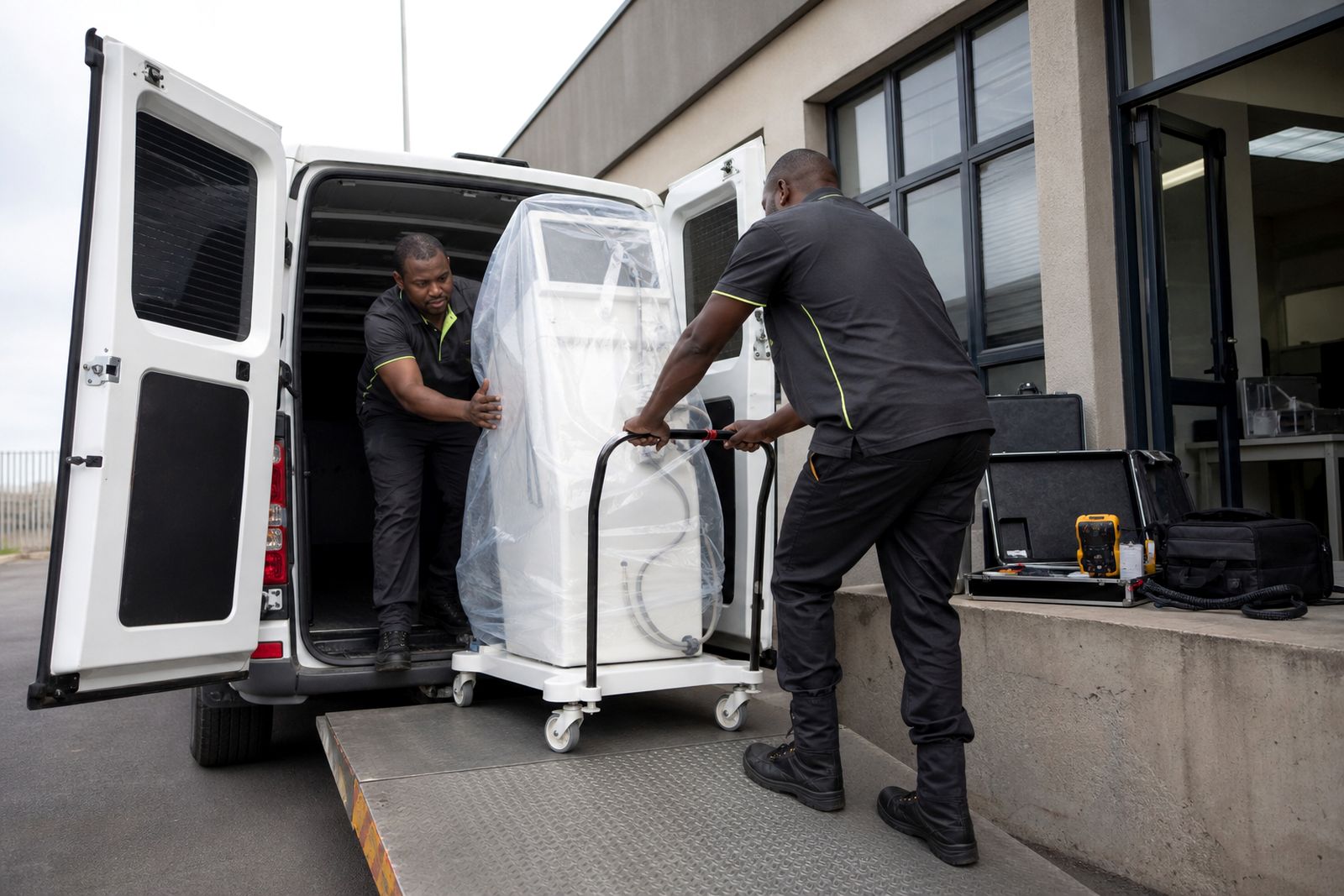
Our base in Germiston gives us practical access to the East Rand and the wider Gauteng road network, which helps when equipment needs to move between a renal unit and the workshop. The premises are set up for technical inspection, servicing and repair work on haemodialysis machines and treatment chairs, with the space needed to receive units, assess them methodically and keep service paperwork in order.
Workshop jobs are handled in a controlled environment where electrical safety testing, calibration checks and post-repair inspection can be completed before a unit is released. That matters when a machine has had an intermittent fault or when a chair needs mechanical and electrical checks after repair. Instead of trying to force every issue to be solved at the unit, we use the workshop where proper access and test conditions make the result clearer.
How a Job Moves From Enquiry to Aftercare
Most jobs start through the enquiry form on our contact page. Once the enquiry is received, we confirm the facility details, the equipment type and the reported issue or maintenance need. If the job is a planned service, we arrange the visit or workshop intake around the unit's operating requirements. If it is a fault call, we first determine whether on-site fault finding is the sensible step or whether workshop assessment will be needed.
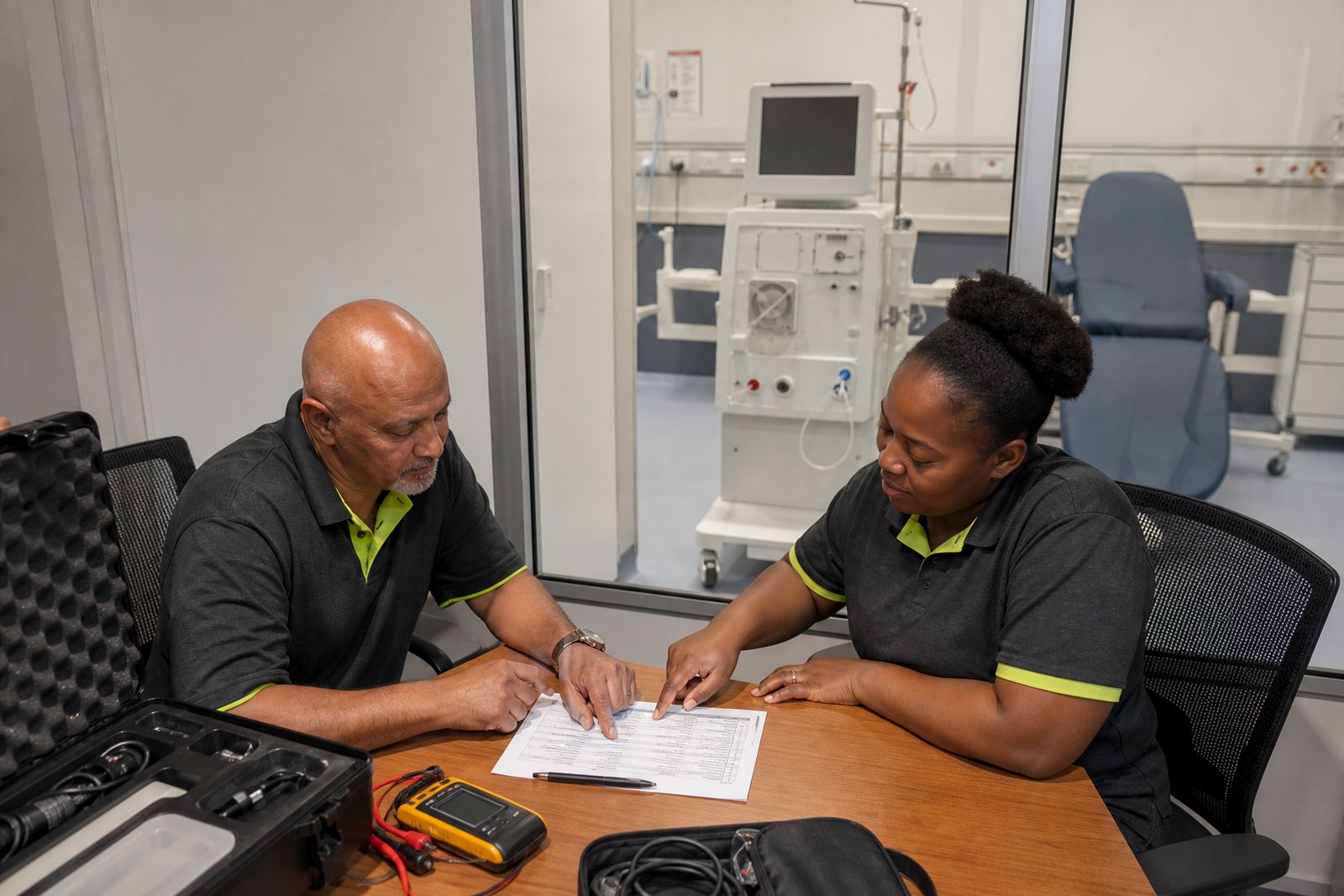
After inspection, the technician carries out the agreed technical work, records the service actions and completes the required testing relevant to the job. Before the equipment goes back into use, we make sure the file reflects what was done and what was found. Aftercare is straightforward: if the unit has technical questions related to the work completed, we respond with the service record in view so there is a clear reference point and not a trail of mixed messages.
- Enquiry received through the contact page
- Unit and equipment details confirmed
- Site visit or workshop intake arranged
- Inspection, servicing or repair completed
- Testing and technical checks recorded
- Service records issued for the facility file and audits
A Practical Service Approach
Renal units need technical support that is careful, traceable and realistic about daily operating pressure. Machines and chairs are used repeatedly through the day, and even a small technical issue can affect scheduling, space and staff planning. Our approach is to keep the service process orderly, document the work properly and return equipment only once the technical checks linked to the job are complete.
We also understand the day-to-day conditions units work under in Gauteng. Power interruptions, building electrical issues and transport timing can all complicate service planning, so we work in a way that keeps the technical handover clear from the start. The aim is simple: give registered renal units a dependable technical partner for servicing and repairs, with records that stand up when the file is opened later and someone needs to see exactly what was done.
Questions we get asked
Do you work with individual patients or home users?
No. We work only for registered renal units and other registered facilities, not for home users or private individuals.
Can you provide clinical advice about dialysis treatment?
No. We handle the technical servicing, calibration and repair of equipment. Clinical decisions and treatment guidance remain with the unit.
How do we request service or ask about a maintenance contract?
Please use the enquiry form on our contact page with your facility details and the type of support required, and we will respond from there.
Also worth a look
Book a service or report a fault
Send a note through our contact form with your unit, the equipment involved and what you need, and a technician will contact you.
Open the contact form