On-site fault finding
When a haemodialysis machine or treatment chair develops a fault, having a technician at the unit can help isolate the problem quickly and document the next step properly. We attend registered renal units to assess the equipment on site, carry out technical checks, and advise whether the item can be repaired in place, needs workshop attention, or should be covered by a loan unit arrangement.
What on-site fault finding includes
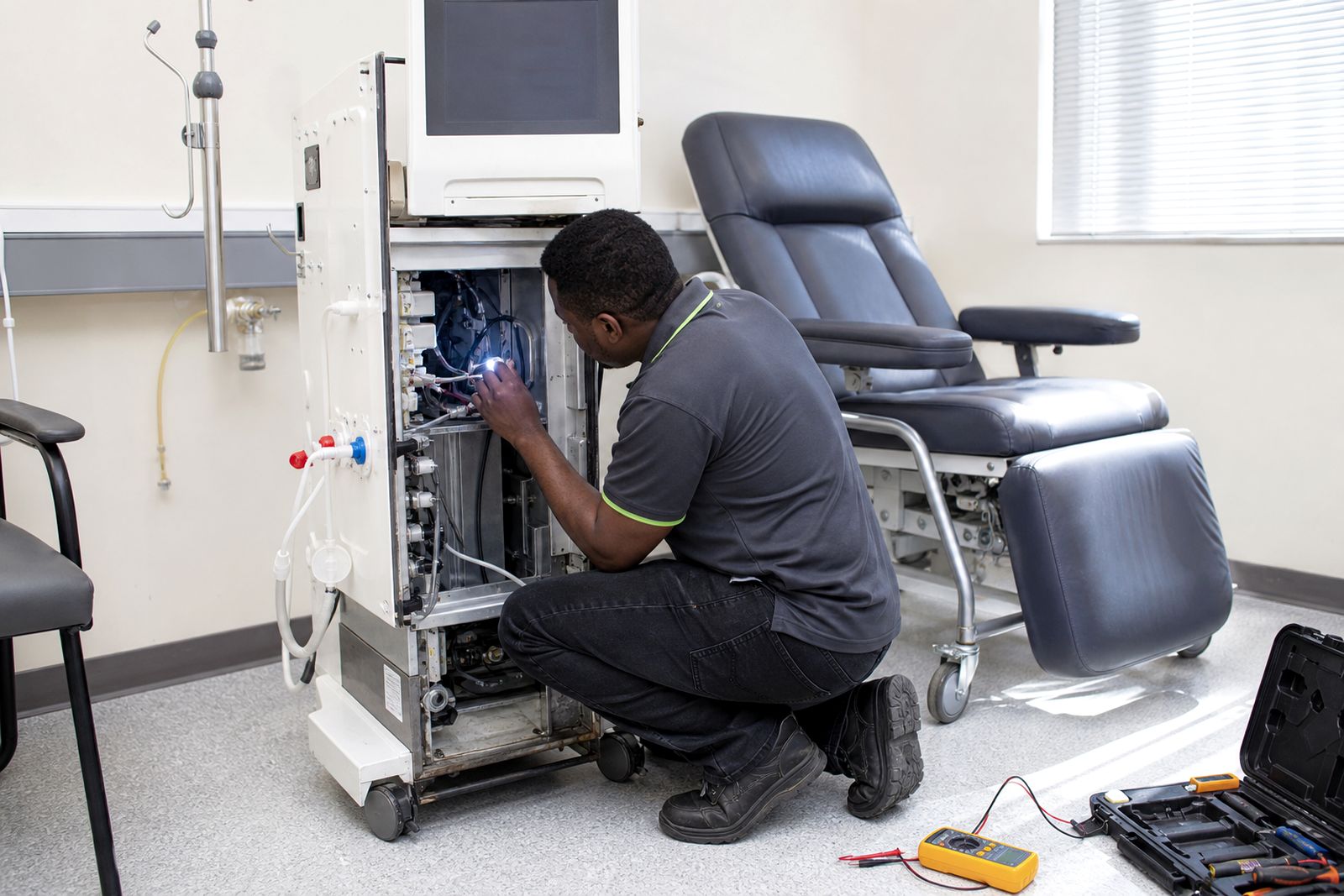
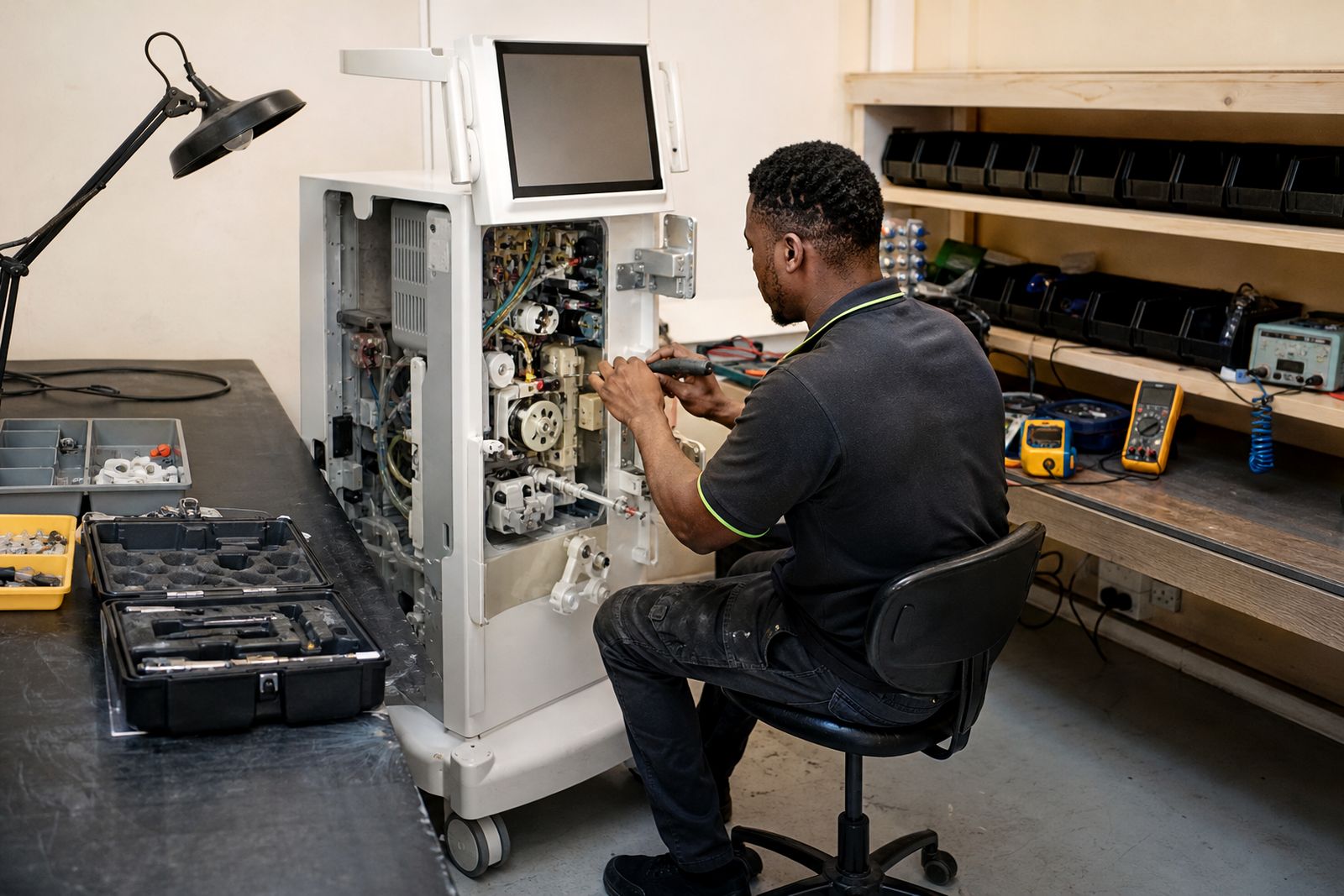
On-site fault finding is a technical visit to your renal unit to identify the cause of a machine stoppage, alarm condition, failed function or chair problem. The visit is focused on diagnosis and safe technical assessment rather than clinical guidance. We work only with registered facilities, and all clinical decisions remain with the unit's nursing and medical team.
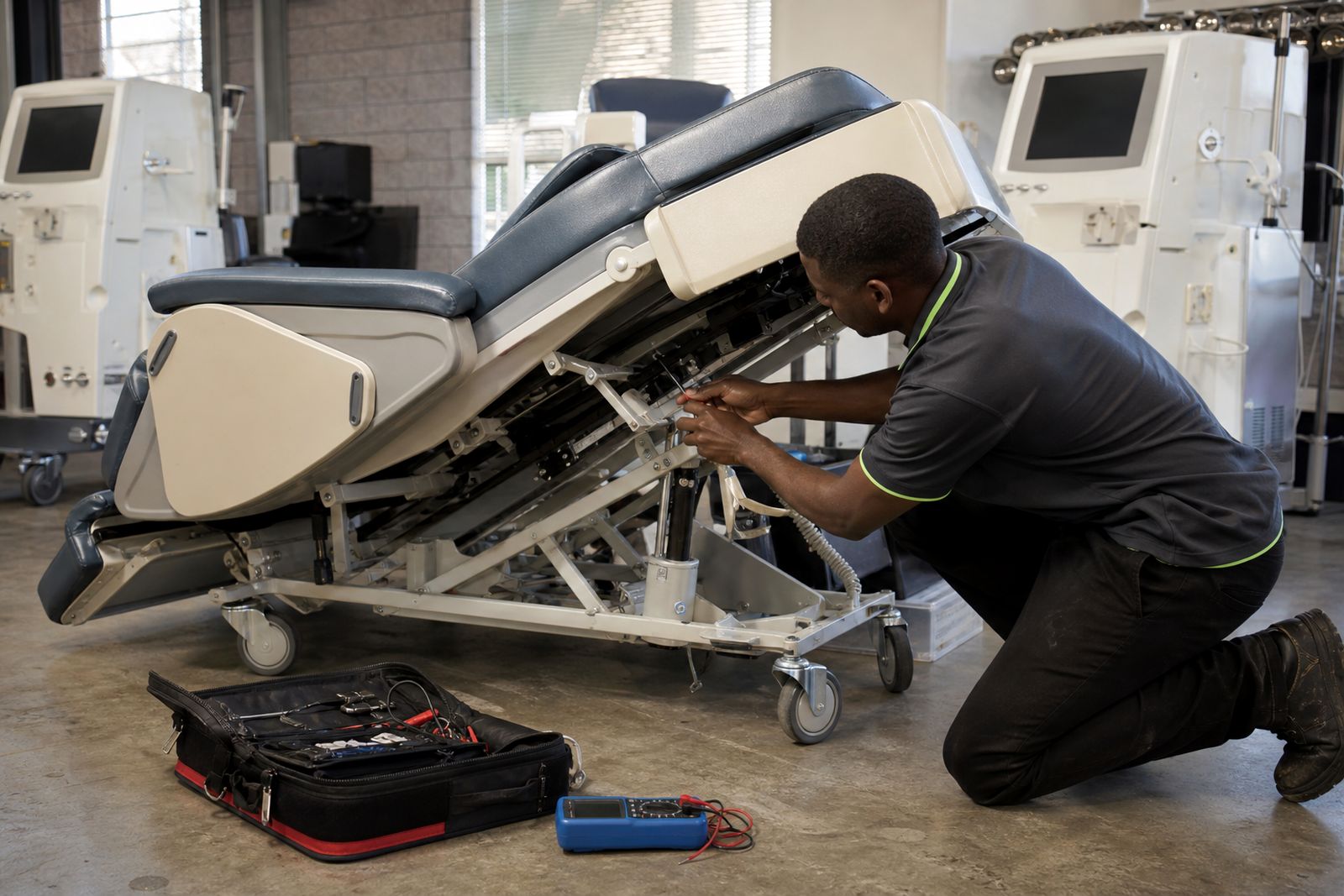
For haemodialysis machines, this may include checking power input, internal alarms, sensor behaviour, flow-related issues, conductivity-related concerns, leakage indications, communication errors, damaged fittings, drain problems and visible wear. For treatment chairs, the technician may assess actuator movement, hand control faults, power supply issues, frame damage, caster or brake faults, and upholstery-related mounting concerns where these affect operation.
- Technical inspection of the reported fault at the unit
- Basic functional testing under unit conditions
- Electrical safety checks where relevant to the fault
- Assessment of whether repair is possible on site or in the workshop
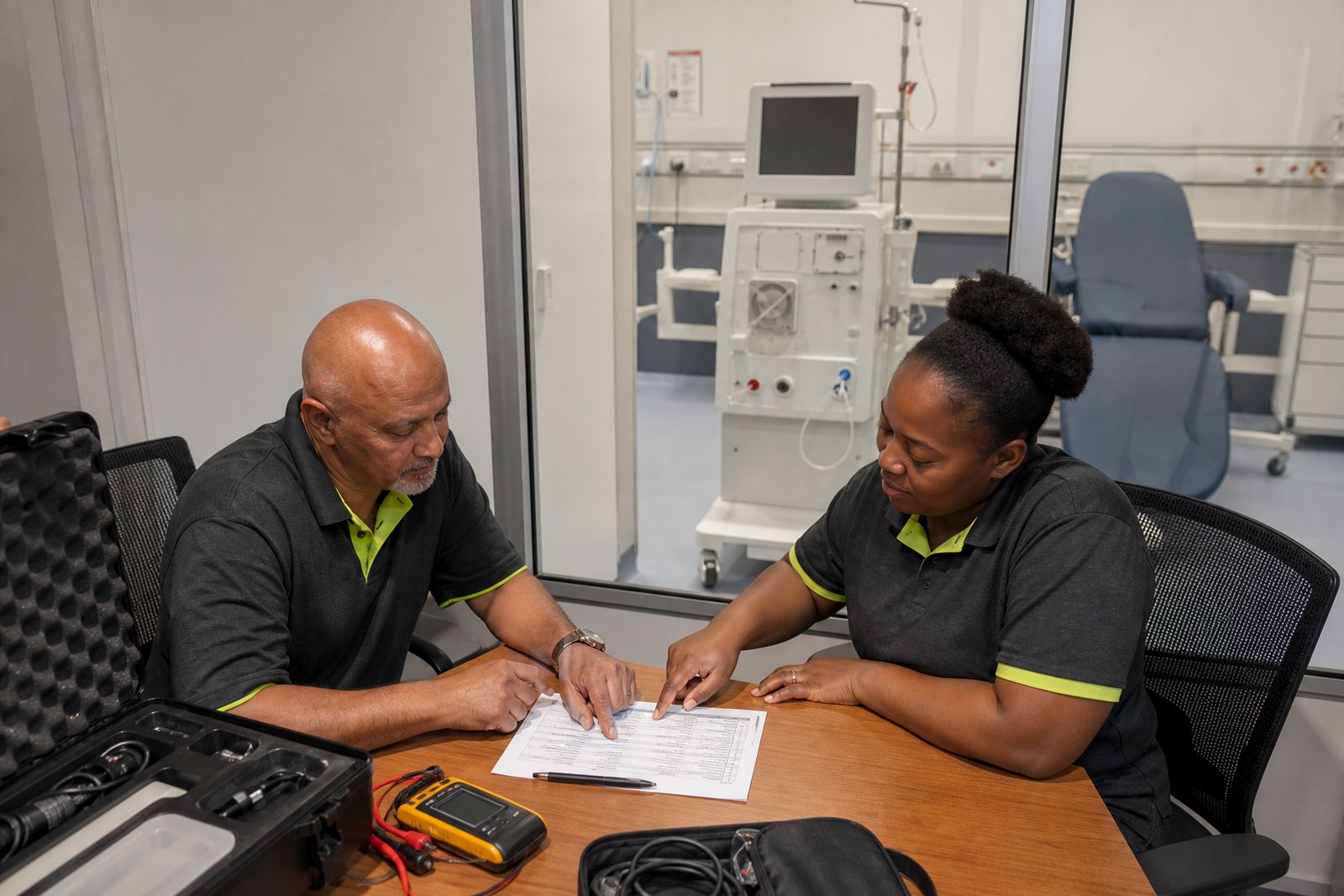
- Record of findings for your service file and audit trail
How the visit works step by step
Once your unit sends an enquiry through the contact page, we arrange a technical attendance for the reported item. Before travelling, we may ask for the equipment type, asset reference, fault description and whether the item is isolated from use. This helps the field technician arrive prepared for the likely checks.
At the unit, the technician signs in according to your site rules and confirms the exact complaint with the unit contact. The first stage is usually a visual inspection, followed by verification of the reported symptoms. Where safe and appropriate, the technician then carries out controlled technical tests to narrow the fault down to a component, assembly, cable, actuator, board, sensor or related subsystem.
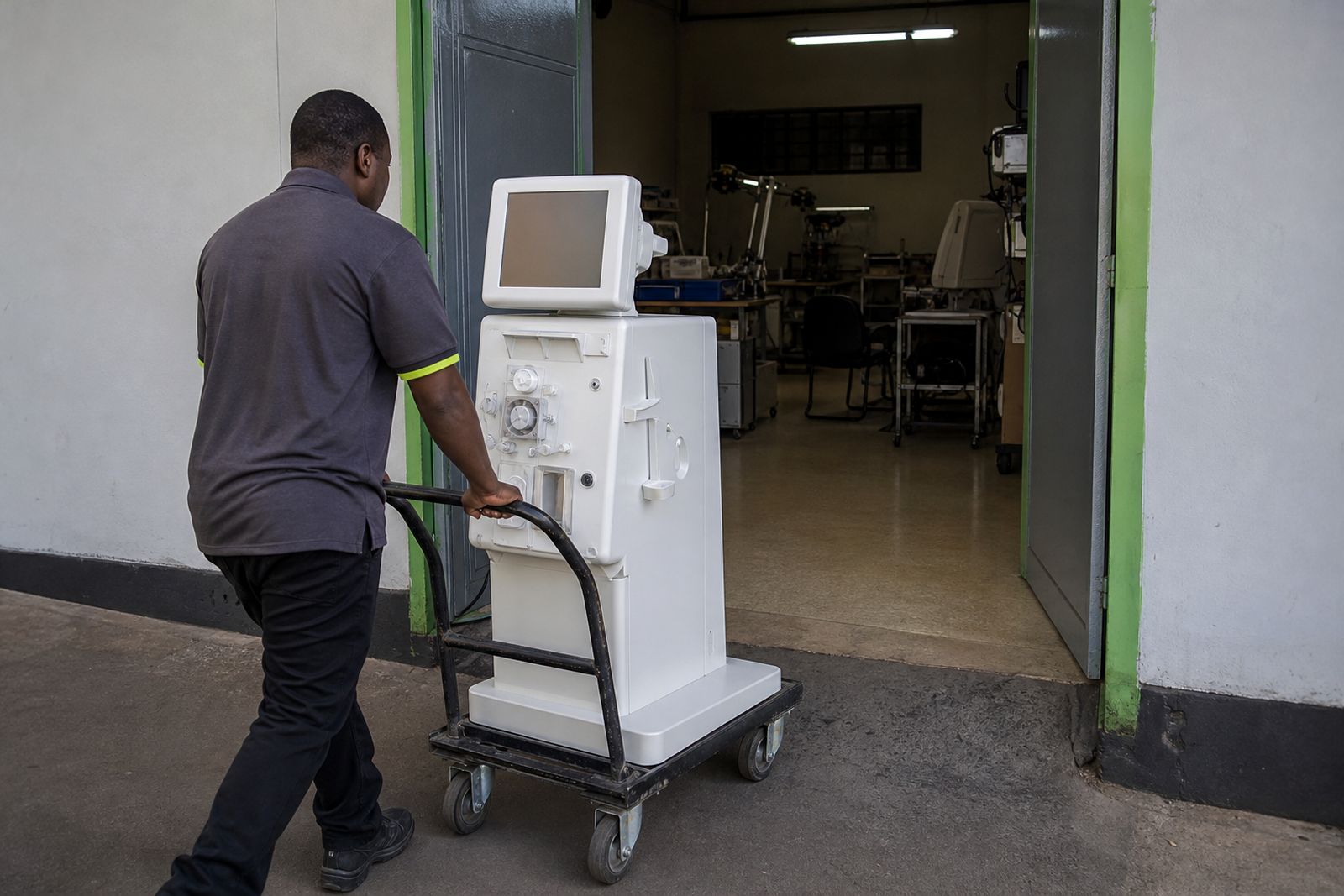
If the fault can be corrected on site with the parts and time available, the technician will complete the repair and re-test the affected function. If not, the unit will be advised whether the machine or chair should be booked into the workshop, held out of service, or supported with a loan unit if applicable. A written service record follows for your files, with the findings and recommended next action.
- Booking and pre-visit information gathering
- Arrival, site sign-in and equipment identification
- Visual checks and symptom confirmation
- Technical testing and fault isolation
- Decision on on-site repair, workshop repair or loan support
- Service record issued after the visit
What your unit should prepare before arrival
A little preparation helps the visit run cleanly and reduces repeated handling of the same item. The machine or chair should be clearly identified and, if required by your internal procedure, labelled as out of service until the technician has assessed it. Please ensure the equipment is accessible and not blocked in by other items, trolleys or stored consumables.
For machine faults, it helps if the unit can note the alarm text or code, when the problem started, whether it is intermittent or constant, and whether it appears during setup, treatment, rinse or shutdown. For chair faults, note which movement is affected, whether the problem is electrical or mechanical, and whether the issue changed after cleaning, relocation or a power interruption. During power cuts or generator changeover periods, supply irregularities can also be relevant, so that detail is useful.
- Asset number or internal equipment reference
- Clear fault description from staff who observed it
- Access to the item and nearby power points
- Any prior service records linked to the same issue
- Site induction or infection-control requirements for visitors
How pricing is worked out
On-site fault finding is generally costed according to the technical attendance and the work required to diagnose the problem. The total can depend on factors such as travel from Germiston to your unit, time spent on site, the complexity of the fault, whether electrical safety or calibration checks are also needed, and whether parts are used during the visit. If the unit is outside the East Rand or elsewhere in Gauteng, distance and routing may also affect the costing basis.
Where a fault leads to workshop repair, replacement parts, additional calibration or a follow-up visit, those items are normally considered separately from the initial diagnostic attendance. If multiple items are to be inspected during the same call-out, it helps to list them clearly in advance so the scope can be planned properly. We do not publish fixed figures on this page because each unit's equipment mix and site conditions differ.
Aftercare and next steps after fault finding
After the visit, your unit receives a technical record stating what was found and what action is recommended. That may be return to service after successful testing, further monitoring by the unit, booking into the workshop for a deeper repair, or temporary replacement support through a loan unit arrangement where suitable. If a recurring fault is linked to wear, water exposure, damaged cables, repeated power issues or transport damage, this is also noted for your maintenance planning.
Where the issue affects service intervals or planned preventive maintenance, we can align the next technical step with your broader maintenance schedule. This is especially useful for units that need orderly records for internal reviews and external audits. We keep the reporting practical and traceable, without crossing into clinical decision-making which stays with your team.
Technical scope and service limits
Our on-site fault finding service covers technical work on haemodialysis machines and treatment chairs at registered renal units. It does not replace routine daily checks by unit staff, and it does not include clinical advice, treatment prescriptions or patient-related decisions. We also do not attend private homes or support home users.
Some faults can be isolated quickly on site, while others only become clear once the item is opened in workshop conditions and tested for longer periods. Environmental conditions can also play a part. In Gauteng this may include dust ingress, unstable power, surge events and heat buildup in plant or treatment rooms. If your unit is further afield, transport planning and downtime management become part of the recommendation, so the technician will set this out clearly.
What our Dialysis Machine Servicing customers say
Verified Google reviews
Questions we get asked
Can you repair the machine during the same visit?
If the fault can be safely corrected on site and the required parts or adjustments are available, the technician may complete the repair during the attendance. If not, we will advise whether workshop repair or a loan unit arrangement is the better route.
Do you work after a failed daily start-up or repeated alarm condition?
Yes. If your unit has isolated the item and needs a technician to determine why it is failing, we can attend to assess the fault, test the affected functions and document the technical findings.
What if the problem appears only now and then?
Intermittent faults can still be assessed on site, but they often depend on good fault notes from unit staff. Alarm wording, timing, operating stage and recent power events can all help narrow the cause down.
Also worth a look
Book a service or report a fault
Send a note through our contact form with your unit, the equipment involved and what you need, and a technician will contact you.
Open the contact form