

Planned preventive maintenance
Planned preventive maintenance helps keep haemodialysis machines and treatment chairs in serviceable condition between breakdowns. We schedule workshop or on-site service visits for registered renal units, with records kept for audit and follow-up.
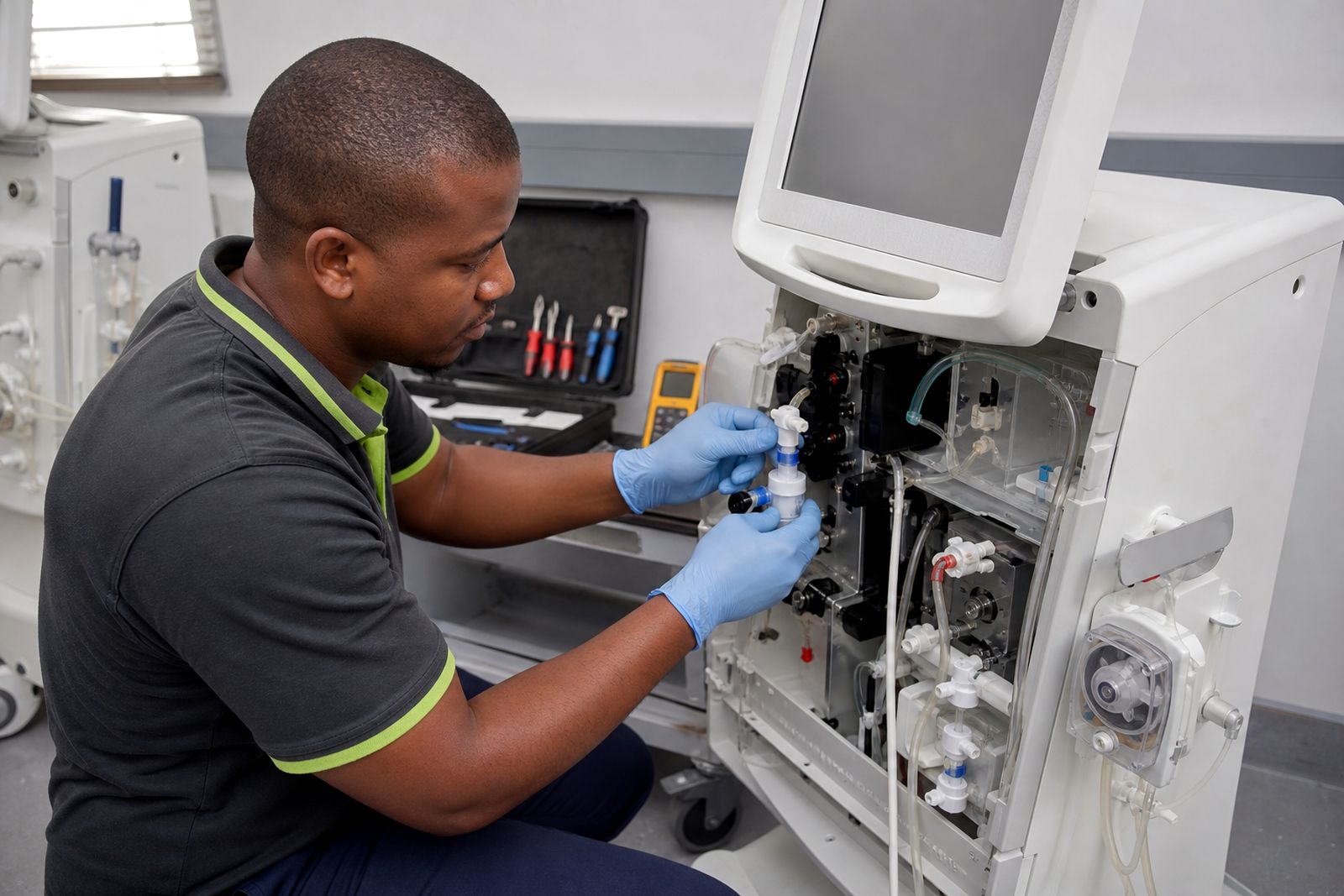
What planned preventive maintenance covers
Our planned preventive maintenance service is set up for registered renal units that need a structured servicing programme for haemodialysis machines and treatment chairs. The aim is to reduce avoidable faults, keep equipment ready for daily lists, and give the unit clear service records for internal checks and external audits. We work as biomedical technicians on the technical side of the equipment only. We do not treat patients and we do not give clinical advice.
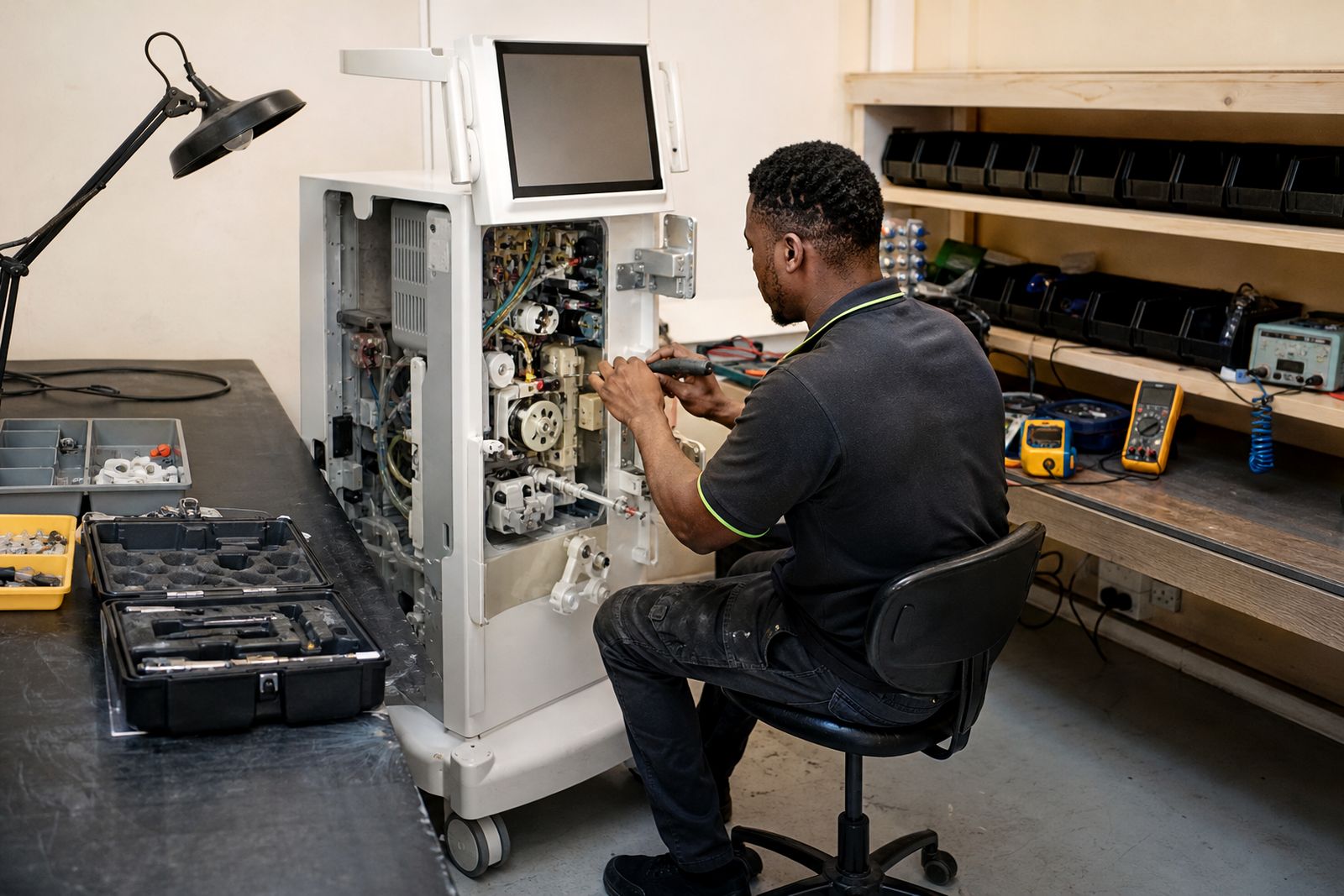
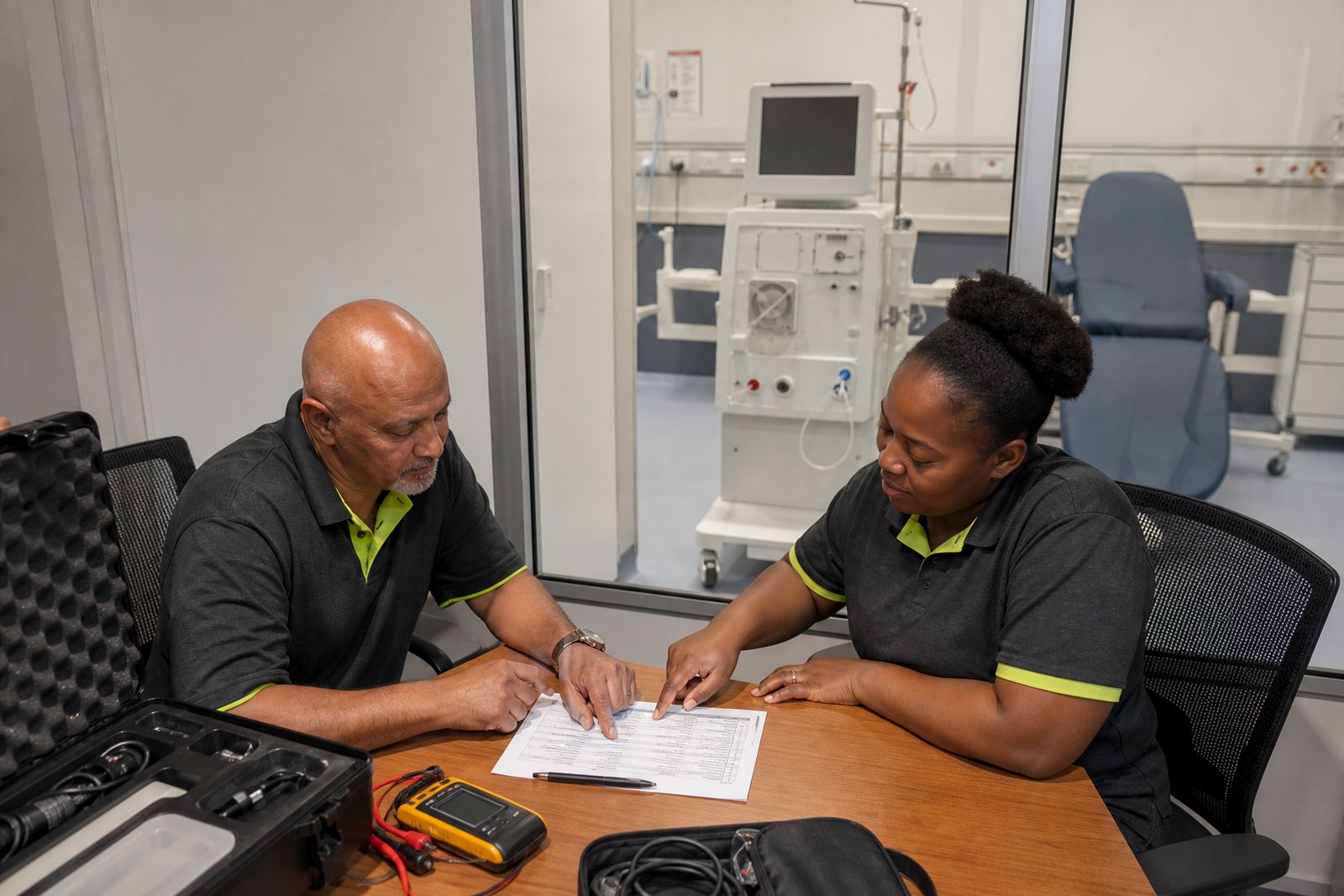
A scheduled maintenance visit usually combines routine inspection, cleaning of accessible technical areas, replacement of service items where applicable, calibration checks, electrical safety testing and a review of any faults reported by the unit. Where a machine needs workshop attention beyond what can reasonably be completed on site, we can arrange the next step and discuss loan-unit availability while that machine is off the floor.
- Haemodialysis machine servicing for registered renal units
- Treatment chair inspection and repair during scheduled visits where required
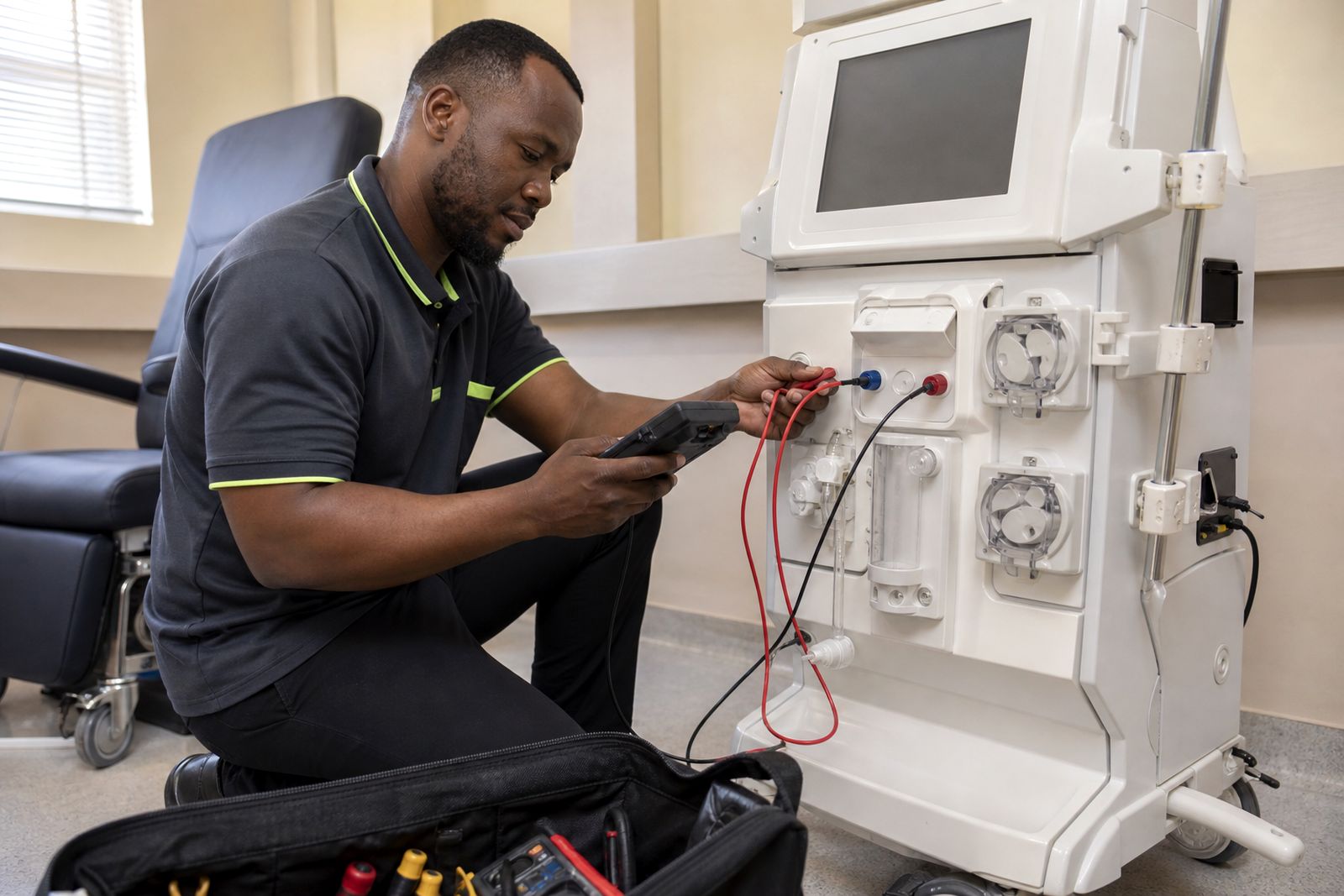
- Calibration checks and electrical safety testing
- Service records for audit files and maintenance tracking
- Planned scheduling across Germiston, Gauteng and further afield on request
What is included during a scheduled service
The exact maintenance scope depends on the equipment type, operating hours, service history and the unit's maintenance plan. Before the visit we confirm what is due and whether the work is best done on site or in the workshop. For most units the service includes both routine items and a practical condition check based on how the machine or chair is being used in the facility.
Typical machine work includes visual inspection of covers, connectors, tubing paths, switches, displays, alarms, fluid-path related service points, cooling and ventilation areas where applicable, and a check for leaks, corrosion or wear. In coastal areas we pay extra attention to oxidation on connectors and fasteners because humidity can shorten the life of exposed electrical parts. Chair work can include actuator checks, movement testing, hand control assessment, frame inspection, cable routing and attention to locking or positioning issues.
- Inspection of physical condition, connectors, fasteners and accessible internal areas
- Functional checks on controls, indicators, alarms and movement systems
- Calibration verification according to the service scope
- Electrical safety testing and recording of the results
- Replacement of due service items where required by the maintenance plan
- Written notes on faults found, parts needed or follow-up work recommended
Step-by-step maintenance process
We try to keep the process orderly so the unit can plan around patient sessions and staff allocation. The first step is booking, where the facility tells us which machines or chairs are due and whether there are known faults that need to be assessed during the same visit. We then confirm site access, available working space and whether the equipment must be rotated out of use one item at a time.
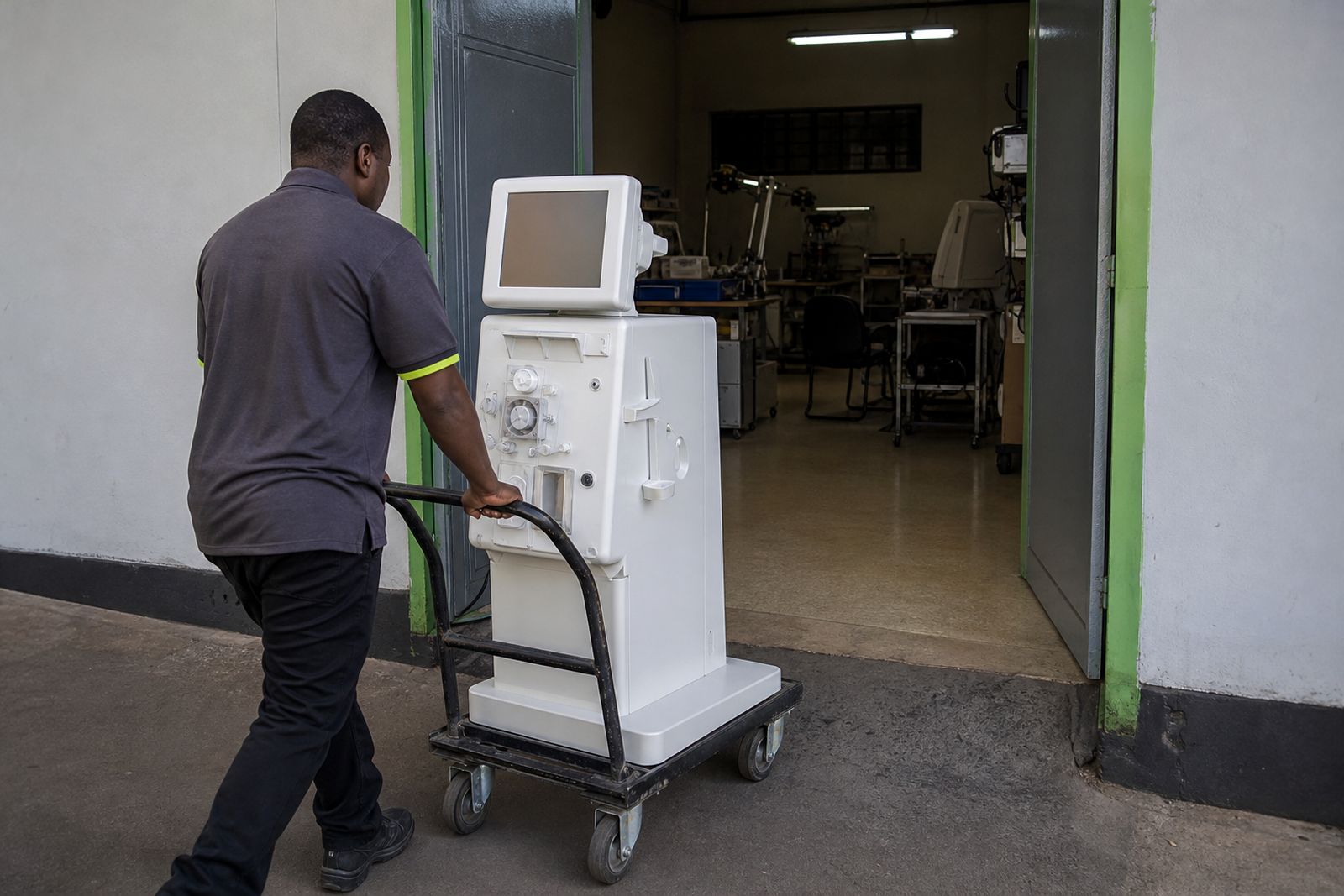
On arrival, the technician logs the equipment details and checks the reported condition against the maintenance schedule. Routine servicing and testing are then carried out, followed by any agreed technical adjustments within the maintenance scope. If a fault is found that falls outside routine service, we note it clearly and advise whether it can be handled on site, moved to the workshop or temporarily supported with a loan unit subject to availability.
Once the work is complete, the unit receives the service record and any follow-up recommendations. If there are repeated fault trends, we flag them so the unit can plan downtime rather than wait for a breakdown. That planning often saves a lot of disruption later.
What the unit should prepare before the visit
A well-prepared service visit runs more smoothly and helps us complete the planned work without unnecessary delays. The unit should identify the equipment due for maintenance, make sure each item can be taken out of service at the agreed time, and have any previous service notes available. If a machine has shown intermittent alarms, drift, chair movement issues or power-related events during power cut changeover, those observations should be written down beforehand.
For on-site visits we need a clean, safe area to work in, with access controlled by the facility. Machines should be presented in a state suitable for technical inspection according to the unit's own infection-control procedures. We rely on the facility to manage all clinical and patient-facing steps, while we handle the technical work only.
- Set aside the machines or chairs booked for maintenance
- Provide equipment identifiers and previous service records if available
- Note recurring faults, alarm behaviour or power-supply incidents
- Ensure access to plugs, isolation points and enough working room
- Confirm site rules for infection control, access control and waste handling
How maintenance pricing is worked out
Planned preventive maintenance is usually costed according to the equipment type, the number of items booked, whether the work is on site or in the workshop, the testing scope required, travel, and whether extra parts or repairs are needed beyond routine service. A unit with a stable maintenance schedule can usually plan better because service visits are grouped and records are kept in sequence.
Where chairs are included with machine maintenance, it helps to list them together so the technical scope can be reviewed in one go. If faults are reported early, the unit can also avoid some of the extra disruption that comes with unplanned call-outs. We do not publish set package figures on this page because each registered facility has a different mix of equipment and service history.
Aftercare, records and follow-up
After each planned maintenance visit, we provide service records showing what was checked, what testing was carried out and what follow-up is recommended. These records help the renal unit maintain an equipment file for audits and internal review. If a machine needs additional workshop repair, or if a chair requires parts not held during the visit, that is recorded separately so the next action is clear.
Units that work to a scheduled maintenance plan generally find it easier to track recurring technical issues, prepare for inspections and rotate equipment with less pressure on daily operations. Our role is to support that process with practical technical work and clear paperwork, not to make clinical decisions. For bookings and contract queries, please use the enquiry form on our contact page.
What our Dialysis Machine Servicing customers say
Verified Google reviews
Questions we get asked
Do you work on equipment for home dialysis users?
No. We work only for registered renal units and other registered facilities, not for home users.
Can planned maintenance be done without stopping the whole unit?
Usually yes. The unit can rotate machines or chairs out of service in stages, provided this is arranged in advance and fits the clinical schedule set by the facility.
Do you give clinical guidance during a service visit?
No. We handle technical servicing, calibration and repairs only. Clinical decisions stay with the unit and its authorised clinical team.
Also worth a look
Book a service or report a fault
Send a note through our contact form with your unit, the equipment involved and what you need, and a technician will contact you.
Open the contact form