

Calibration and safety testing
Calibration and safety testing helps a renal unit confirm that key readings and electrical protections are within expected limits. We check equipment against reference instruments and issue a written record for your files and audit trail.
What this service covers
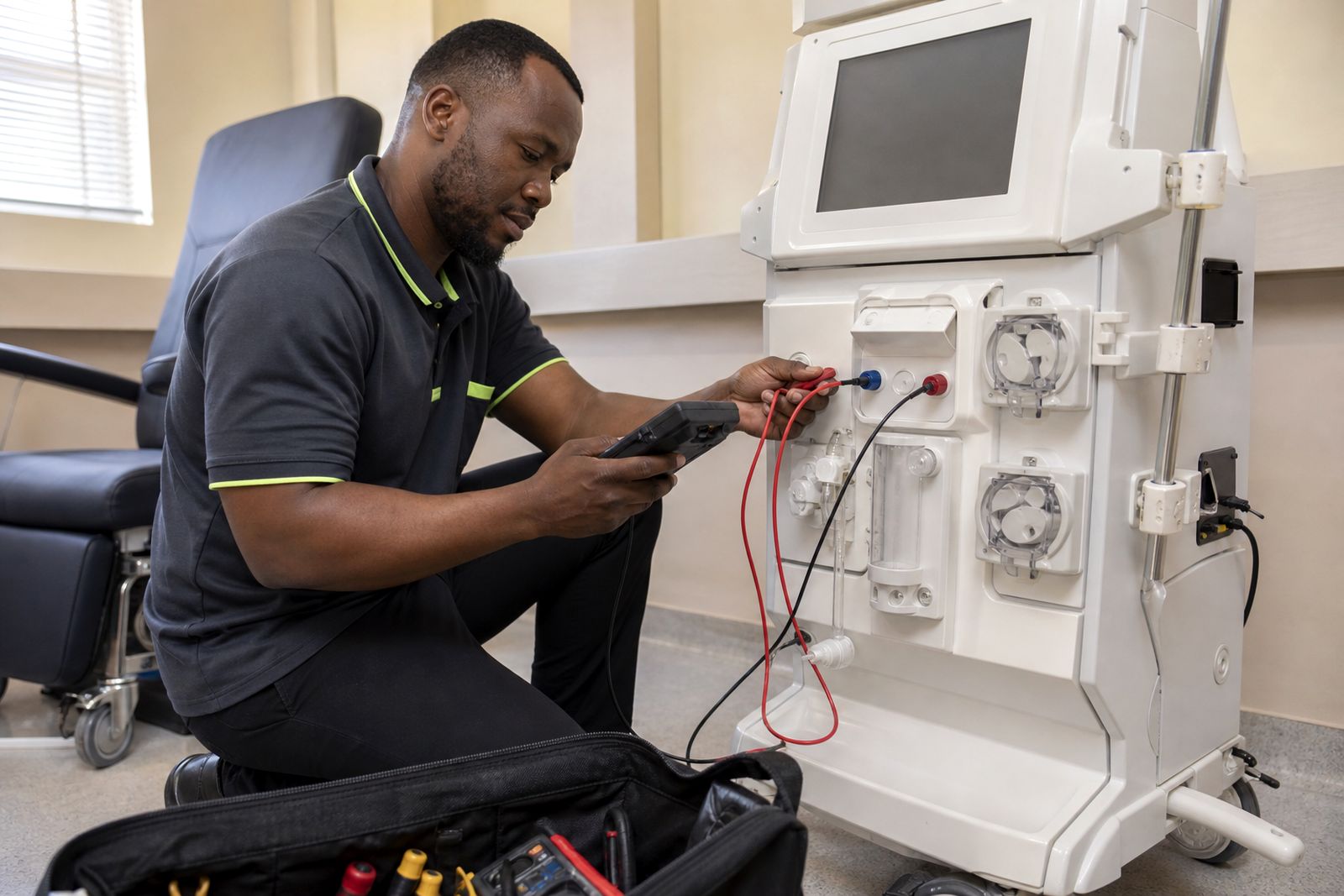
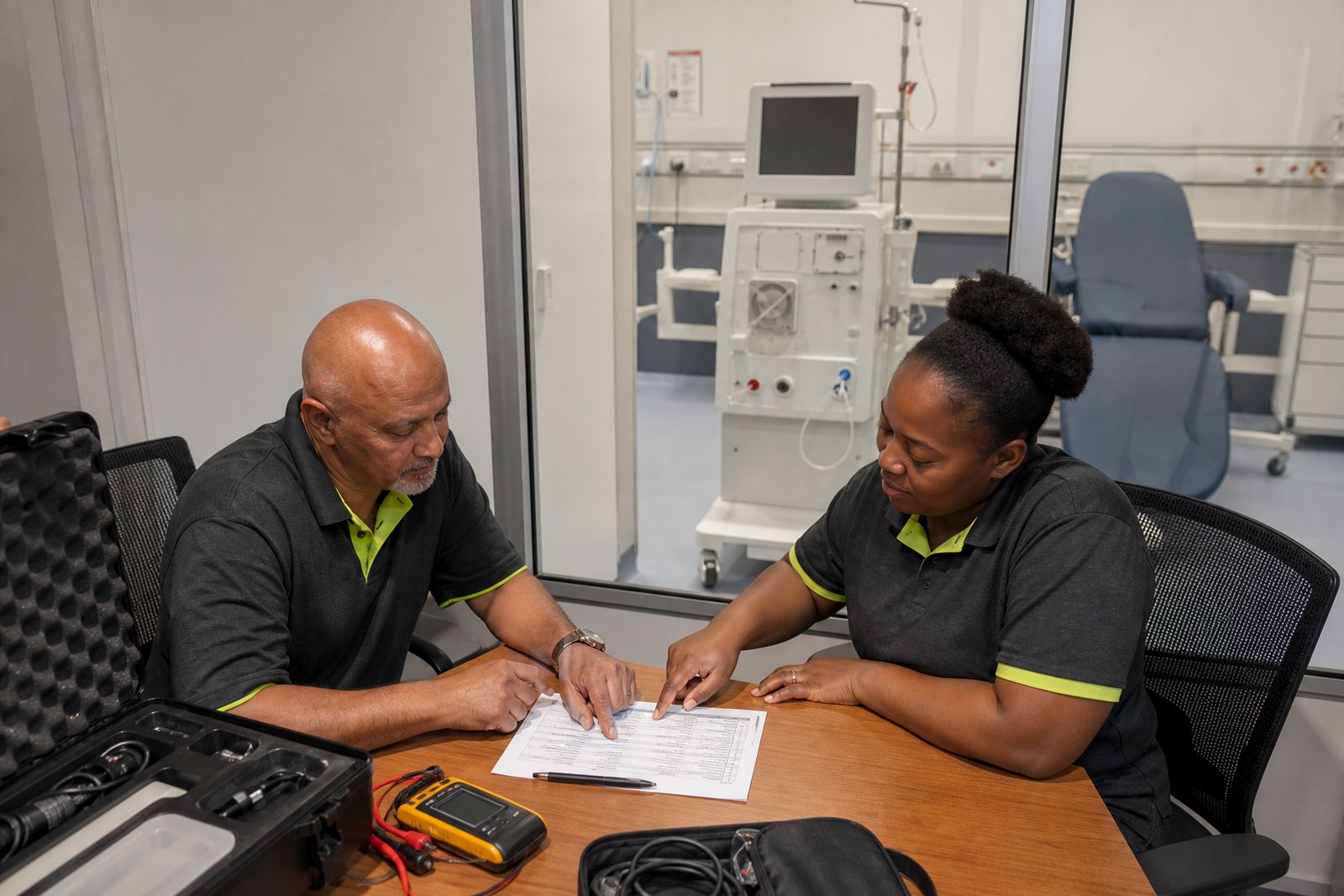
Our calibration and safety testing service is for registered renal units that need documented technical checks on haemodialysis machines and treatment chairs. We verify selected machine functions against reference meters, carry out electrical safety testing, and record findings clearly so the unit can file them with service records. This is a technical service only. We do not advise on prescriptions, patient settings or clinical decisions, as those remain with the unit.
Testing can be done as part of planned maintenance, during a workshop service, or as a separate booked visit where the unit needs records brought up to date. If a reading falls outside acceptable tolerance, or if an electrical safety fault is found, we note it and discuss the next technical step with the unit representative before any repair work proceeds.
- Functional calibration checks against traceable reference instruments
- Electrical safety testing on haemodialysis machines
- Safety and function checks on treatment chairs where applicable
- Written records for asset files, internal quality systems and audits
- Clear note of pass, fail, adjustment required or repair required
What we check on the equipment
The exact checks depend on the machine type, its configuration and the work booked in, but the aim is always the same: confirm that critical technical functions are reading correctly and that the unit has a proper written record. On dialysis machines this may include conductivity verification, temperature verification, alarm checks, flow-related checks where applicable, and electrical safety measurements using dedicated test instruments.
On treatment chairs, the focus is different. We inspect power input, earthing continuity where fitted, actuator operation, hand control response, limit behaviour where present, cable condition and general electrical safety. If a chair has an intermittent fault we record that separately so it is not lost in the service notes.
- Conductivity check against a reference meter
- Temperature check against a reference instrument
- Alarm and indicator confirmation where accessible in service mode
- Leakage current, earth continuity and insulation related safety checks
- Visual inspection of leads, plugs, casings and strain reliefs
- Chair movement functions, actuator response and control operation
Step by step process on site or in the workshop
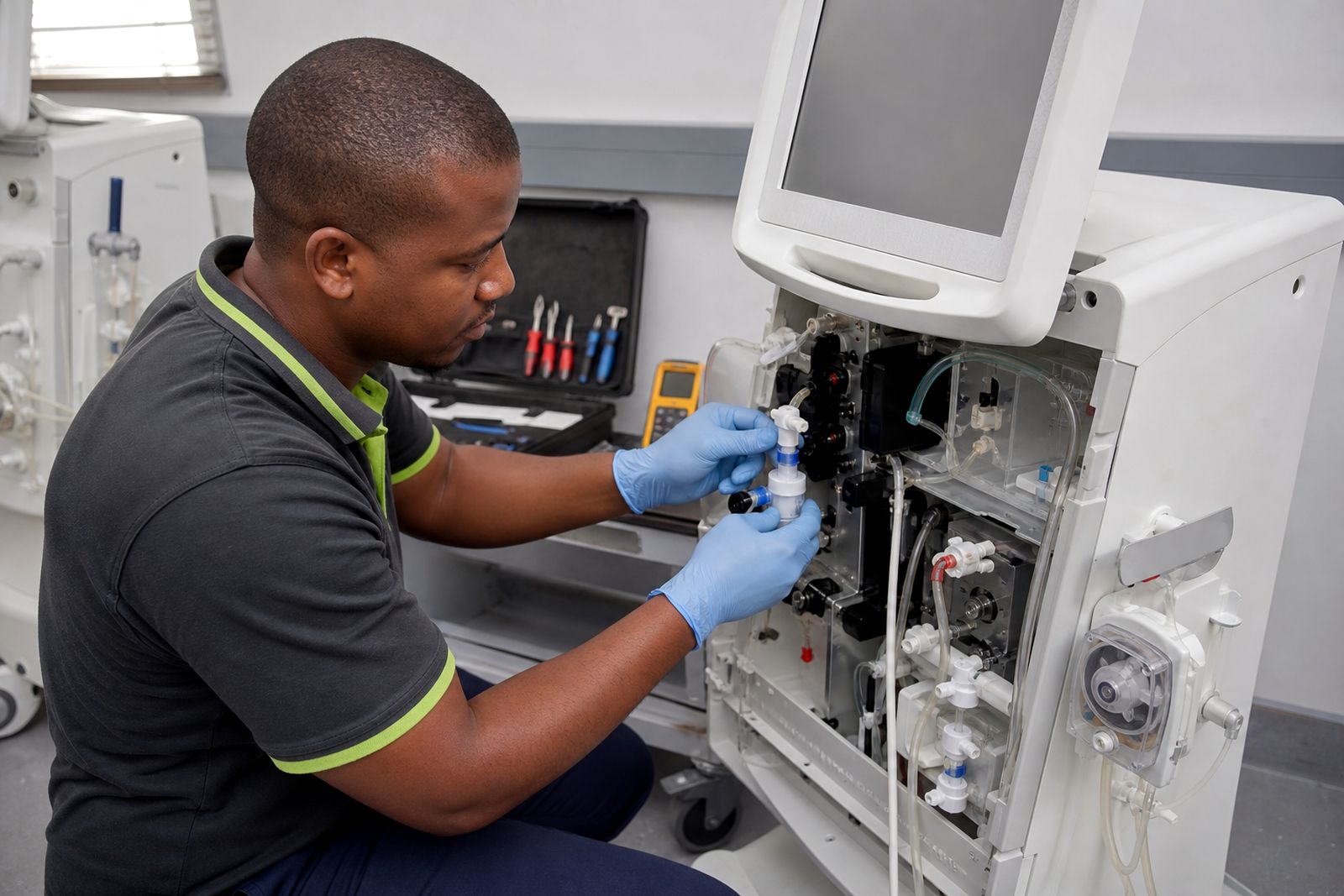
We start by confirming the asset details, serial number and fault history, then inspect the machine or chair for obvious damage, missing covers, fluid ingress, worn cables or transport damage. After that the technician prepares the unit for test conditions and connects the appropriate reference instruments. Where a machine requires warm-up or specific service access, that is done before readings are taken.
Next, the technician records baseline values, performs the calibration or verification checks, and notes any deviation from expected values. If an adjustment is possible within the booked scope it is carried out and the readings are rechecked. Electrical safety tests are then completed and recorded. Finally the equipment is returned to standby condition, labels or test status notes are updated where required, and the written record is prepared for the unit file.
If a machine cannot pass because of a failed component, unstable reading or unrelated repair issue, we state that plainly. The unit then has a clear technical record of what stopped completion and what action is still needed, which is often helpful for audit readiness and maintenance planning.
What the unit should prepare before we arrive
Good preparation shortens disruption in a busy renal unit. Before the visit, please identify the machines or chairs to be tested, confirm where they will be made availble, and make sure a unit representative can hand over service history or any recent fault notes. Where equipment has been taken out of use, it should be labelled accordingly so there is no confusion on the day.
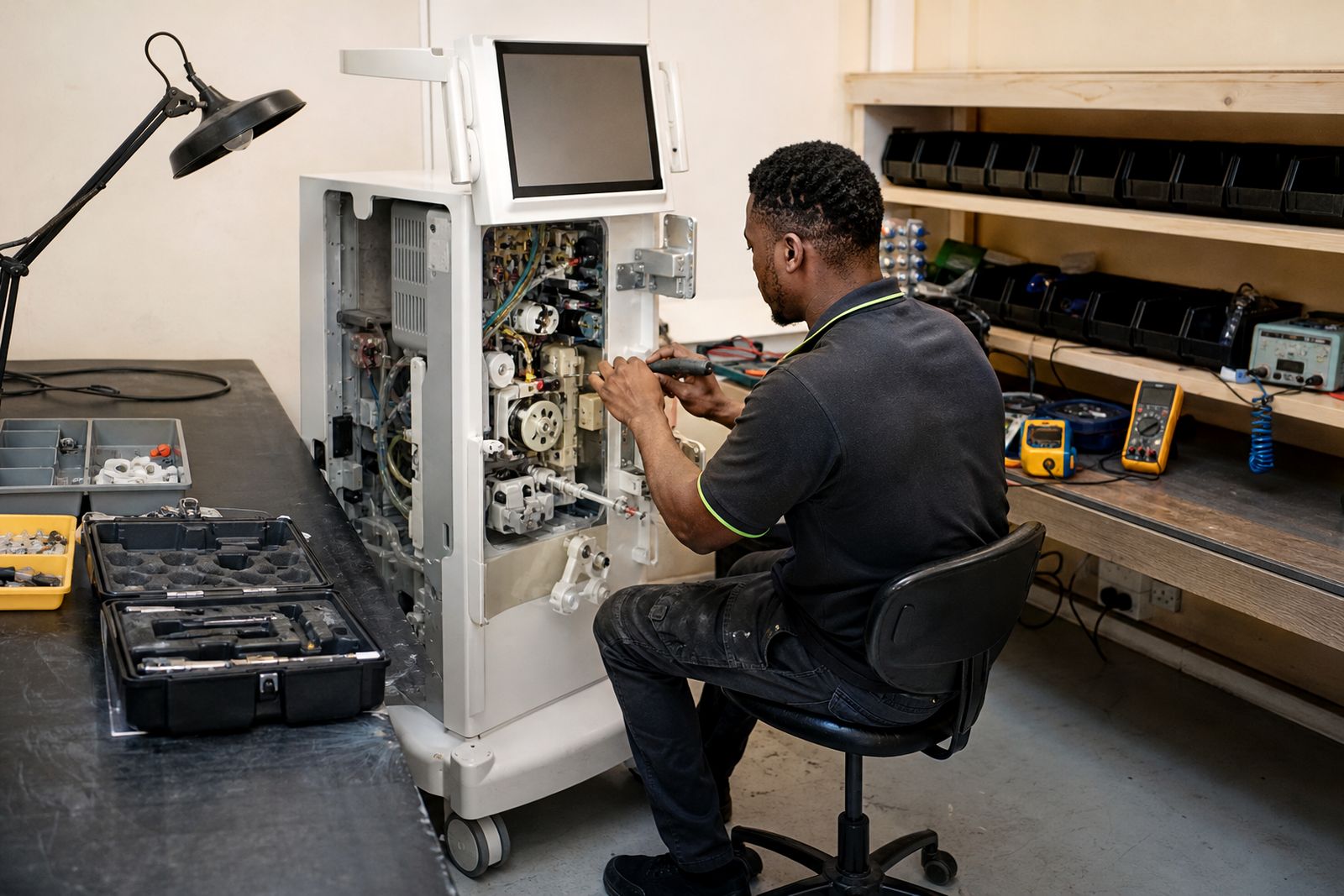
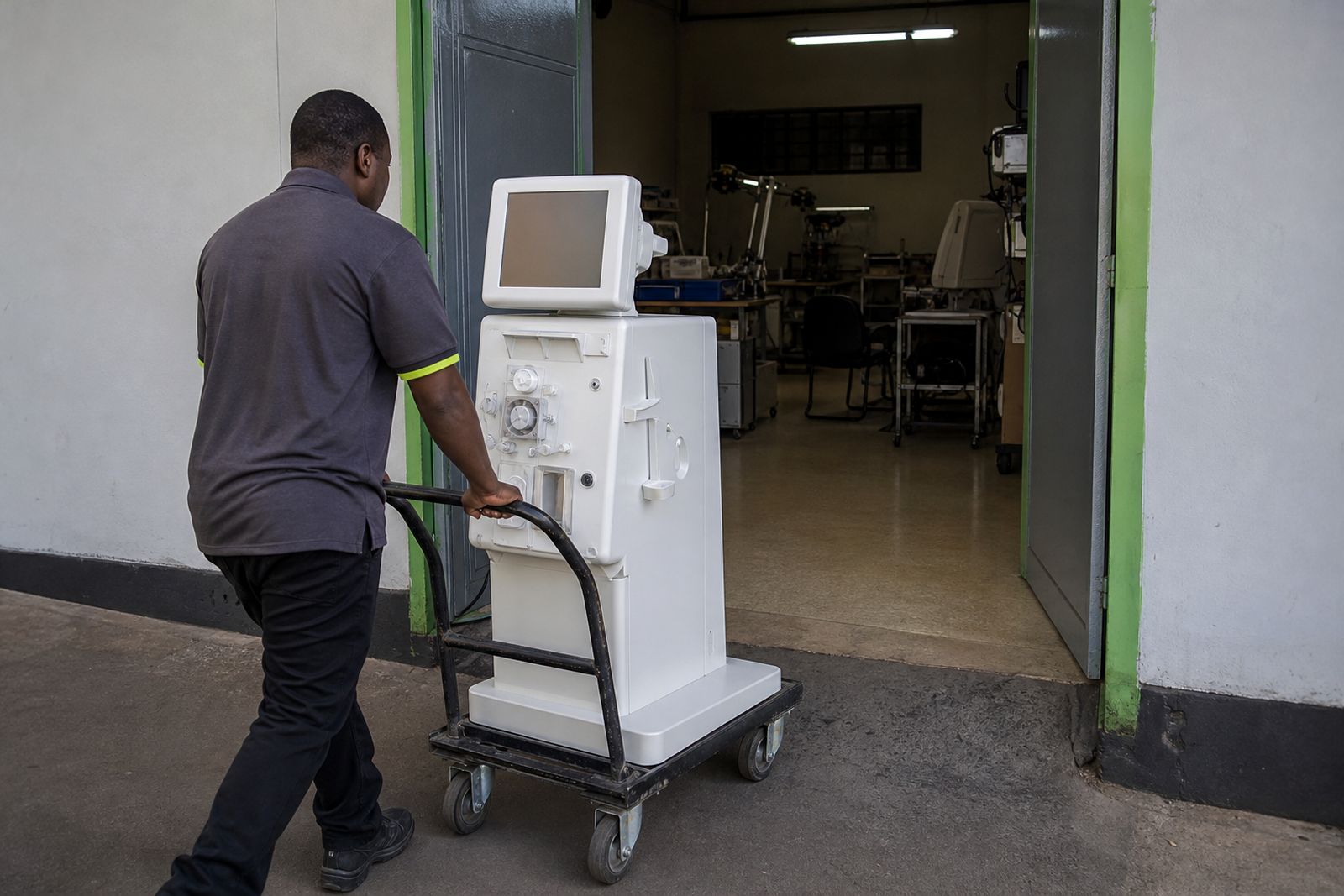
For workshop testing, the equipment should be clean and safe to handle before collection or delivery. For on-site work, we need stable power, enough space around the machine or chair, and reasonable access to sockets and isolators. If there are site rules for contractor sign-in, parking or infection-control areas, send those instructions through the contact page in advance.
- Asset list with serial numbers if available
- Recent fault notes, alarm reports or service concerns
- Access to the unit, workshop bay or equipment store
- Power supply available and safe working space around each unit
- Confirmation of whether testing is stand-alone or linked to a service visit
How pricing is worked out
Pricing is based on the scope of work rather than a one-size-fits-all figure. We look at how many machines or chairs are booked, whether testing is on site or in the workshop, whether the equipment is presented for straightforward verification or needs fault finding first, and whether extra work is required after a failed result. Travel from Germiston and any additional field time for units further afield are also considered.
Where calibration is part of a planned-maintenance contract, the costing structure may differ from a once-off call-out. If a machine fails testing because of a component issue, parts and repair labour are treated separately from the test record itself. This keeps the paperwork clear for the unit and avoids mixing routine verification with corrective repair work.
Records, results and aftercare
After testing, the unit receives a written record showing what was checked and the outcome. These records help with internal quality control, equipment history and audit preparation. They also make it easier to spot recurring faults over time, especially where the same machine shows drift, intermittent alarm issues or repeated electrical safety concerns.
If remedial work is needed, we explain the technical finding and the next step, whether that is adjustment, workshop repair, further fault finding or temporary replacement with a loan unit where suitable and arranged separately. We keep service records for the equipment we attend so that future visits can build on a proper maintenance trail. For renal units managing multiple assets across Gauteng, this can save time when preparing for inspections or planning shutdown windows.
What our Dialysis Machine Servicing customers say
Verified Google reviews
Questions we get asked
Do you test equipment for home dialysis users?
No. We work only for registered renal facilities and do not take in equipment from home users.
Can calibration be done during a planned maintenance visit?
Yes, where the booked scope includes it. Many units prefer calibration and safety testing to be completed alongside scheduled servicing so records stay together.
What happens if a machine fails testing?
We record the failed item or reading, explain the technical issue to the unit representative, and advise whether adjustment, repair, workshop assessment or follow-up testing is required.
Also worth a look
Book a service or report a fault
Send a note through our contact form with your unit, the equipment involved and what you need, and a technician will contact you.
Open the contact form