

Daily checks for unit staff
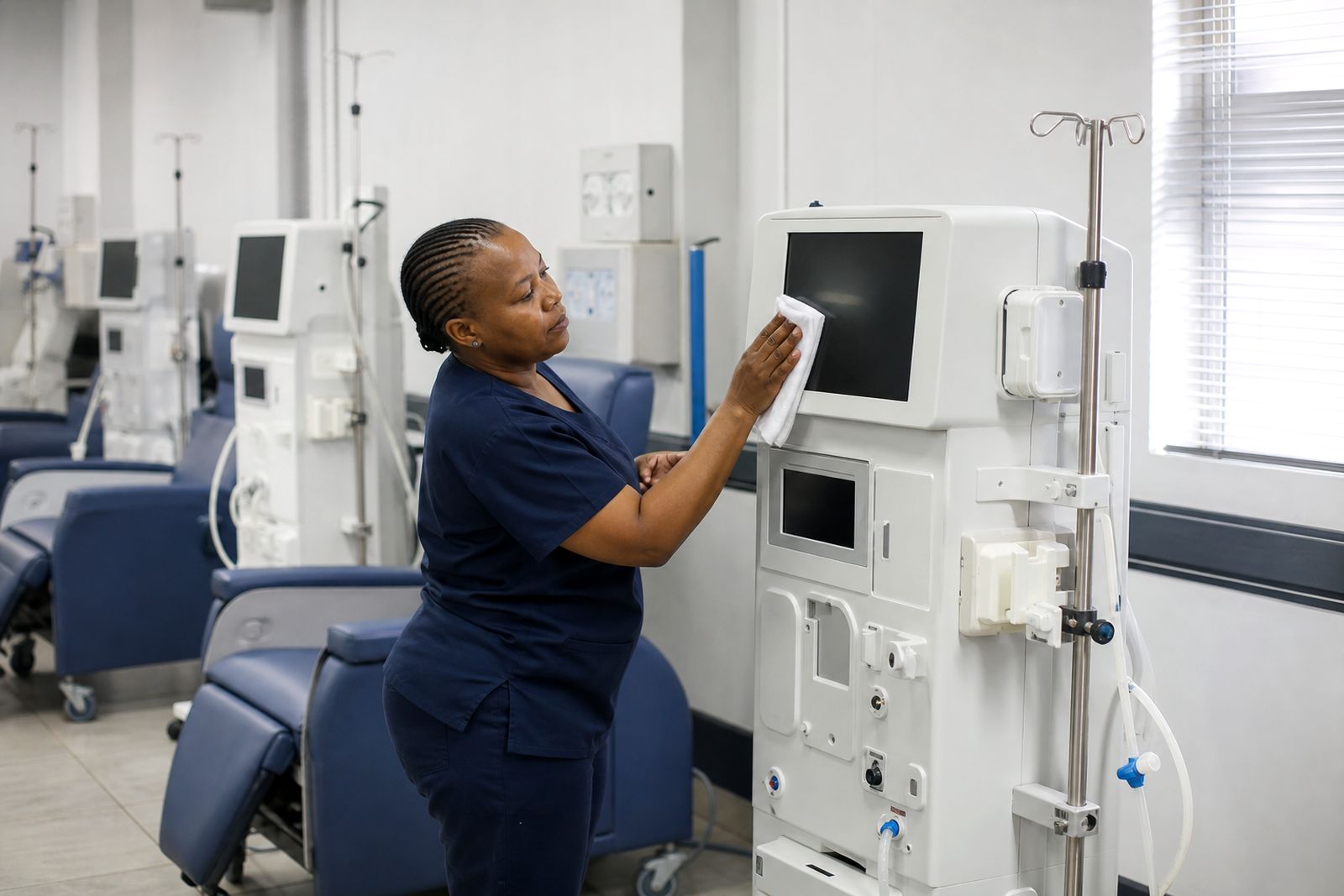
A few simple checks at the start and end of each shift can help unit staff pick up equipment issues before they turn into lost treatment time. This guide covers practical daily checks for haemodialysis machines and treatment chairs between scheduled services.
Why daily checks matter
Daily checks do not replace servicing, calibration or repair work by biomedical technicians, but they do help a registered renal unit spot small problems early. A loose connector, damaged caster, blocked filter area or repeated alarm can become a bigger failure if it is ignored for several shifts.
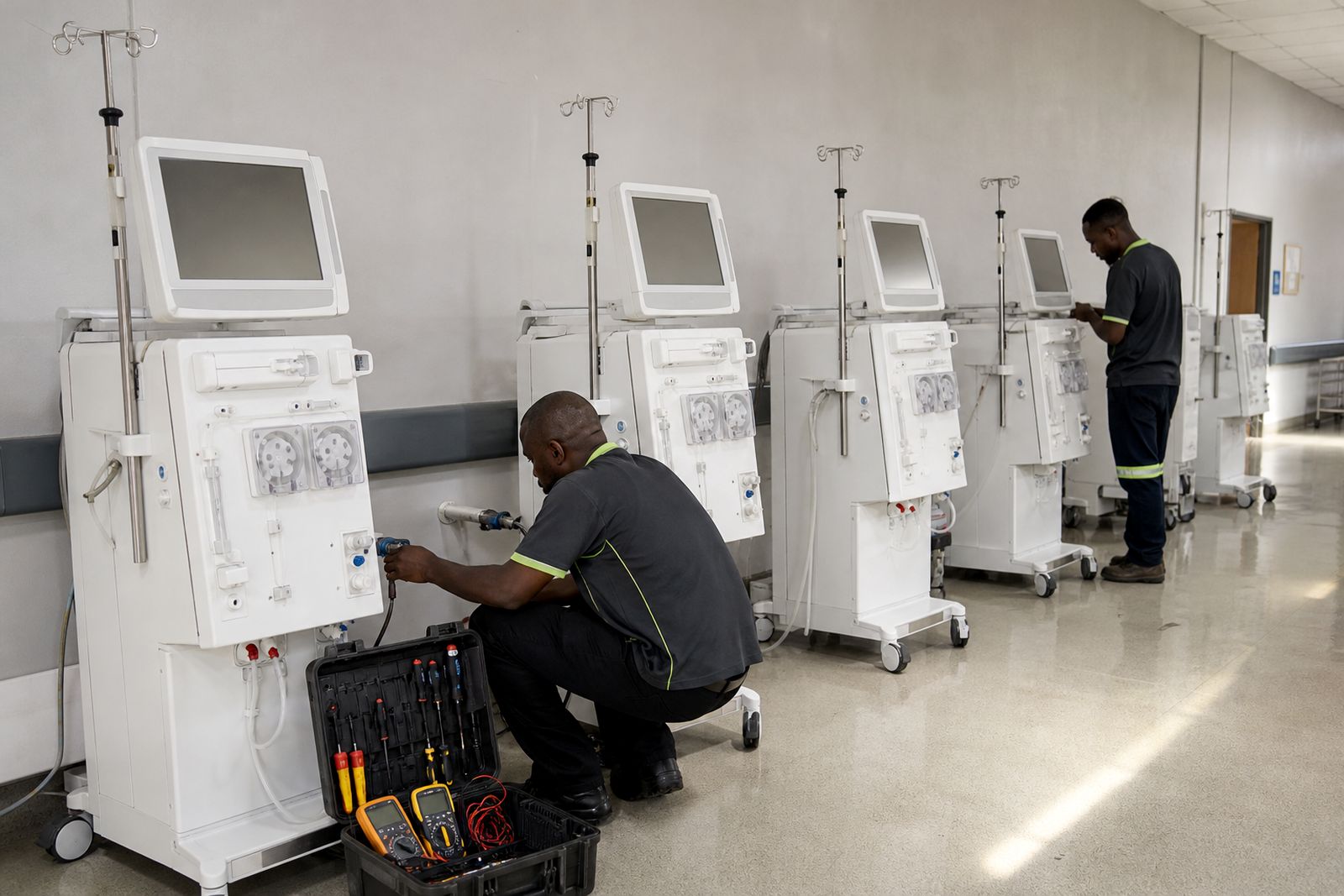
These checks are also useful when your unit is preparing for an audit or handing equipment over for planned maintenance. Clear notes from the operator make fault finding quicker and help the service technician arrive with the right parts and test equipment. If a machine or chair is unsafe, remove it from use and follow your unit procedure straight away.
This guide is for equipment condition checks only. It does not cover clinical decisions, treatment settings or patient management, which stay with the unit.
Start-of-shift visual checks on each machine
Before the first patient is connected, give each machine a careful visual check. Good lighting helps, especially in units that have had power cuts overnight or where backup power has been used. Look for anything that is obviously worn, loose, cracked or out of place.
- Check the exterior panels, corners and doors for cracks, missing screws or signs of impact damage.
- Inspect the mains cable and plug for cuts, flattening, heat marks or bent pins.
- Confirm the machine is standing level with brakes or castors working as intended.
- Look at hose routing, connectors and drain lines for kinks, strain or leaks.
- Check around the base and rear of the unit for dried residue, damp patches or drips.
- Make sure labels, asset numbers and warning markings are still legible.
- Confirm any external water connections fitted to the unit are secure and not under strain.
If your unit is in a coastal area or a humid room, pay extra attention to corrosion on exposed metal parts, plug tops and fasteners. Surface rust, green staining or white oxidation should be recorded and reported. In Gauteng units, dust build-up around vents is also common and can affect cooling if it is left too long.
Power-up and alarm checks
Once the visual check is done, power the machine up according to your unit routine and observe the start-up sequence. Staff who use the same equipment daily usually notice when a machine sounds different, takes longer to start, or shows repeated messages that were not there before. Those changes matter.
- Confirm the display, indicators and controls respond normally during power-up.
- Listen for unusual fan noise, buzzing, clicking or repeated relay sounds.
- Check that alarms clear as expected during the normal preparation sequence.
- Note any recurring alarm text or symbols, even if the machine later continues to run.
- Confirm the machine returns after a power interruption if your unit has generator or inverter changeover.
- Check that the date and time display, if fitted, appears sensible for record purposes.
If there was a power event during the night, do not assume a machine is fine because it switches on. Intermittent faults often show up only after warm-up or during priming. A short note such as “repeated power alarm after generator changeover” is far more useful than “machine faulty”.
Fluid path, leaks and cleanliness checks
Between services, unit staff can do a lot to identify early signs of fluid path trouble. Leaks, residue and poor cleaning outcomes should never be ignored. Even a small drip can affect electrical safety, internal components and uptime.
During normal pre-treatment preparation, look around connectors, pump areas, lower panels and drain outlets for fresh moisture or staining. Check whether covers and access points close properly after routine cleaning. If your process includes external water or drain hoses, make sure they are not rubbing against sharp edges or trapped under wheels.
- Look for fresh leaks, dried deposits or unusual odours near fluid connections.
- Check that routine cleaning appears complete, with no visible residue left on touch surfaces.
- Inspect trays, bases and floor areas beneath the machine for drips after preparation.
- Confirm removable items used in routine cleaning are refitted correctly.
- Record any repeated leak point, even if it seems minor.
Do not open panels or attempt internal repairs. Isolate the unit if your local procedure requires it and log the fault for technical attention. In some facilities a small leak gets wiped away and forgotten, then shows up later as a larger workshop repair.
Treatment chair checks during the day
Treatment chairs work hard and often show wear gradually. A chair can still move while becoming unsafe or uncomfortable, so daily checks by staff are important. These checks should be quick, but they must be consistent.
- Check castors, brakes and base stability before moving or positioning the chair.
- Inspect arm rests, side supports and adjustment points for looseness or cracked covers.
- Test hand control functions and confirm movements stop and start correctly.
- Listen for unusual motor or actuator noise during backrest, leg rest and height movement.
- Look for cable strain, pinching or exposed conductors around moving sections.
- Check upholstery for splits, exposed foam or areas that cannot be cleaned properly.
- Confirm the chair returns to the expected position without jerking.
If a chair has a movement problem, note which function is affected and whether the problem is constant or intermittent. “Backrest stops halfway when lowering” helps more than “chair not right”. Also note if the issue happens only when occupied. Staff should not dismantle covers or bypass a failed control, even if the chair still seems usable.
What to record and when to call for technical support
Good records make daily checks worthwhile. Use your unit log sheet or asset register and tie each note to the correct machine or chair. Include the date, the equipment ID, a short description of what was seen, and whether the unit was removed from service. Clear notes support audit readiness and help us track repeated faults over time.
Contact a biomedical technician through your facility process if you find electrical damage, repeated start-up alarms, fluid leaks, failed chair movement, broken castors, signs of overheating or any problem that affects safe operation. If a machine is due for workshop attention, a loan unit may be arranged where available so the unit can keep capacity while repairs are done.
- Write down the equipment ID and the shift when the issue was found.
- Describe the fault in plain words, including any alarm text shown.
- Note whether the issue is constant, intermittent, after cleaning, or after a power event.
- Record any action taken by unit staff such as removing the unit from service.
- Keep service records together so they are easy to produce during audits.
If you are unsure whether a fault is minor or serious, treat it cautiously and escalate it. Early reporting usually means less downtime, fewer cancelled sessions and easier fault finding when the technician arrives.
What our Dialysis Machine Servicing customers say
Verified Google reviews
Questions we get asked
Can unit staff do these checks on loan units as well?
Yes. Loan units should be checked in the same practical way at the start of the shift and any issue should be logged against that specific unit ID.
Should staff open covers if they suspect an internal fault?
No. Daily checks should stay external and observational. Internal inspection, testing and repair should be done by biomedical technicians.
Do daily checks replace planned preventive maintenance?
No. Daily checks help spot obvious problems between visits, but planned maintenance, calibration and safety testing still need to be carried out on schedule.
Book a service or report a fault
Send a note through our contact form with your unit, the equipment involved and what you need, and a technician will contact you.
Open the contact form