

Preparing for a service visit
A well prepared service visit saves time and helps the technician finish the planned work with fewer interruptions. This guide sets out simple steps renal units can follow before the technician arrives.
Know the reason for the visit
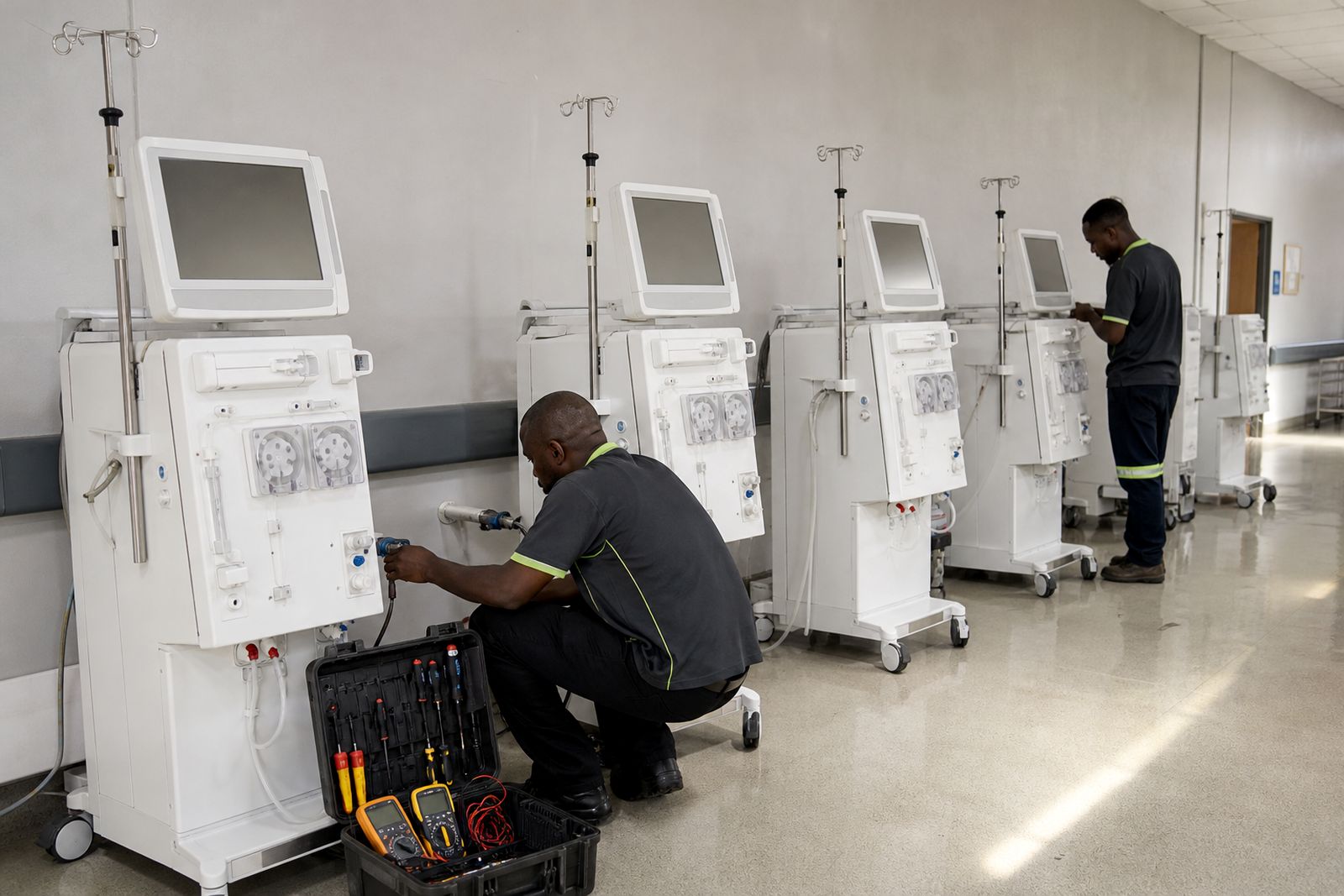
Before the booking is confirmed, make sure the unit and the technician agree on the purpose of the visit. A planned preventive maintenance visit is different from a breakdown call, a calibration check or chair repair work. When the scope is clear from the start, the technician can arrive with the right test gear, service parts and paperwork.
It helps to nominate one unit contact who can explain what is needed on the day. That person does not need to make clinical decisions, but should know which machines are due for service, which items are out of use, and whether any recurring faults have been seen during treatment sessions.
- Confirm whether the visit is for routine servicing, fault finding, calibration, electrical safety testing, chair repairs or a mix of tasks.
- List the machine asset numbers or unit identifiers to be attended to.
- Note any repeated alarms, leaks, conductivity concerns, battery issues or power interruptions.
- Advise if any machine is already isolated and tagged out of service.
- Confirm whether the work is on-site only or whether a workshop return may be required.
Prepare the equipment and service area
Technicians work faster when the equipment is clean, accessible and not boxed in by other items. Try to place the machines scheduled for service where there is enough room to move around both sides safely. If treatment chairs are included, check that they can be fully raised, lowered and tilted without obstruction.
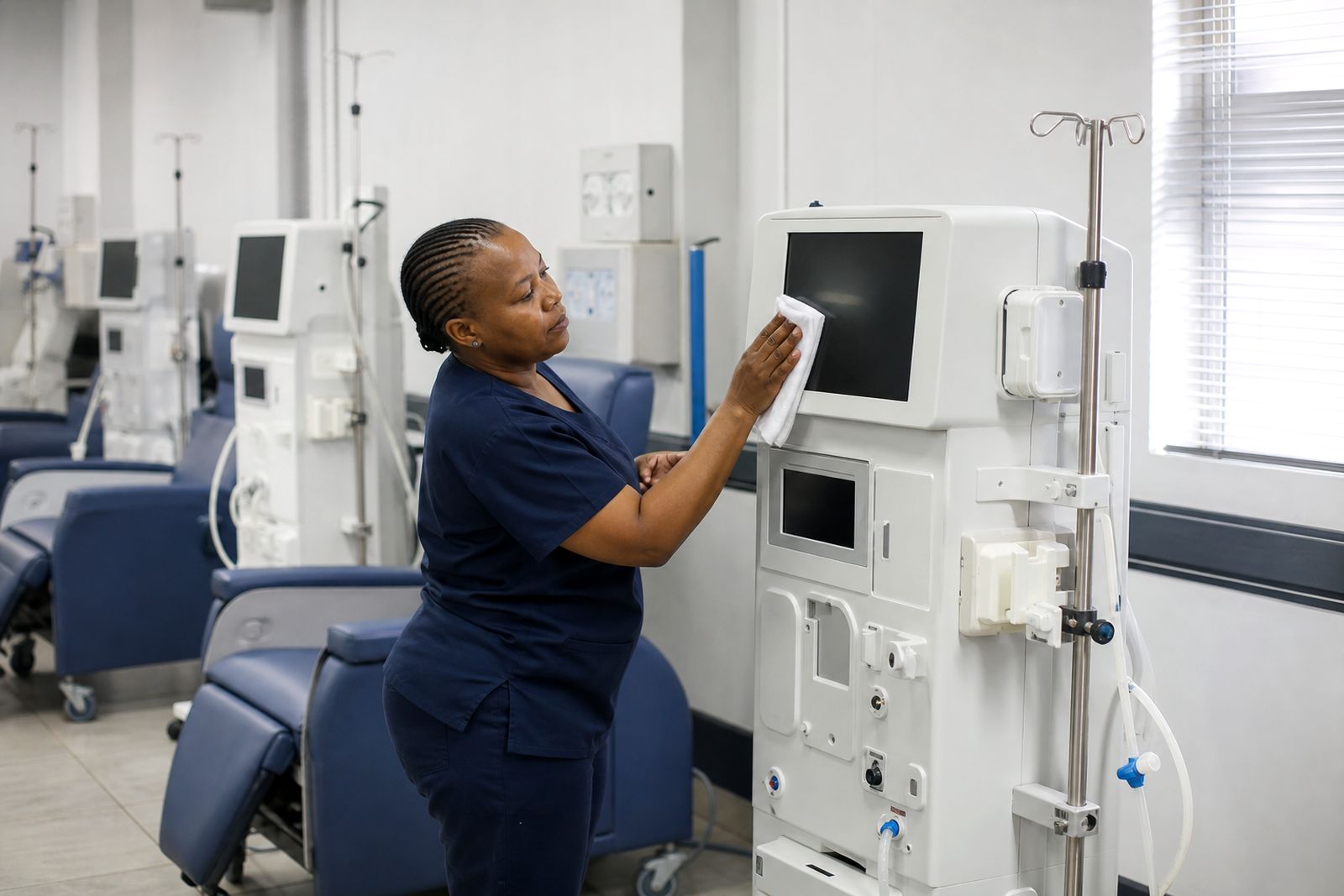
Basic housekeeping matters more than many units expect. Wipe down external surfaces, remove disposable items and clear the floor area so leads, hoses and tools do not become a trip risk. In winter and during power cut periods, also check that the area has stable lighting and a usable power point. A dark treatment bay slows work and can hide small leaks or cable damage.
- Make space around each machine for inspection and testing.
- Ensure access to a suitable power outlet and water connection where needed.
- Remove used consumables, tape, boxes and loose packaging from the area.
- Set aside any detachable parts or accessories that belong with a specific machine.
- Check that chairs to be repaired are free of personal items and can be safely moved.
Have records ready before the technician arrives
Good records shorten fault finding. If a machine has shown intermittent problems, the technician will need to know when they started, whether they happen during priming, treatment or disinfection, and whether they affect one bay only or several. This information can point to a machine issue, a chair power issue, or even a supply problem within the unit.
Keep previous service reports, calibration records and any internal fault notes together for the visit. If your unit keeps a maintenance file for audits, make it available at the start rather than halfway through the day. Small delays add up and often force less urgent checks to be postponed.
- Previous service records for each machine due for work.
- Any internal logbook notes on alarms, shutdowns or unusual sounds.
- Electrical safety test records if available.
- Asset list or room list showing where each machine normally operates.
- Details of recent moves, storage, transport or water quality concerns if relevant.
Plan around patients, staff and unit flow
The best service visits are planned around the clinical day rather than squeezed into it. The technician should have safe access to the equipment without disrupting patient care. Where possible, identify machines that can be removed from the active roster for the visit and tell the team early so allocations can be adjusted. This is especially useful for units running close to capacity.
If the visit includes breakdown work on a machine needed for the next shift, say so at the start. The technician can then prioritise that item. If a loan unit is being arranged while a machine goes to the workshop, prepare the bay in advance and make sure the relevant staff know which equipment is changing over. Clinical decisions remain with the unit, but clear operational planning helps everyone.
For infection control, the technician should be directed to local entry, hand hygiene and PPE requirements on arrival. Each unit has its own routine and it is better to explain it once clearly than to correct it later.
What staff should point out on the day
A few minutes with the operator in charge can save an hour of guesswork. Show the technician exactly what staff have noticed, even if the fault seems minor. A machine that only alarms at a certain stage, a chair that drifts down slowly, or a connector that feels warm after use may all be important clues. Do not assume a note in the file tells the full story.
Be specific where you can. Instead of saying the machine is "not working properly", describe what happens first, what happens next, and whether the problem clears after a restart. If the issue appeared after a move, after municipal water interruptions or after repeated power dips say so. On the East Rand and across Gauteng, unstable power can affect more than one bay at the same time.
- Show the exact alarm or symptom if it can be reproduced safely.
- Point out visible leaks, broken panels, damaged castors or loose fittings.
- Explain whether the fault is constant or intermittent.
- Say if the problem began after cleaning, storage, transport or a power event.
- Mention any chair movement issues, hand control faults or unusual motor noise.
After the visit, close out properly
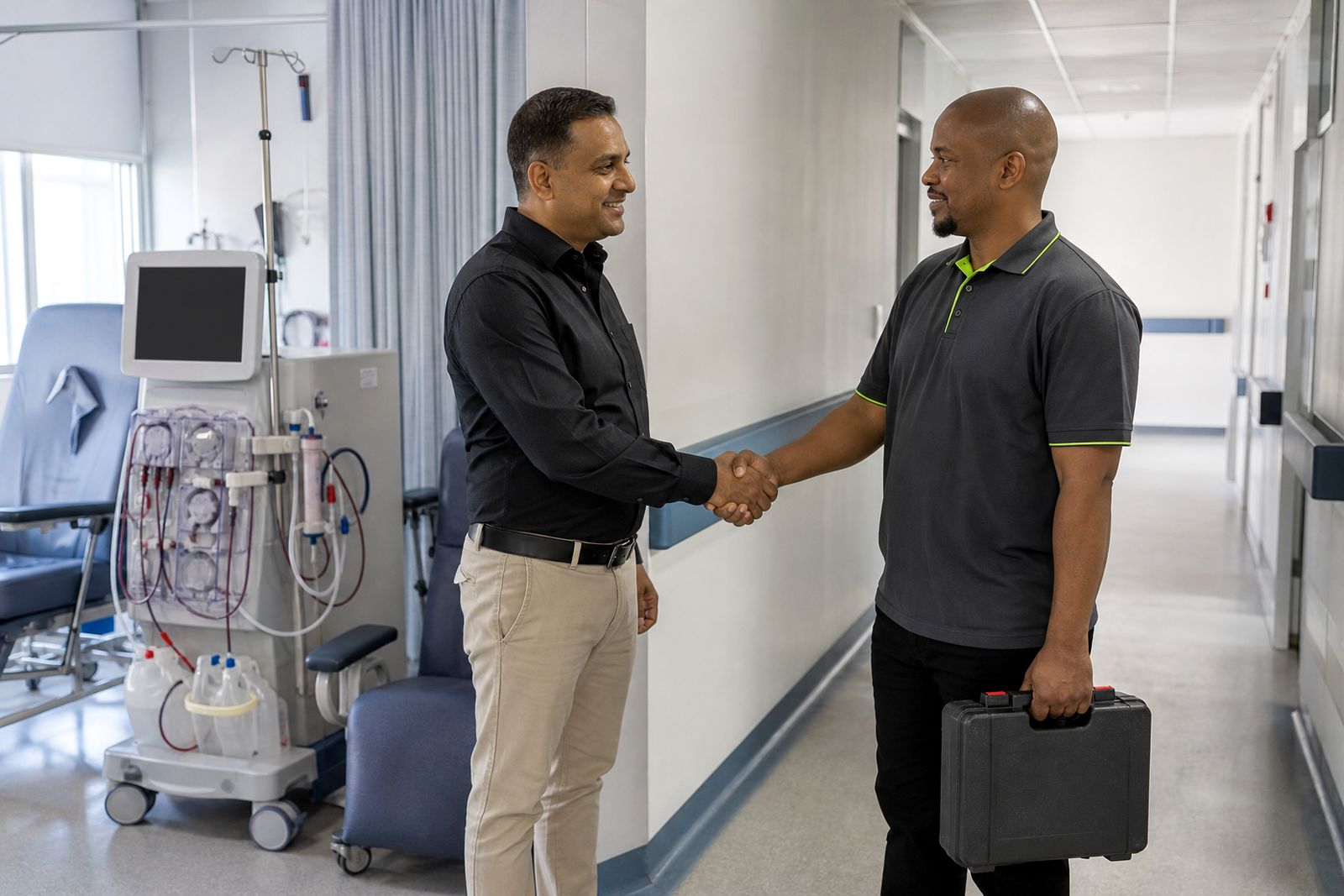
When the work is complete, make time for a quick handover. The technician should identify what was done, what was tested, what still needs follow-up and which items must remain out of service. This protects the unit and helps your internal records stay accurate for audit purposes.
File the service record promptly and update your asset list if a machine has gone to the workshop or a loan unit has been placed. If any actions are needed from the facility, such as arranging access to a bay later, replacing a damaged plug point or monitoring a recurring issue, assign them there and then. It sounds basic but this step is often missed.
Finally, share any observations from the visit with the relevant unit staff so the next shift knows which machines are cleared for use and which are not. Clear communication prevents equipment being put back into service before all technical checks are complete.
What our Dialysis Machine Servicing customers say
Verified Google reviews
Questions we get asked
Should we disinfect machines before a service visit?
Follow your unit's normal infection control process and present equipment in a clean condition for safe handling. If there are any special precautions for a specific machine or bay, tell the technician on arrival.
Can a technician work while patients are being treated?
This depends on the task and the unit layout. Many checks can be planned around treatment flow, but the unit should identify safe access areas and remove any machines from clinical use before technical work starts where needed.
Do you work with home dialysis users?
No. Work is carried out only for registered renal facilities, and clinical advice remains with the unit.
Book a service or report a fault
Send a note through our contact form with your unit, the equipment involved and what you need, and a technician will contact you.
Open the contact form