
Choosing a service partner
Before a renal unit signs a service contract, the technical questions matter as much as the paperwork. This guide covers the checks unit managers and clinical teams usually make before appointing a biomedical service partner.
Start with scope, not promises
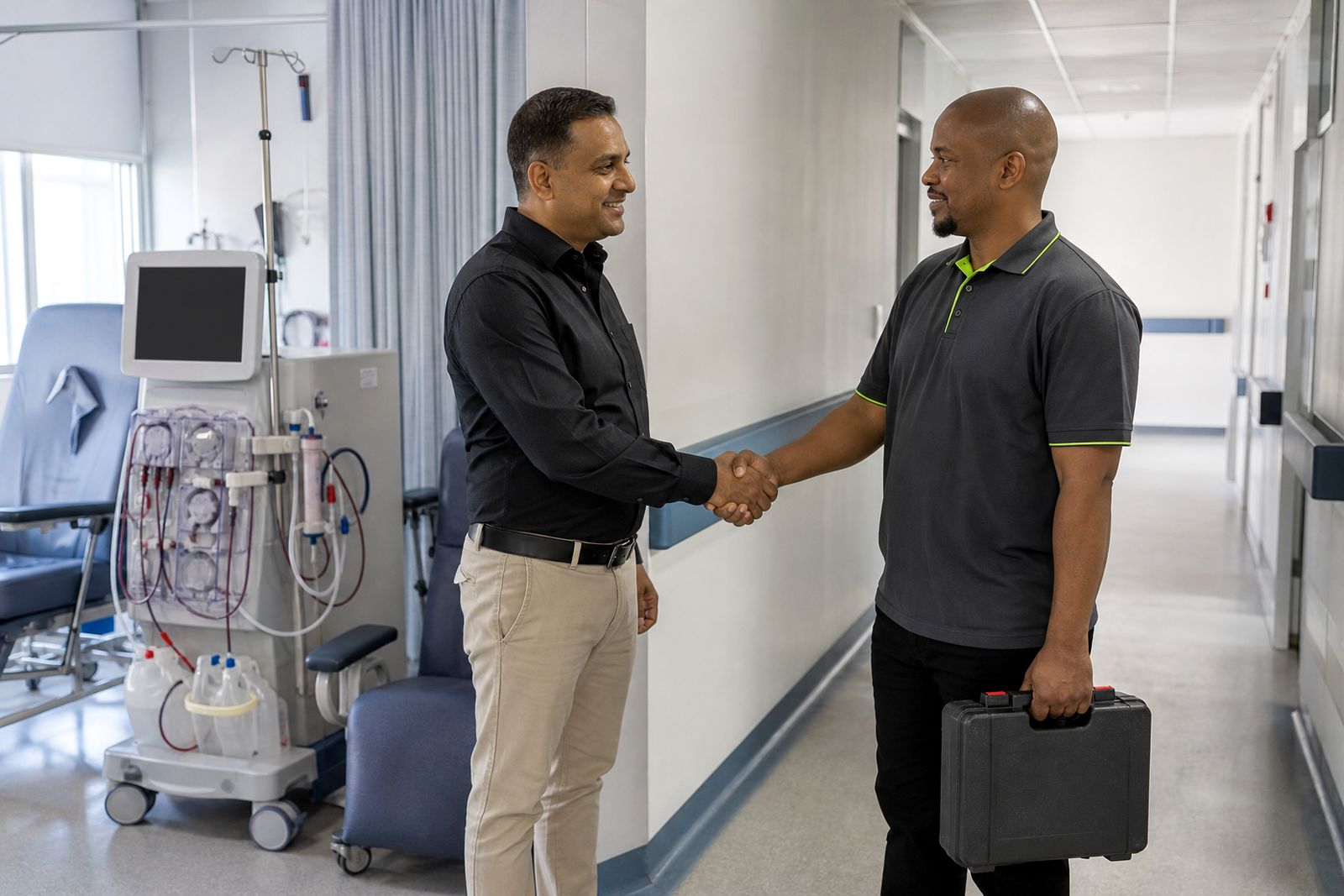
The first question is simple: what exactly will the service partner cover? In renal units, vague wording causes problems later. A contract should state whether the provider handles routine servicing, calibration, electrical safety testing, breakdown repairs, chair repairs, workshop repairs, on-site fault finding and service records for audits. It should also be clear whether loan units are available when a machine has to come off line for workshop work.
Units should also confirm who the provider works for. A proper technical partner for haemodialysis equipment should be working with registered facilities only, not home users, and should stay within the technical scope of service. Clinical decisions must remain with the unit at all times. If a supplier mixes clinical advice with technical work, that boundary is not clear enough.
- Ask for a written list of included services and excluded services.
- Check whether treatment chairs are covered as well as dialysis machines.
- Confirm how service records are issued and stored for audit purposes.
- Make sure the contract describes what happens when a machine must go to the workshop.
Look at workshop process and field support
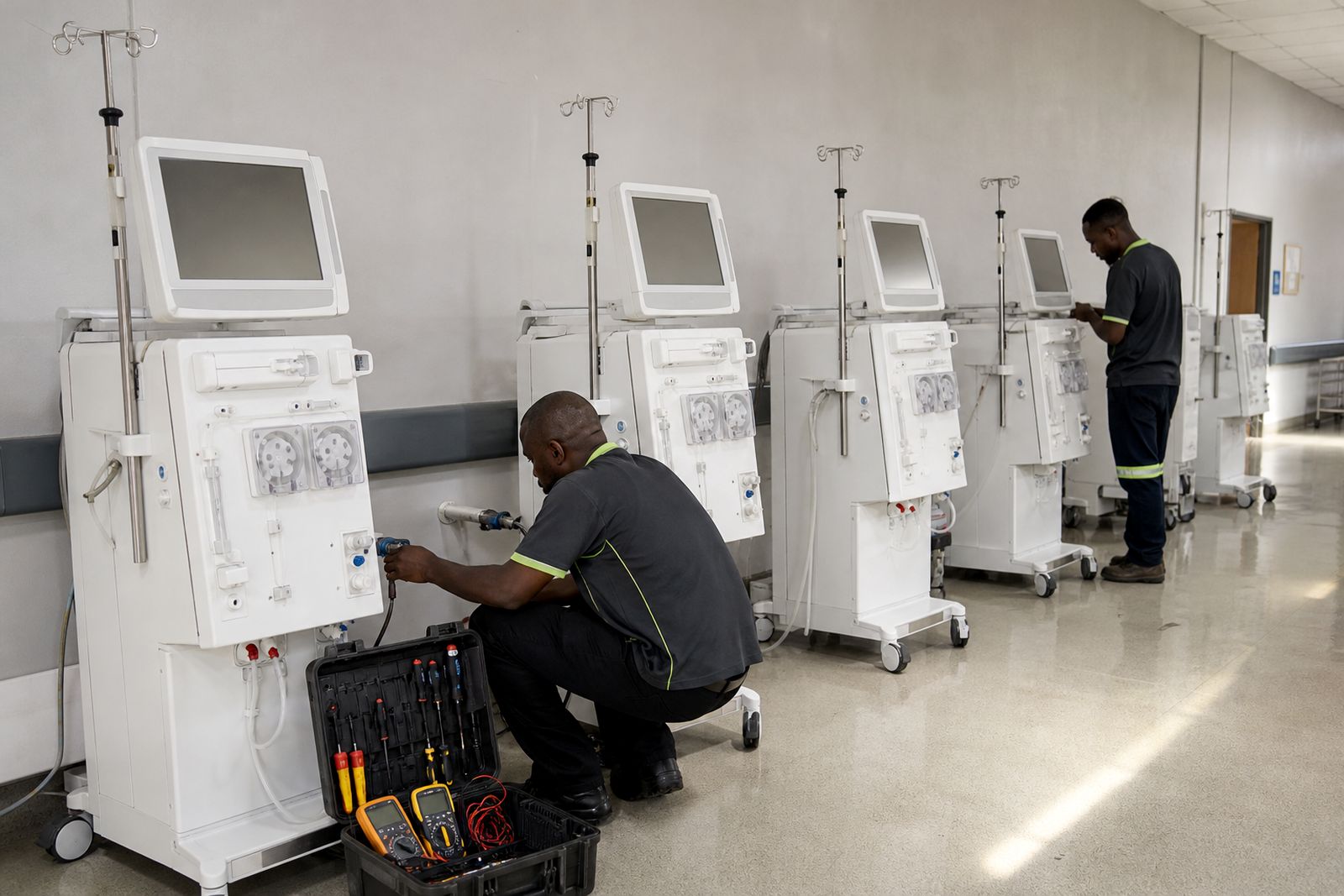
A service partner needs more than tools in a vehicle. Renal units usually depend on both field technicians and a functioning workshop base. On-site work is important for inspections, planned maintenance and many faults, but some repairs need bench testing, parts replacement and longer observation in a controlled workshop setting.
A practical South African example is a unit on the East Rand with a machine showing intermittent alarms during treatment preparation. The field technician can inspect installation conditions, power supply quality, connectors and visible wear on site. If the fault remains inconsistent the machine may need to go to the Germiston workshop for deeper testing while a loan unit is placed in service. That reduces pressure on the unit roster and allows the technician to work properly rather than rushing a guess on the ward.
Ask how the provider splits workshop work from field work. The answer should be specific, not general. In Gauteng traffic and power cut plans can affect the day, so the provider should have a practical method for bookings, collections, workshop testing and returning equipment with records.
Check calibration and electrical safety testing properly
Calibration and electrical safety testing should never sit in the contract as a loose line item with no detail. Renal units are right to ask what is tested, how it is recorded and how findings are reported back to the facility. The point is not paperwork for its own sake. The point is to show that the machine or chair has been checked methodically and that any out-of-spec findings were noted and addressed.
For South African facilities this matters during internal quality checks and external audits. A clear record helps unit management show when a device was serviced, what checks were done, what parts were replaced if any, and whether follow-up work was needed. The same applies to treatment chairs, where electrical safety, actuator function and physical condition all affect daily use.
- Ask what calibration checks form part of a planned service.
- Ask how electrical safety results are documented for each asset.
- Confirm that failed findings are reported clearly, not hidden in broad comments.
- Check whether records can be matched easily to your asset numbers.
Ask how breakdowns are handled in real unit conditions
Breakdown support is where many contracts are judged. A renal unit should ask what information the technician needs before attending site, what the likely first steps are on arrival, and when the machine is likely to stay on site versus going to the workshop. The best answers are practical. They should mention asset identification, fault history, recent service work, environmental conditions and whether the fault appears during preparation, rinsing or treatment setup.
It also helps to ask how the service partner deals with local conditions. In some facilities water leaks, humidity, unstable power and cramped treatment spaces contribute to repeat faults. In coastal areas corrosion can be more of an issue, while inland units may see dust and heat around plant rooms and service spaces. A capable technician looks at the surrounding conditions and not only the symptom on the screen.
Units should be wary of providers who appear to diagnose everything from a distance. Some faults are straightforward, but repeated alarms or intermittent electrical issues need proper testing. Guesswork wastes sessions and can create avoidable downtime for the clinic.
Service records should make audit day easier
When a unit manager asks for service history, the answer should not be a pile of mixed job cards. Good records help the facility track what was done on each machine and chair, when it was done, and what follow-up was recommended. That becomes important when planning shutdown windows, budgeting for recurring technical issues and preparing for audit review.
Ask to see the format of the service record pack before signing anything. It should be easy to follow and should link each visit or workshop job to the correct asset. Where a loan unit was used, that should be noted clearly so there is no confusion later. A unit does not need fancy wording, it needs records that can be read quickly and checked against equipment on the floor.
- Service date and asset identification should be clear on every record.
- Findings, actions taken and outstanding issues should be separated properly.
- Calibration and safety testing results should be easy to locate.
- Workshop work and loan-unit placement should be recorded against the relevant machine.
Choose a partner who understands operational pressure
The final decision often comes down to whether the provider understands how a renal unit actually runs. Technical skill is essential, but so is working in a way that respects treatment schedules, infection-control rules, access control and communication with nursing and unit management. The technician should know when to ask the unit to isolate a machine, when to remove it from use, and when to wait for the correct staff member before proceeding.
Before appointing a service partner, ask how service visits are prepared, how machines are labelled when removed from use, how loan units are introduced into the unit, and what information the clinic receives at the end of the job. Clear answers usually show an organised provider. Vague answers usually mean the unit will end up chasing details later.
In the end, a good contract is not the one with the most pages. It is the one that tells the renal unit exactly what support it can expect, how equipment will be handled and how records will stand up when audit time comes around. That clarity saves time and avoids arguments later on, especialy when a busy unit cannot afford uncertainty.
What our Dialysis Machine Servicing customers say
Verified Google reviews
Questions we get asked
What should a renal unit ask before signing a maintenance contract?
Ask what equipment is covered, what planned maintenance includes, how calibration and electrical safety testing are recorded, whether loan units are available, and how service records are issued for audits.
Why do loan units matter when choosing a service partner?
If a machine needs workshop testing or repair, a loan unit can help the facility keep capacity available while the original machine is off site.
Should a service partner give clinical advice about dialysis treatment?
No. A technical service partner should stay within servicing, calibration, testing and repair. Clinical decisions remain with the renal unit.
Book a service or report a fault
Send a note through our contact form with your unit, the equipment involved and what you need, and a technician will contact you.
Open the contact form